
Episode 124: Mental Health During A Pandemic: How US Media Spins Societal Failures Into Personal Self-Help Journeys
Citations Needed25 Nov 2020

Episode 124: Mental Health During A Pandemic: How US Media Spins Societal Failures Into Personal Self-Help Journeys

A CNN headline from this past summer read: "Mental health during coronavirus: Tips for processing your feelings." Psychology Today gave us an article on "Coping With Loneliness During a Pandemic," while the Washington Post presents, "A guide to taking care of yourself during the pandemic." Everywhere we've turned over the past 9 months, American media has been covering the mental health downside of the COVID-19 pandemic and the subsequent lockdown and economic crash on one of these two settings: Awareness Mode or Self-Help Mode.

The first setting — "Awareness Mode" — is merely witnessing mass suffering; that is, reporting on the topic with no prescriptions offered. Second is "Self-Help Mode," which is, to the extent these articles do put forth prescriptions for wellness and mental health, it is entirely individualistic in nature. Your well-being during this once-in-a-century pandemic is up to you — but don't fret, here are some "guides," "plans," "hacks," and "tricks" to help you out.

Missing from the vast bulk of coverage is the glaringly obvious third option: actionable, proven, political solutions to mental health crises that operate under the radical assumption that  social problems may require social solutions. Nowhere in any of these articles is the idea that socialized medicine, guaranteed income, free childcare, student debt relief or rent and mortgage cancellations may be the best and most rational "hacks" or "tricks" to actually improve mental health of people at scale.

Obviously, a robust social safety net wouldn't solve all mental health problems — after all, countries with universal healthcare and generous unemployment and childcare benefits still have depression and suicides — but we have decades of data showing basic social welfare clearly improves mental welfare. But because mental health crises are seen as moral failings rather than diseases thrust upon innocent people, we are conditioned to view those suffering from their effects as inevitable, losses simply factored into the moral framework of the world.


It basically goes like this: If a giant blood-sucking monster were ravaging the country killing thousands of people and terrorizing millions more, the media would never provide us "hacks" or "plans" or "tricks" to cope with the giant blood-sucking monster. It would ask the obvious question: What are those in power doing to stop the monster from killing and terrorizing in the first place?

Unfortunately, such an approach is sacrilege in U.S. media when it comes to mental health. The solution is never to lobby for a specific candidate or policy that would provide immediate relief to the masses because neoliberal hyper-atomization, unlike appeals to social solutions, is not seen as political. It's simply the objective reporter voice mode of journalism U.S. media has uncritically adopted. But collectivist solutions, marked by the political choice to redistribute resources to the less well-off, is a proven technique to help those suffering mental health issues, doubly so during a pandemic that has cut people off from socialization, radially increased substance abuse, and has left millions unemployed.

Our guest is writer Colette Shade.

Denne episoden er hentet fra en åpen RSS-feed og er ikke publisert av Podme. Den kan derfor inneholde annonser.

Episoder(379)

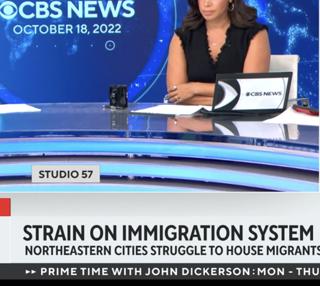
Ep 240: How the Media's "Burden," the "Straining Resources" Framing Manufactures the Expendable Other

Ep 240: How the Media's "Burden," the "Straining Resources" Framing Manufactures the Expendable Other

In this episode, we discuss the ideological work done by our media's default frame of immigrants, poor seniors, homeless people, and those with disabilities as "burdens" and "strains" on our limited r...

8 Jul 1h 34min

News Brief: Despite 9-Figure Infusion from Silicon Valley, Abundance Still Seeks Popular Support

News Brief: Despite 9-Figure Infusion from Silicon Valley, Abundance Still Seeks Popular Support

In this news brief, we catch up with Dylan Gyauch-Lewis, senior researcher at the Revolving Door Project, to discuss Abundance's PR problems, why this latest neoliberalism rebrand isn't catching on an...

1 Jul 38min

News Brief: The ADL's Bogus Origin Story and Its Rise as Ideological Enforcer for Empire and Israel

News Brief: The ADL's Bogus Origin Story and Its Rise as Ideological Enforcer for Empire and Israel

In this News Brief, we talk with Emmaia Gelman, author of The Anti-Defamation League and the Racial State, about how––despite posing a civil rights org––the ADL functions as defender of colonialism an...

24 Jun 42min

Episode 239: The Vague, Capital-Serving Co-Optation of "Affordability" Politics

Episode 239: The Vague, Capital-Serving Co-Optation of "Affordability" Politics

In this episode, we detail the long history of generic "affordability" discourse and how, post-Mamdani, it's become the go-to establishment buzzword justifying tax breaks for developers, deregulation,...

17 Jun 1h 20min

News Brief: The Call to Boycott—and Delegitimize—the New York Times

News Brief: The Call to Boycott—and Delegitimize—the New York Times

In this News Brief, we talk with Chris Mills Rodrigo from Writers Against The War On Gaza about their campaign to boycott the New York Times and remove the "paper of record" from its pedestal of alleg...

28 Mai 40min

Episode 238: The Fictional, Racist, Paranoia-Sowing "Sleeper Cell" Media Construction

Episode 238: The Fictional, Racist, Paranoia-Sowing "Sleeper Cell" Media Construction

In this episode, we detail the vague, baseless racism-sowing media coverage and pop culture obsession with so-called "sleeper cells," a construction that has consumed post-9/11 America but suffers fro...

20 Mai 1h 30min

Live Show: 'How to Sell a Genocide' Book Talk at The Word Is Change Bookstore in Brooklyn, NY

Live Show: 'How to Sell a Genocide' Book Talk at The Word Is Change Bookstore in Brooklyn, NY

This is a live recording between Nima and Adam at the Word is Change Bookstore May 7, 2026. In this conversation, we discuss key findings that can be found in Adam's new book, How to Sell a Genocide: ...

13 Mai 1h 3min

News Brief: "Peak TV," Streamer Studio Accounting Gimmicks, and the Precarity of Hollywood Labor

News Brief: "Peak TV," Streamer Studio Accounting Gimmicks, and the Precarity of Hollywood Labor

In this News Brief, we talk with Miranda Banks and Kate Fortmueller, authors of the new book Boom to Bust: How Streaming Broke Hollywood Workers, about rising inequality and precarity in Hollywood, st...

6 Mai 47min

Populært innen Politikk og nyheter

giver-og-gjengen-vg
aftenpodden-usa
fotballpodden-2
aftenpodden
popradet
forklart
stopp-verden
det-store-bildet
rss-gukild-johaug
hanna-de-heldige
rss-ness
nokon-ma-ga
lydartikler-fra-aftenposten
dine-penger-pengeradet
aftenbla-bla
rss-utenrikskomiteen-med-bogen-og-grasvik
ta-dokumentar
rss-penger-polser-og-politikk
e24-podden
rss-espen-lee-usensurert