#235 – Ajeya Cotra on whether it’s crazy that every AI company’s safety plan is ‘use AI to make AI safe’

#235 – Ajeya Cotra on whether it’s crazy that every AI company’s safety plan is ‘use AI to make AI safe’

Every major AI company has the same safety plan: when AI gets crazy powerful and really dangerous, they’ll use the AI itself to figure out how to make AI safe and beneficial. It sounds circular, almost satirical. But is it actually a bad plan?

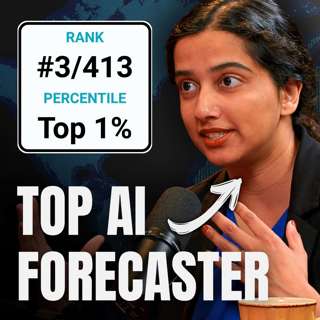
Today’s guest, Ajeya Cotra, recently placed 3rd out of 413 participants forecasting AI developments and is among the most thoughtful and respected commentators on where the technology is going.

She thinks there’s a meaningful chance we’ll see as much change in the next 23 years as humanity faced in the last 10,000, thanks to the arrival of artificial general intelligence. Ajeya doesn’t reach this conclusion lightly: she’s had a ring-side seat to the growth of all the major AI companies for 10 years — first as a researcher and grantmaker for technical AI safety at Coefficient Giving (formerly known as Open Philanthropy), and now as a member of technical staff at METR.

So host Rob Wiblin asked her: is this plan to use AI to save us from AI a reasonable one?

Ajeya agrees that humanity has repeatedly used technologies that create new problems to help solve those problems. After all:

  • Cars enabled carjackings and drive-by shootings, but also faster police pursuits.
  • Microbiology enabled bioweapons, but also faster vaccine development.
  • The internet allowed lies to disseminate faster, but had exactly the same impact for fact checks.

But she also thinks this will be a much harder case. In her view, the window between AI automating AI research and the arrival of uncontrollably powerful superintelligence could be quite brief — perhaps a year or less. In that narrow window, we’d need to redirect enormous amounts of AI labour away from making AI smarter and towards alignment research, biodefence, cyberdefence, adapting our political structures, and improving our collective decision-making.

The plan might fail just because the idea is flawed at conception: it does sound a bit crazy to use an AI you don’t trust to make sure that same AI benefits humanity.

But if we find some clever technique to overcome that, we could still fail — because the companies simply don’t follow through on their promises. They say redirecting resources to alignment and security is their strategy for dealing with the risks generated by their research — but none have quantitative commitments about what fraction of AI labour they’ll redirect during crunch time. And the competitive pressures during a recursive self-improvement loop could be irresistible.

In today’s conversation, Ajeya and Rob discuss what assumptions this plan requires, the specific problems AI could help solve during crunch time, and why — even if we pull it off — we’ll be white-knuckling it the whole way through.


Links to learn more, video, and full transcript: https://80k.info/ac26

This episode was recorded on October 20, 2025.

Chapters:

  • Cold open (00:00:00)
  • Ajeya’s strong track record for identifying key AI issues (00:00:41)
  • The 1,000-fold disagreement about AI's effect on economic growth (00:02:31)
  • Could any evidence actually change people's minds? (00:23:26)
  • The most dangerous AI progress might remain secret (00:30:39)
  • White-knuckling the 12-month window after automated AI R&D (00:47:21)
  • AI help is most valuable right before things go crazy (01:12:01)
  • Foundations should go from paying researchers to paying for inference (01:24:42)
  • Will frontier AI even be for sale during the explosion? (01:32:03)
  • Pre-crunch prep: what we should do right now (01:43:59)
  • A grantmaking trial by fire at Coefficient Giving (01:47:03)
  • Sabbatical and reflections on effective altruism (02:07:45)
  • The mundane factors that drive career satisfaction (02:37:17)
  • EA as an incubator for avant-garde causes others won't touch (02:46:55)

Video and audio editing: Dominic Armstrong, Milo McGuire, Luke Monsour, and Simon Monsour
Music: CORBIT
Coordination, transcriptions, and web: Katy Moore

Denne episoden er hentet fra en åpen RSS-feed og er ikke publisert av Podme. Den kan derfor inneholde annonser.

Episoder(340)

We can guess what intergalactic war would look like. And strangely, it matters.

We can guess what intergalactic war would look like. And strangely, it matters.

Intergalactic war is probably billions of years away — yet physics can already tell us how it ends. And strangely that conclusion is relevant to decisions people have to make today.In this video, Rob ...

18 Jun 15min

How AI could create the world’s biggest problems (article by Zershaaneh Qureshi)

How AI could create the world’s biggest problems (article by Zershaaneh Qureshi)

Imagine you’re living 15,000 years ago. Your people are hunter-gatherers and you sleep under the stars. If someone told you humans would one day build cities with millions of people, fly through the a...

11 Jun 1h 29min

What it's really like to run AGI safety at Google DeepMind (and where I disagree with 'doomers') | Rohin Shah

What it's really like to run AGI safety at Google DeepMind (and where I disagree with 'doomers') | Rohin Shah

Most people working on AI safety think without a massive effort AI systems will probably end up with goals catastrophically different from humanity’s. Today’s guest, Rohin Shah — head of AGI Safety an...

2 Jun 2h 48min

What makes for a dream job? | Benjamin Todd

What makes for a dream job? | Benjamin Todd

What actually makes a job fulfilling? It's not what most career advice tells you. "Follow your passion" sounds inspiring, but it's misleading — and the research backs that up.Drawing on hundreds of st...

28 Mai 28min

We’re updating our career advice for the strangest time in history | Benjamin Todd, author of 80,000 Hours

We’re updating our career advice for the strangest time in history | Benjamin Todd, author of 80,000 Hours

The average career is 80,000 hours long. With AI advancing so rapidly, the hours you have left in your career matter more than ever.Some leading AI researchers think there’s a 10% chance that AI syste...

26 Mai 1h 6min

Can AIs already start 'rogue deployments' inside AI companies? (Landmark new METR report)

Can AIs already start 'rogue deployments' inside AI companies? (Landmark new METR report)

A red-teamer was embedded inside Anthropic for three weeks, told to imagine he was an evil Claude, and asked to figure out how to launch a ‘rogue AI deployment’ without getting caught. It’s one part o...

20 Mai 20min

#243 – 'Godfather of AI' Yoshua Bengio: "I now see a path" to safe superintelligent AI

#243 – 'Godfather of AI' Yoshua Bengio: "I now see a path" to safe superintelligent AI

The co-inventor of modern AI and the most cited living scientist believes he's figured out how to ensure AI is honest, incapable of deception, and never goes rogue. Yoshua Bengio – Turing Award Winner...

7 Mai 2h 35min

'95% of AI Pilots Fail': The hidden agenda behind the viral stat that misled millions

'95% of AI Pilots Fail': The hidden agenda behind the viral stat that misled millions

You might have heard that '95% of corporate AI pilots' are failing. It was one of the most widely cited AI statistics of 2025, parroted by media outlets everywhere. It helped trigger a Nasdaq selloff ...

28 Apr 10min

Populært innen Fakta

fastlegen
dine-penger-pengeradet
relasjonspodden-med-dora-thorhallsdottir-kjersti-idem
foreldreradet
treningspodden
mikkels-paskenotter
rss-kunsten-a-leve
jakt-og-fiskepodden
rss-strid-de-norske-borgerkrigene
hverdagspsyken
sinnsyn
tomprat-med-gunnar-tjomlid
rss-impressions-2
rss-kull
rss-var-forste-kaffe
rss-kunstig-intelligens-med-elisabeth-maren-og-morten
level-up-med-anniken-binz
gravid-uke-for-uke
rss-bisarr-historie
dopet