Beethoven String Quartet, Op. 59, No.2

Beethoven String Quartet, Op. 59, No.2

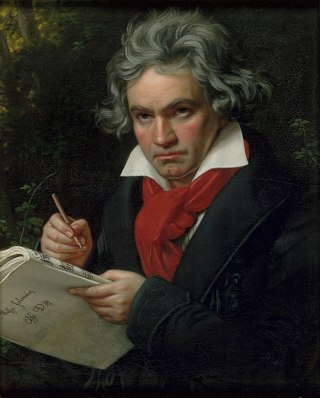
I'm always tickled by composer trivia questions, like which standard canon works begin in a major key and end in a minor key? I'll give you one, but please comment others below: Mendelssohn's 4th Symphony. Well, how about this one: how many of Beethoven's 16 string quartets end in a minor key? The answer? Just one, Op. 59, No. 2, the subject of today's show. And that minor key is hugely important to this darkest of the three Op. 59 quartets, three towering achievements that changed the string quartet repertoire for good.

Beethoven, as I've said many times on the show, was a revolutionary within limits, always expanding, rethinking, and reshaping what was possible without breaking anything beyond repair. But make no mistake: the Op. 59 quartets were revolutionary works. No one had written anything like them before in terms of scope, emotional intensity, difficulty, and complexity. In fact, like a few of Beethoven's greatest works, they were received with confusion and, in some cases, anger by musicians, audiences, and critics. Famously, the cellist of the first string quartet to receive the parts of Op. 59, No. 1 saw the Morse code-like, one-note theme of the second movement, threw the music aside, and stomped on it!

These quartets were Beethoven going out on a limb, applying the intensity and drama of his Middle Heroic Period to a genre that had been at least partly the province of amateur musicians, but not anymore. Op. 59, No. 2, as I said, is the darkest of this group: four movements all centered around the key of E, and with the exception of the glorious second movement, all in minor, presenting a seriousness and directness of purpose that is powerfully compelling. This might be my favorite of the Op. 59 quartets, and so I'm very excited to dig into it with you today. We'll discuss the enigmatic and ecstatic aspects of this quartet, as well as Beethoven's own philosophical views on life, which come to light in the second movement, one of Beethoven's greatest creations.

Recording: Cleveland Quartet

Episoder(282)

Franck Symphony in D Minor

Franck Symphony in D Minor

In the 1960s, Leonard Bernstein famously helped to popularize the music of a then relatively obscure composer, Gustav Mahler. His work, as well as the work of other conductors, made Mahler into a clas...

20 Nov 202559min
Ravel and Falla: Echoes of Spain

Ravel and Falla: Echoes of Spain

Nowadays it's hard to imagine Maurice Ravel as a "bad-boy" revolutionary, a member of a group whose name can be loosely translated as The Hooligans. To most listeners today, Ravel's music is the very ...

6 Nov 202557min

Shostakovich Symphony No. 10 LIVE w/ The Aalborg Symphony

Shostakovich Symphony No. 10 LIVE w/ The Aalborg Symphony

Longtime listeners of Sticky Notes know that Shostakovich's 10 symphony was the inaugural piece covered on the show. It's been 8 years(!) since that show, so I've totally re-written the episode and ha...

27 Okt 202559min
Barber Violin Concerto

Barber Violin Concerto

There are so many great apocryphal stories in the long history of classical music, from the reason Tchaikovsky wrote his Sixth Symphony to what famous composers supposedly said on their deathbeds, to ...

9 Okt 202547min

100 Years of Beethoven's Eroica (recordings)

100 Years of Beethoven's Eroica (recordings)

One of my favorite things about having Patreon sponsors is that they often suggest the most fascinating pieces and topics for shows. Adrian, who sponsored a show last year, gave me one of my favorite ...

25 Sep 202555min

The Life and Music of Grazyna Bacewicz

The Life and Music of Grazyna Bacewicz

The great Polish composer Witold Lutoslawski said this after the premature death of his contemporary Grazyna Bacewicz: "She was born with an incredible wealth of musical talent, which she succeeded to...

6 Sep 202557min

Sticky Notes meets You'll Hear It

Sticky Notes meets You'll Hear It

I had such a wonderful time joining the jazz podcast You'll Hear It! We talked about the meeting of jazz and classical music, a topic I've explored before, but never in this much depth and never with ...

22 Aug 20251h 10min
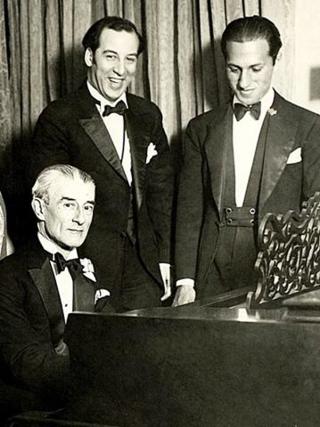
Impressions in Blue: Ravel & Gershwin

Impressions in Blue: Ravel & Gershwin

In the mid-1920s, Maurice Ravel wrote a letter to the legendary composition teacher Nadia Boulanger. Boulanger's class was a mecca for composers, both young and old, and musicians from all over the wo...

7 Aug 202544min

Populært innen Underholdning

papaya
enkel-servering
storefri-med-mikkel-og-herman
tore-og-haralds-podkast
harm-og-hegseth
folk-flest-med-linn-og-nils
topp-3-med-wold-og-fladseth
konspirasjonspodden
tusvik-tnne
hovla
ma-pa-behandling-med-morten-ramm
kjendiscrush-med-sofie-karlstad
big-5-med-nils-og-harald-2
nare-venner
vitnemal
gi-meg-alle-detaljene
feedback-med-egon-holstad
rss-gammal-maiden
christine-dancke
rss-backstage-historier-om-legender