The muscle we forgot: SMRs, hyperscalers, and why this nuclear renaissance might actually be different

The muscle we forgot: SMRs, hyperscalers, and why this nuclear renaissance might actually be different

Why nuclear has never been project financed and how that might finally be about to change.

Every nuclear plant ever built has ultimately been backstopped by taxpayers or ratepayers. Not because the technology doesn't work, but because nobody has ever cracked the construction cost and schedule problem well enough to convince a bank to finance it without government support. Bridget van Dorsten is joined by Jake Jurewicz, Co-founder and CEO of Blue Energy, to explore why that has been so hard and what a credible path to fixing it might actually look like.

Jake walks through the root cause of nuclear's cost overrun problem and it is not the reactor. The reactor equipment itself represents around 7% of total project costs. The real problem is what Jake calls nuclear construction overhead: the cost of mobilizing, training, and retaining the 10,000 or so skilled workers needed to build these plants in the field, the way we have been building them for 70 years, essentially the same way you would build a castle.

The episode then turns to what Blue Energy is doing differently. By intentionally selecting sites accessible by barge and contracting existing oil and gas fabrication yards and shipyards to build large pre-assembled modules offsite, Blue Energy aims to bring fixed-price contracts into nuclear for the first time, the same contracting structure that made offshore wind and LNG bankable. Jake explains why that single shift changes everything for project financing.

Bridget and Jake also work through the demand side of the equation: why hyperscalers are becoming the crucial beachhead market for new nuclear, what binding PPAs from investment-grade counterparties actually signal versus announcements, and why the restarts and uprates, while valuable, only go so far.

The conversation also covers Blue Energy's first announced project at the Port of Victoria in Texas, a 1.5 gigawatt nuclear-powered AI data centre co-located with a gas-to-nuclear conversion, designed to accelerate commercial operation and reduce cost of capital even without government loan support. Jake explains the mechanics of why firing the balance of plant with gas first before switching to nuclear steam is not a compromise but a genuine financing innovation.

Finally, Jake offers a view of what signals actually matter when separating the nuclear renaissance from the noise: binding PPAs, large balance sheets standing behind fixed-price contracts, and projects moving through the Nuclear Regulatory Commission rather than staying at the prototype stage.

See Privacy Policy at https://art19.com/privacy and California Privacy Notice at https://art19.com/privacy#do-not-sell-my-info.

Episoder(342)

Collision Course: How Wind and Solar Are Disrupting Power Markets

Collision Course: How Wind and Solar Are Disrupting Power Markets

We've spent a lot more time lately looking at the structure of U.S. power markets. Why? Because they're about to get shaken up.It's already begun. In this episode, we'll look at how renewables are upe...

16 Nov 201733min

Watt It Takes: Sungevity CEO Andrew Birch

Watt It Takes: Sungevity CEO Andrew Birch

This week: a conversation with Andrew Birch, the co-founder and CEO of Sungevity.For those who’ve been following the wild ride in solar, you’re going to want to listen to this conversation.Sungevity w...

7 Nov 201754min

Halloween Special: You Should Fear a Cyber Attack on the Grid

Halloween Special: You Should Fear a Cyber Attack on the Grid

Still looking for a scary costume for this Halloween? Here's a terrifying idea: Dress up like an "attack vector" or an "advanced persistent threat."This week's topic of conversation is a combination d...

31 Okt 201744min

Blockchain for Energy, Part Deux: Real-World Use Cases

Blockchain for Energy, Part Deux: Real-World Use Cases

Two unproven startups just raised a combined $65 million to test out real-world use cases of blockchain in energy: Grid+ and Power Ledger.Blockchain for energy is starting to get traction, and there's...

26 Okt 201755min
Watt It Takes: Dick Swanson, Founder of SunPower

Watt It Takes: Dick Swanson, Founder of SunPower

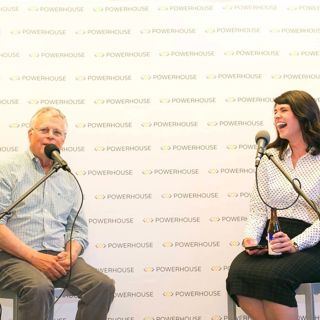
This week, we’re unveiling a new podcast collaboration between Greentech Media and Powerhouse, called "Watt it Takes." Watt It Takes is produced and recorded live at Powerhouse, a cleantech incubator ...

9 Okt 20171h 6min
Rick Perry's Value-of-Coal Tariff

Rick Perry's Value-of-Coal Tariff

Thought that controversial grid resiliency report ordered by Energy Secretary Rick Perry was only an intellectual exercise? It didn't take long for the Department of Energy to put it into action -- in...

2 Okt 201740min

The Utility-Startup Paradox

The Utility-Startup Paradox

There’s a paradox in energy. While new technologies are accelerating faster than ever, the adoption of those technologies by incumbents remains slow. This presents a captivity problem for startups, pa...

27 Sep 201730min

America's Solar Trade War Escalates

America's Solar Trade War Escalates

In the four decades since congress passed the 1974 Trade Act, there have been 75 cases when U.S. industries used the law to argue that imports caused them injury. The list of aggrieved industries is w...

25 Sep 201734min

Populært innen Business og økonomi

stopp-verden
lydartikler-fra-aftenposten
dine-penger-pengeradet
e24-podden
rss-penger-polser-og-politikk
rss-borsmorgen-okonominyhetene
pengepodden-2
tid-er-penger-en-podcast-med-peter-warren
utbytte
pengesnakk
liberal-halvtime
livet-pa-veien-med-jan-erik-larssen
morgenkaffen-med-finansavisen
rss-markedspuls-2
finansredaksjonen
rss-pa-konto
lederpodden
rss-politisk-preik
rss-investering-gjort-enkelt
stormkast-med-valebrokk-stordalen