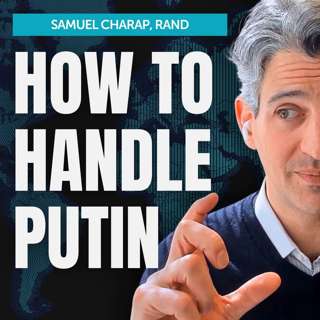
A Ukraine ceasefire could accidentally set Europe up for a bigger war | RAND's top Russia expert Samuel Charap

A Ukraine ceasefire could accidentally set Europe up for a bigger war | RAND's top Russia expert Samuel Charap

Many people believe a ceasefire in Ukraine will leave Europe safer. But today's guest lays out how a deal could potentially generate insidious new risks — leaving us in a situation that's equally dangerous, just in different ways.

That’s the counterintuitive argument from Samuel Charap, Distinguished Chair in Russia and Eurasia Policy at RAND. He’s not worried about a Russian blitzkrieg on Estonia. He forecasts instead a fragile peace that breaks down and drags in European neighbours; instability in Belarus prompting Russian intervention; hybrid sabotage operations that escalate through tit-for-tat responses.

Samuel’s case isn’t that peace is bad, but that the Ukraine conflict has remilitarised Europe, made Russia more resentful, and collapsed diplomatic relations between the two. That’s a postwar environment primed for the kind of miscalculation that starts unintended wars.

What he prescribes isn’t a full peace treaty; it’s a negotiated settlement that stops the killing and begins a longer negotiation that gives neither side exactly what it wants, but just enough to deter renewed aggression. Both sides stop dying and the flames of war fizzle — hopefully.

None of this is clean or satisfying: Russia invaded, committed war crimes, and is being offered a path back to partial normalcy. But Samuel argues that the alternatives — indefinite war or unstructured ceasefire — are much worse for Ukraine, Europe, and global stability.


Links to learn more, video, and full transcript: https://80k.info/sc26

This episode was recorded on February 27, 2026.

Chapters:

  • Cold open (00:00:00)
  • Could peace in Ukraine lead to Europe’s next war? (00:00:47)
  • Do Russia’s motives for war still matter? (00:11:41)
  • What does a good ceasefire deal look like? (00:17:38)
  • What’s still holding back a ceasefire (00:38:44)
  • Why Russia might accept Ukraine’s EU membership (00:46:00)
  • How to prevent a spiraling conflict with NATO (00:48:00)
  • What’s next for nuclear arms control (00:49:57)
  • Finland and Sweden strengthened NATO — but also raised the stakes for conflict (00:53:25)
  • Putin isn’t Hitler: How to negotiate with autocrats (00:56:35)
  • Why Russia still takes NATO seriously (01:02:01)
  • Neither side wants to fight this war again (01:10:49)

Video and audio editing: Dominic Armstrong, Milo McGuire, Luke Monsour, and Simon Monsour
Music: CORBIT
Transcripts and web: Nick Stockton, Elizabeth Cox, and Katy Moore

Episoder(326)

Why automating human labour will break our political system | Rose Hadshar, Forethought

Why automating human labour will break our political system | Rose Hadshar, Forethought

The most important political question in the age of advanced AI might not be who wins elections. It might be whether elections continue to matter at all.That’s the view of Rose Hadshar, researcher at ...

17 Mar 2h 14min
#238 – Sam Winter-Levy and Nikita Lalwani on how AGI won't end mutually assured destruction (probably)

#238 – Sam Winter-Levy and Nikita Lalwani on how AGI won't end mutually assured destruction (probably)

How AI interacts with nuclear deterrence may be the single most important question in geopolitics — one that may define the stakes of today’s AI race. Nuclear deterrence rests on a state’s capacity to...

10 Mar 1h 11min
Using AI to enhance societal decision making (article by Zershaaneh Qureshi)

Using AI to enhance societal decision making (article by Zershaaneh Qureshi)

The arrival of AGI could “compress a century of progress in a decade,” forcing humanity to make decisions with higher stakes than we’ve ever seen before — and with less time to get them right. But AI ...

6 Mar 31min
#237 – Robert Long on how we're not ready for AI consciousness

#237 – Robert Long on how we're not ready for AI consciousness

Claude sometimes reports loneliness between conversations. And when asked what it’s like to be itself, it activates neurons associated with ‘pretending to be happy when you’re not.’ What do we do with...

3 Mar 3h 25min
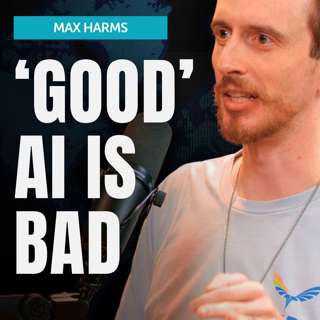
#236 – Max Harms on why teaching AI right from wrong could get everyone killed

#236 – Max Harms on why teaching AI right from wrong could get everyone killed

Most people in AI are trying to give AIs ‘good’ values. Max Harms wants us to give them no values at all. According to Max, the only safe design is an AGI that defers entirely to its human operators, ...

24 Feb 2h 41min
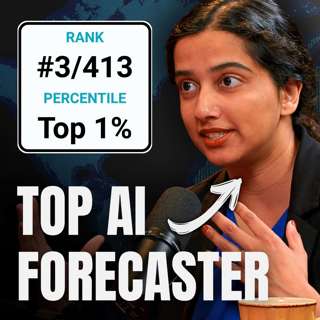
#235 – Ajeya Cotra on whether it’s crazy that every AI company’s safety plan is ‘use AI to make AI safe’

#235 – Ajeya Cotra on whether it’s crazy that every AI company’s safety plan is ‘use AI to make AI safe’

Every major AI company has the same safety plan: when AI gets crazy powerful and really dangerous, they’ll use the AI itself to figure out how to make AI safe and beneficial. It sounds circular, almos...

17 Feb 2h 54min
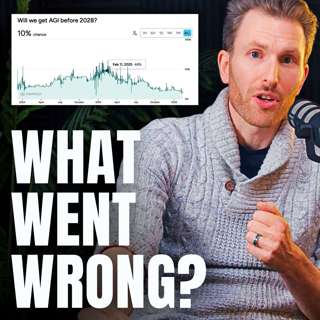
What the hell happened with AGI timelines in 2025?

What the hell happened with AGI timelines in 2025?

In early 2025, after OpenAI put out the first-ever reasoning models — o1 and o3 — short timelines to transformative artificial general intelligence swept the AI world. But then, in the second half of ...

10 Feb 25min

Populært innen Fakta

fastlegen
dine-penger-pengeradet
relasjonspodden-med-dora-thorhallsdottir-kjersti-idem
rss-strid-de-norske-borgerkrigene
foreldreradet
treningspodden
rss-sunn-okonomi
jakt-og-fiskepodden
takk-og-lov-med-anine-kierulf
sinnsyn
merry-quizmas
gravid-uke-for-uke
rss-kunsten-a-leve
rss-kull
hagespiren-podcast
hverdagspsyken
rss-var-forste-kaffe
fryktlos
rss-mann-i-krise-med-sagen
smart-forklart