#241 – Richard Moulange on how now AI codes viable genomes from scratch and outperforms virologists at lab work — what could go wrong?

#241 – Richard Moulange on how now AI codes viable genomes from scratch and outperforms virologists at lab work — what could go wrong?

Last September, scientists used an AI model to design genomes for entirely new bacteriophages (viruses that infect bacteria). They then built them in a lab. Many were viable. And despite being entirely novel some even outperformed existing viruses from that family.

That alone is remarkable. But as today’s guest — Dr Richard Moulange, one of the world’s top experts on ‘AI–Biosecurity’ — explains, it’s just one of many data points showing how AI is dissolving the barriers that have historically kept biological weapons out of reach.

For years, experts have reassured us that ‘tacit knowledge’ — the hands-on, hard-to-Google lab skills needed to work with dangerous pathogens — would prevent bad actors from weaponising biology. So far, they’ve been right.

But as of 2025 that reassurance is crumbling. The Virology Capabilities Test measures exactly this kind of troubleshooting expertise, and finds that modern AI models crushed top human virologists even in their self-declared area of greatest specialisation and expertise — 45% to 22%.

Meanwhile, Anthropic’s research shows PhD-level biologists getting meaningfully better at weapons-relevant tasks with AI assistance — with the effect growing with each new model generation.

In today’s conversation, Richard and host Rob Wiblin discuss:

  • What AI biology tools already exist
  • Why mid-tier actors (not amateurs) are the ones getting the most dangerous boost
  • The three main categories of defence we can pursue
  • Whether there’s a plausible path to a world where engineered pandemics become a thing of the past.

Learn more and read the full transcript on the 80,000 Hours website.

This episode was recorded on January 16, 2026. Since recording this episode, Richard has seconded to the UK Government — please note that his views expressed here are entirely his own.

Links to learn more, video, and full transcript: https://80k.info/rm

Announcements:

  1. Our new book is available to preorder: 80,000 Hours: How to have a fulfilling career that does good is written by our cofounder Benjamin Todd. It’s a completely revised and updated edition of our existing career guide, with a big new updated section on AI — covering both the risks and the potential to steer it in a better direction, and how AI automation should affect your career planning and which skills one chooses to specialise in. Preorder now: https://geni.us/80000Hours
  2. We're hiring contract video editors for the podcast! For more information, check out the expression of interest page on the 80,000 Hours website: https://80k.info/video-editor

Chapters:

  • Cold open (00:00:00)
  • Who’s Richard Moulange? (00:00:31)
  • AI can now design novel viruses (00:01:11)
  • The end of the 'tacit knowledge' barrier (00:04:42)
  • Are risks from bioterrorists overstated? (00:18:50)
  • The 3 key disasters AI makes more likely (00:23:14)
  • Which bad actors does AI help the most? (00:30:43)
  • Experts are more scary than amateurs (00:42:07)
  • Barriers to bioterrorists using AI (00:47:32)
  • AI biorisks are sometimes dismissed (and that’s a huge mistake) (00:49:43)
  • Advanced AI biology tools we already have or will soon (01:05:12)
  • Rob argues that the situation is hopeless (01:10:57)
  • Intervention #1: Limit access (01:19:38)
  • Intervention #2: Get AIs to refuse to help (01:34:28)
  • Intervention #3: Surveillance and attribution (01:44:18)
  • Intervention #4: Universal vaccines and antivirals (01:58:28)
  • Intervention #5: Screen all orders for DNA (02:12:01)
  • AI companies talk about def/acc more than they fund it (02:21:57)
  • Can you build a profitable business solving this problem? (02:28:44)
  • This doesn't have to interfere with useful science (much) (02:33:08)
  • What are the best low-tech interventions? (02:35:16)
  • Richard's top request for AI companies (02:40:17)
  • Grok shows governments lack many legal levers (02:55:44)
  • Best ways listeners can help fix AI-Bio (02:58:54)
  • We might end all contagious disease in 20 years (03:06:12)

Video and audio editing: Dominic Armstrong, Milo McGuire, Luke Monsour, and Simon Monsour
Music: CORBIT
Camera operator: Jeremy Chevillotte
Transcripts and web: Elizabeth Cox and Katy Moore

Denne episoden er hentet fra en åpen RSS-feed og er ikke publisert av Podme. Den kan derfor inneholde annonser.

Episoder(364)

Luke Muehlhauser on the most important AI safety work nobody is doing

Luke Muehlhauser on the most important AI safety work nobody is doing

The US government spends 25 times more on military marching bands than on its AI safety institute. And that’s just one of the many institutions we’re missing as AI becomes more powerful and dangerous....

29 Okt 2h 36min
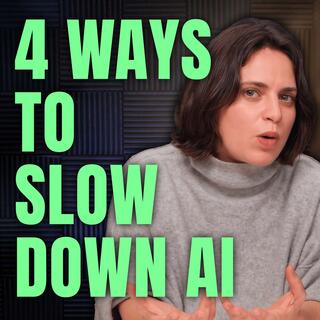
Why Silicon Valley can’t slow down AI on its own | Luisa Rodriguez

Why Silicon Valley can’t slow down AI on its own | Luisa Rodriguez

Two-thirds of Americans think AI is moving too fast. So do the people building it. So why the hell isn’t anyone slowing down?We can’t tell when models are too dangerous. We mostly don’t know how they ...

27 Okt 21min

Tom Milton on how we could verify a US–China deal on AI

Tom Milton on how we could verify a US–China deal on AI

If the US and China agreed to pause frontier AI training, how would either side confirm the other was complying? Today, Tom Milton argues, the most likely answer would be to shut down data centres ent...

23 Okt 1h 48min
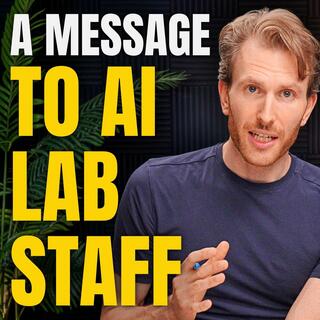
AI lab staff: Has your project been overtaken by events? 8 strategic updates | Rob Wiblin

AI lab staff: Has your project been overtaken by events? 8 strategic updates | Rob Wiblin

I have a plea for all staff at AI companies: reassess if your current role is still your best opportunity for impact. And if it’s not — move.Frontier lab staff listening to this show will mostly alrea...

21 Okt 14min

Introducing our new YouTube channel: Zershaaneh Talks AI

Introducing our new YouTube channel: Zershaaneh Talks AI

Our host Zershaaneh Qureshi has just launched a new YouTube channel: Zershaaneh Talks AI — featuring conversations about who should control AI, how to control AI, and who gets the benefits.The first e...

20 Okt 1min
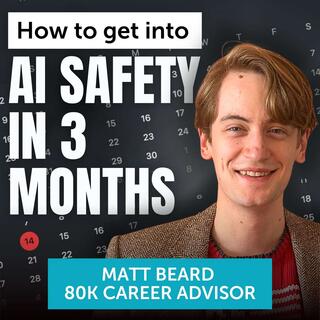
How to get into AI safety in 3 months (article reading by career advisor Matt Beard)

How to get into AI safety in 3 months (article reading by career advisor Matt Beard)

The AI safety field has grown by about 30x in the last eight years. Yet it is still in need of more people. Many want to help, but don’t know where to start. As an advisor at 80,000 Hours, Matt Beard ...

15 Okt 18min

OpenAI Security: Controlling Models is Now ‘Hell’ (AI Explained cross-post)

OpenAI Security: Controlling Models is Now ‘Hell’ (AI Explained cross-post)

This is an (unpaid) cross-post of a video from the podcast 'AI Explained', which Rob Wiblin thought you might be interested in.You can find the original on YouTube here. If you like it and want more s...

9 Okt 40min
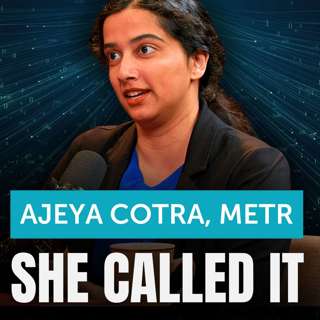
In 2023 Ajeya Cotra already knew what was coming (classic episode)

In 2023 Ajeya Cotra already knew what was coming (classic episode)

We're rereleasing some of older episodes that seem more relevant than ever with new rogue AI incidents now seemingly announced every day. Ajeya was one of three independent investigators into the Hugg...

8 Okt 2h 46min
Populært innen Fakta

fastlegen
dine-penger-pengeradet
fryktlos
relasjonspodden-med-dora-thorhallsdottir-kjersti-idem
rss-strid
foreldreradet
treningspodden
rss-ekteskapet
rss-bisarr-historie
jakt-og-fiskepodden
rss-kunsten-a-leve
sinnsyn
rss-orjasater
rss-kull
mikkels-paskenotter
rss-sarbar-med-lotte-erik
branncast
gravid-uke-for-uke
hverdagspsyken
hr-podden-2