
S9 Ep22: World War Trade

S9 Ep22: World War Trade

On 2 April 2025, the United States imposed tariffs on almost every country on earth. The next day, China responded with export controls on the entire world. In the space of one week, world trade had been weaponised as it has never been in peacetime.

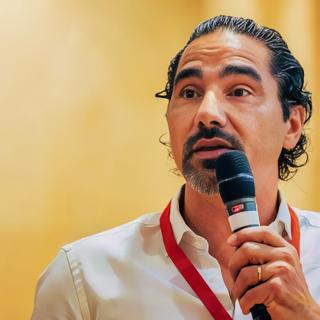
Richard Baldwin of IMD Business School, the founder of VoxEU and a former president of the Centre for Economic Policy Research, wrote World War Trade to make sense of the events of the last 12 months. The dramatic April salvos have settled into a trade Cold War; US tariffs and Chinese export controls are lodged in place, with neither side expecting the other to back down.

And yet world trade grew in 2025; exports from every country rose except from the US, which recorded its largest trade deficit. The rest of the world is self-organising a new order. When one country joins a rules-based regional agreement, the cost of staying out rises for the next. EU-Mercosur and EU-Australia deals, stalled for years, crossed the line. An expanding CPTPP and early alignment talks between the EU and CPTPP blocs are pulling more partners in. The old system was a cathedral built and maintained largely by the US; the architect burned it down. Something else is being built in its place.

The book discussed in this episode:

Baldwin, Richard. 2026. World War Trade: Conflict, Containment, and the Emergent World Trading Order. Rapid Response Economics 6. CEPR Press. Free to download from CEPR Press.

To cite this episode:

Phillips, Tim, and Richard Baldwin. 2026. "World War Trade." VoxTalks Economics (podcast).

Assign this as extra listening. The citation above is formatted and ready for a reading list or VLE.

About the guest

Richard Baldwin is Professor of International Economics at IMD Business School in Lausanne. He founded VoxEU, the Centre for Economic Policy Research's policy portal, and served as president of CEPR. His research spans trade policy, globalisation, and the political economy of trade; he is one of the architects of modern thinking on global value chains and the "second unbundling" of production. World War Trade is the sixth book in the CEPR Press Rapid Response Economics series.

Research cited in this episode

TACO (Trump Always Chickens Out) began as a joke in finance markets as a description of the pattern in which the US president announces aggressive trade measures and then partially or fully reverses them when markets react or negotiations begin. Baldwin argues that financial markets eventually priced in a TACO floor; once they believed Trump would back down before a full market meltdown, they stopped reacting to his escalations as if they were terminal. The dynamic makes tariff threats simultaneously more frequent and less credible.

Domino regionalism describes the self-reinforcing logic by which regional trade agreements attract new members. When one economy gains preferential access to a large market, the cost of staying outside that agreement rises for its trading partners; that pressure brings in the next country, which raises the cost for the next, and so on. Baldwin identified this mechanism in the regional trade wave of the 1990s and argues it is now operating again, accelerated by the uncertainty created by US and Chinese trade weapons. The EU-Mercosur deal unblocking was the trigger; EU-Australia followed within weeks.

G-0 world is a concept developed by political scientist Ian Bremmer to describe a world in which no single country or group of countries provides consistent global leadership. Baldwin draws on this framework to explain why regional conflicts and trade disputes have become harder to contain since the US began stepping back from its hegemonic role; the trade cold war is one expression of that leadership vacuum, but so is the reduced capacity to broker deals in the Middle East or manage the Black Sea grain corridor.

CPTPP (Comprehensive and Progressive Agreement for Trans-Pacific Partnership) is a rules-based regional trade agreement covering eleven countries across Asia and the Pacific, including Japan, Canada, Australia, Vietnam, and the United Kingdom. It operates without US or Chinese membership and maintains deep disciplines on intellectual property, investment, and trade in services. Baldwin identifies it, alongside the EU, as one of the two main "pools of predictability" around which the new post-war trading order is forming. The two blocs have opened alignment discussions that, if concluded, would bring a very large share of world trade under compatible rules.

RCEP (Regional Comprehensive Economic Partnership) is a large but shallower regional agreement covering much of Asia, including China, Japan, South Korea, Australia, and the ten ASEAN nations. It involves Chinese leadership and does not carry the depth of disciplines found in CPTPP. Baldwin notes that it is rules-based and that as long as China plays by those rules it could enlarge; but it has not attracted the same wave of new joiners as CPTPP and the EU framework.

The EU Anti-Coercion Instrument is a European Union mechanism, adopted in 2023, allowing the EU to retaliate against third countries that use trade or economic measures to coerce member states into changing their policies. Baldwin cites it as an example of the "building bunkers" response adopted by many economies; rather than retaliating directly against US tariffs, countries are changing their domestic laws to give themselves tools to counter future coercion without breaching WTO rules.

More VoxTalks Economics episodes

This is the second time Richard Baldwin has discussed the 2025 trade upheaval on VoxTalks Economics. He appeared alongside Gene Grossman of Princeton in What's Next for Trump's Tariffs, broadcast in January 2026, which covered the seismic moves of 2025 as they were unfolding.

Denne episoden er hentet fra en åpen RSS-feed og er ikke publisert av Podme. Den kan derfor inneholde annonser.

Episoder(461)

S9 Ep34: Making defence spending pay

S9 Ep34: Making defence spending pay

Defence spending is rising whether voters like it or not. The UK has committed to 2.5% of national income and aims for nearer 3.5% over the next decade, £30bn a year for each percentage point. What do...

19 Jun 26min

S9 Ep33: Did the Sewing Machine Liberate Women?

S9 Ep33: Did the Sewing Machine Liberate Women?

In January 1860 the New York Times gave its blessing to a new machine: the sewing machine. These "iron needle-women", it wrote, were the only invention that could be claimed “chiefly for women's benef...

12 Jun 19min

S9 Ep32: The digital money supply

S9 Ep32: The digital money supply

Every day, billions of transactions settle between strangers who have no idea which bank the other uses. That lack of friction is not automatic. Nine-tenths of the money in daily circulation has been ...

5 Jun 27min

S9 Ep31: How well does patent screening work?

S9 Ep31: How well does patent screening work?

Someone once held a patent on the swing. A piece of wood. Two ropes. The US Patent Office granted it. How often does that actually happen, and what does it cost when the system gets it wrong? Or, how ...

29 Mai 32min

S9 Ep30: Redefining the monetary standard

S9 Ep30: Redefining the monetary standard

The fiat money system has survived the Great Inflation, the global financial crisis, and a pandemic. But can it survive digital currencies?Bitcoin and the blockchain solved a genuine problem in comput...

22 Mai 26min

S9 Ep29: Guns and Butter

S9 Ep29: Guns and Butter

Europe's NATO members have pledged 3.5% of GDP to rearmament. The political argument is already about which social programmes will be sacrificed to pay for this, when the government chooses guns inste...

15 Mai 21min

S9 Ep28: Immigration and integration in Europe

S9 Ep28: Immigration and integration in Europe

More than one in eight people living in the EU today was born in another country. In fourteen of the bloc's largest economies, it is closer to one in six. For ten years, the same team of researchers h...

8 Mai 25min

S9 Ep27: The right to choose to die

S9 Ep27: The right to choose to die

Content note: this episode discusses assisted dying, end-of-life choices, and suicide. Some listeners may find the content distressing.In April 2024, Daniel Kahneman — one of the most influential psyc...

1 Mai 23min

Populært innen Business og økonomi

lydartikler-fra-aftenposten
stopp-verden
dine-penger-pengeradet
e24-podden
rss-penger-polser-og-politikk
rss-borsmorgen-okonominyhetene
rss-skravla-gar
rss-pa-konto
pengepodden-2
livet-pa-veien-med-jan-erik-larssen
finansredaksjonen
tid-er-penger-en-podcast-med-peter-warren
lederpodden
utbytte
okonomiamatorene
morgenkaffen-med-finansavisen
stormkast-med-valebrokk-stordalen
pengesnakk
rss-markedspuls-2
liberal-halvtime