The Normals | Episode 2

The Normals | Episode 2

Last time on The Normals, we learned that in the 1950s, the National Institutes of Health (NIH) wanted to recruit many healthy volunteers for basic research. Two peace churches, the Mennonites and the Church of the Brethren, had an excess of healthy human volunteers. The “Normals” recruited from these Anabaptist churches were surprisingly happy, even as they went through sometimes painful procedures. In this follow-up episode, we hear about how the sources of normal human subjects changed in the 1960s and why NIH researchers felt they needed to expand their search for normal people. We also learn about the first death in the program and the shifting motives on the parts of the researchers and volunteers. Final episode drops next Tuesday, April 21. All Normals episodes In this episode: Laura Stark, history professor at the Center for Medicine, Health, and Society at Vanderbilt University Ken Naas, former Normal patient Cindy Jansen, former Normal patient Dale Horst, former Normal patient Sarah Crespi, Science Podcast senior host and producer Additional resources: The Normals: A People’s History of Modern America in Five Human Experiments by Laura Stark Learn more about your ad choices. Visit megaphone.fm/adchoices

Denne episoden er hentet fra en åpen RSS-feed og er ikke publisert av Podme. Den kan derfor inneholde annonser.

Episoder(659)

Psychoactive substances helped spur Andean civilization, and breaking barriers to education

Psychoactive substances helped spur Andean civilization, and breaking barriers to education

First up on the podcast, producer Meagan Cantwell and freelance journalist Andrew Lawler discuss how psychoactive drugs might have shaped culture in pre-Inca Andean societies. They chat about how tech...

10 Sep 33min
Sex-reversing frogs, and Europe’s rising rates of a deadly tick-borne disease

Sex-reversing frogs, and Europe’s rising rates of a deadly tick-borne disease

First up on the podcast, Senior International Correspondent Richard Stone joins host Sarah Crespi to discuss how climate is pushing the disease-carrying tick Hyalomma marginatum out of its comfort zon...

3 Sep 27min

Making drugs in space, the man who fed India, and what narwhals can teach us about changing seas

Making drugs in space, the man who fed India, and what narwhals can teach us about changing seas

First up on the podcast, will it ever make economic sense to produce drugs and biomedical supplies in space? Associate Online News Editor Michael Greshko discusses his story on the researchers attempt...

27 Aug 49min
Why tracing cyclosporiasis is so tough, and a digestible probe for the microbiome

Why tracing cyclosporiasis is so tough, and a digestible probe for the microbiome

First up on the podcast, the News team’s Diverse Voices in Science Journalism interns Mona Patterson and Laura Martín Agudelo join host Sarah Crespi to talk over some of their reporting from the summe...

20 Aug 28min

A vest for blocking cosmic rays, and updates on NIH funding

A vest for blocking cosmic rays, and updates on NIH funding

First up on the podcast, ScienceInsider Editor Jocelyn Kaiser joins host Sarah Crespi for the latest science policy news. The two discuss recent grant cancellations by the U.S. National Institutes of ...

13 Aug 26min
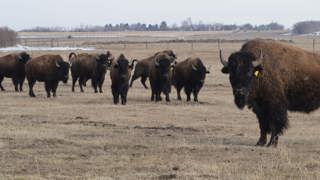
Did meat or fruit give people big brains, and protecting bison diversity using ancient DNA

Did meat or fruit give people big brains, and protecting bison diversity using ancient DNA

First up on the podcast, Deputy News Editor Michael Price discusses the history of the North American bison population, its decline, and resurrection—and links to Indigenous cultures. He’s joined by U...

6 Aug 38min

AI’s influence on society, measuring muscles, and a Crick biography

AI’s influence on society, measuring muscles, and a Crick biography

First up on the podcast, we catch up with Celina Zhao, a staff reporter for Science’s AI In Science reporting initiative. She talks with host Sarah Crespi about artificial intelligence’s knack for fin...

30 Jul 46min

Death in a gene-editing trial, and insect larvae surviving in deep waters

Death in a gene-editing trial, and insect larvae surviving in deep waters

First up on the podcast, freelance science journalist Brendan Borrell talks about his work reporting on the previously undisclosed death of a 6-year-old girl in a gene-editing clinical trial in China ...

23 Jul 37min

Populært innen Politikk og nyheter

giver-og-gjengen-vg
aftenpodden
forklart
aftenpodden-usa
stopp-verden
popradet
fotballpodden-2
nokon-ma-ga
dine-penger-pengeradet
det-store-bildet
rss-espen-lee-usensurert
hanna-de-heldige
rss-gukild-johaug
rss-ness
aftenbla-bla
e24-podden
unitedno
rss-penger-polser-og-politikk
frokostshowet-pa-p5
liverpoolno-pausepraten