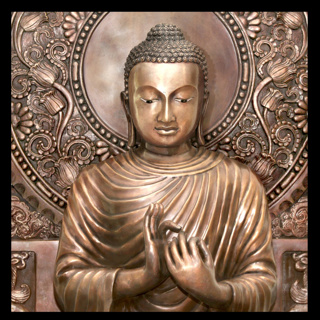
Anatta, the Buddha's Teaching on 'Not-Self' | Ajahn Dhammasiha | Dhammagiri

Anatta, the Buddha's Teaching on 'Not-Self' | Ajahn Dhammasiha | Dhammagiri

One of best known features of the Dhamma is the teachings on 'Anattā' ('not-Self' or 'non-self'). It is rightfully regarded as one of the hallmarks of the Buddha's teaching, something that distinguishes it from all other spiritual or philosophical doctrines and religious beliefs.

And yet, there is considerable bewilderment as to the exact meaning of anattā, even among knowledgeable, well practised Buddhists, or in scholarly discussions. For instance, one can often hear the opinion that the Buddha teaches that "there is no self".

But did the Buddha ever literally say: "there is no self"?


There is at least one occasion where the Buddha is asked point-blank by the wanderer Vacchagotta whether an Attā exists or whether it does not exist:

"kiṃ nu kho, bho Gotama, atth'attā ti? ... kiṃ pana, bho Gotama, natth'attā ti?"
[Saṃyutta Nikāya 44.10 = Connected Discourses 44.10]

Fascinatingly, the Buddha refuses an answer to either question, but instead remains silent.

And there is another quote where the Buddha explains that anyone who clings to either of the following two views as true and absolute:

"My self exists" ("atthi me attā ti")
"My self does not exist" ("n'atthi me attā ti")
[Majjhima Nikāya #2 'Sabbāsavasutta' = Middle Length Discourses #2 'All the Taints']

has "gone into the thicket of views, the desert of views, the contortion of views, the vacillation of views, the fetter of views".


So what, then, does the Buddha teach regarding self?
He teaches that:
"all phenomena are not self". "Sabbe dhammā anattā"
[e.g. Dhammapada Verse 279]

He teaches that form is not self, feeling is not self, perception is not self, volition is not self, consciousness is not self. He teaches that the eye is not self, forms are not self, ear, sounds, nose, fragrances, tongue, flavours, body, sensations, mind, ideas are not self.


Some may object that this is merely splitting hairs. They may feel that there is virtually no difference between saying that there is no self, and saying that all phenomena are not self. But it's a huge difference. The statement "there is no self" is building up a merely intellectual opinion, it is establishing a doctrine which in itself becomes ground for clinging, and immediately puts one in direct conflict with anyone who believes the opposite, that "there is a self".

On the other hand, to state "phenomena are not self", or "form is not self" is aimed at letting go. It's not an attempt at philosophical speculation, the development of views and opinions in one's head. Instead, it is a meditation instruction, it is a tool to be used to abandon attachment. The Dhamma is not trying to establish 'absolute' truth by means of words, thoughts and notions. It's not an abstract philosophy. Instead, it's a pragmatic instruction that is applicable ('opanāyika') to our personal situation, a medicine to treat the suffering we feel in our heart. It's whole purpose is simply to induce letting go. Once we contemplate and clearly see form, feeling, perception, intention and consciousness as not self, not me, and not mine, the heart lets go of them.

With this insight, the whole delusion of self is destroyed and abandoned for good, as it is impossible for the delusion of self to be established anywhere else than on these 5 groups of clinging. In fact, it's quite impossible to even meaningfully express an intellectual view of a self other than in reference to them.


⁠⁠⁠⁠⁠⁠⁠Dhammagiri Website⁠⁠⁠⁠⁠⁠⁠⁠⁠⁠⁠⁠⁠⁠⁠⁠⁠⁠⁠⁠⁠⁠⁠⁠⁠⁠⁠⁠⁠

⁠⁠⁠⁠⁠⁠⁠⁠⁠⁠⁠⁠⁠⁠⁠⁠⁠⁠⁠⁠⁠⁠⁠⁠⁠⁠⁠⁠⁠Our Spotify Playlists⁠⁠⁠⁠⁠⁠⁠⁠⁠⁠⁠⁠⁠⁠⁠⁠⁠⁠⁠⁠⁠⁠⁠⁠⁠⁠⁠⁠⁠

⁠⁠⁠⁠⁠⁠⁠⁠⁠⁠⁠⁠⁠⁠⁠⁠⁠⁠⁠⁠⁠⁠⁠⁠⁠⁠⁠⁠⁠Newsletter⁠⁠⁠⁠⁠⁠⁠⁠⁠⁠⁠⁠⁠⁠⁠⁠⁠⁠⁠⁠⁠⁠⁠⁠⁠⁠⁠⁠⁠

⁠⁠⁠⁠⁠⁠⁠⁠⁠⁠⁠⁠⁠⁠⁠⁠⁠⁠⁠⁠⁠⁠⁠⁠⁠⁠⁠⁠⁠Dhammagiri Youtube Channel⁠⁠⁠⁠⁠⁠⁠⁠⁠⁠⁠⁠⁠⁠⁠⁠⁠⁠⁠⁠⁠⁠⁠⁠⁠

⁠⁠⁠⁠⁠⁠⁠⁠⁠⁠⁠⁠⁠⁠⁠⁠⁠⁠⁠⁠⁠⁠Pics⁠⁠⁠


#anatta #notself #nonself #emptiness #sunyata #dhamma

Denne episoden er hentet fra en åpen RSS-feed og er ikke publisert av Podme. Den kan derfor inneholde annonser.

Episoder(503)

Feeling the Whole Body in Breath Meditation | Anapanasati | Mindfulness of Breathing | Ajahn Dhammasiha

Feeling the Whole Body in Breath Meditation | Anapanasati | Mindfulness of Breathing | Ajahn Dhammasiha

In the Buddha's own instructions for Breath Meditation (Anapanasati), the third step is: "Sabba-kaya-patisamvedi assasissami/passasissamit ti sikkhati""One trains oneself to breathe in/out feeling the...

6 Jul 21min

Protection against Snake Bite | Loving Kindness to Snakes | Khandhaparitta | Ajahn Dhammasiha

Protection against Snake Bite | Loving Kindness to Snakes | Khandhaparitta | Ajahn Dhammasiha

The Buddha has given a special Pali Recitation to protect the monks (or anyone) against snake bite, the Khandhaparitta. The power of this protection rests mostly on developing loving kindness (Metta) ...

29 Jun 43min

Contentment is the greatest wealth - Dhammapada Verse 204 | Teachings of the Buddha | Ajahn Moneyyo

Contentment is the greatest wealth - Dhammapada Verse 204 | Teachings of the Buddha | Ajahn Moneyyo

A teaching on Dhammapada Verse 204 of the Buddha: Contentmet is the greatest wealth.How can we relate to our material posessions in a skillfull way, so that we use them for a good purpose rather than ...

23 Jun 34min
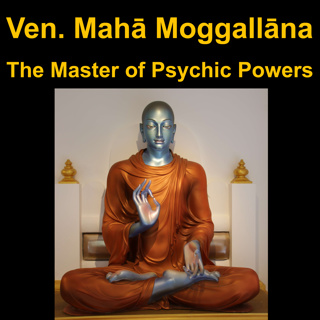
 Ven. Maha Moggallana - The Master of Psychic Powers - Great Disciples of the Buddha | Early Buddhism

Ven. Maha Moggallana - The Master of Psychic Powers - Great Disciples of the Buddha | Early Buddhism

The Buddha says that every perfectly awakened one has a pair of monk disciples who are the most outstanding among all the several thousand Arahants (completely liberated disciples). The Buddha calls t...

16 Jun 1h 9min
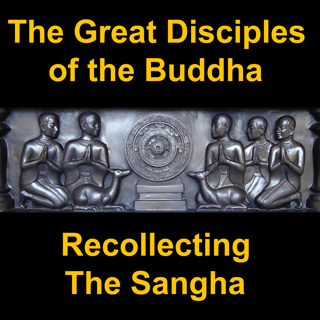
Great Disciples of the Buddha - Introduction - The benefits of recollecting the Sangha | Meditation | Ajahn Moneyyo

Great Disciples of the Buddha - Introduction - The benefits of recollecting the Sangha | Meditation | Ajahn Moneyyo

The Buddha was not only perfect in knowledge and conduct and developed supreme purity, compassion, wisdom and liberation but he was also the unsurpassable trainer of trainable people and teacher of go...

9 Jun 38min
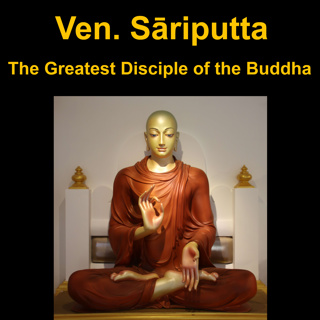
Ven. Sariputta - The Greatest Disciple of the Buddha foremost in wisdom | Great Disciples of the Buddha

Ven. Sariputta - The Greatest Disciple of the Buddha foremost in wisdom | Great Disciples of the Buddha

The Buddha says that every perfectly awakened one has a pair of monk disciples who are the most outstanding amongall the several thousand Arahants (completely liberated disciples).The Buddha calls the...

3 Jun 1h 2min
Thinking in Meditation | Vitakka & Bhavana | Buddhist Meditation and Thoughts | Ajahn Dhammasiha

Thinking in Meditation | Vitakka & Bhavana | Buddhist Meditation and Thoughts | Ajahn Dhammasiha

Ajahn Dhammasiha talks about thoughts coming up while we're meditating. How can we abandon unwholesome thoughts, and can we perhaps even use thoughts to further our meditation if they are of a wholeso...

25 Mai 26min
Faith Follower vs Wisdom Follower | Saddhanusari vs Dhammanusari | Noble Disciples | Ajahn Dhammasiha

Faith Follower vs Wisdom Follower | Saddhanusari vs Dhammanusari | Noble Disciples | Ajahn Dhammasiha

Ajahn Dhammasiha is asked about the meaning of Saddhanusari and Dhammanusari. Both are considered 'Noble Individuals' by the Buddha, although they have not yet attained stream entry. However, their sp...

18 Mai 29min

Populært innen Religion og åndelighet

rss-nesten-hele-uka-med-lepperod
lydartikler-fra-aftenposten
rss-lilli-isabelle
sektledere
sektpodden-2
rss-det-uforklarlige-med-victoria-skau
rss-den-andre-siden
rss-losrevet
ole-martin-og-einar-leser-bibelen
andelig-pafyll-hver-tirsdag
rss-normalt-paranormalt
rss-andelige-tanker-med-camillo
rss-paradigmepodden
dokka
rss-hel-med-mari
rss-kristen-norge
rss-pust-for-livet
vendepunkt
rss-espen-er-kristen
rss-tro-tvil-og-terapi-2