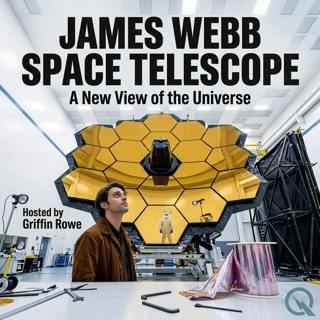
Webb helps discovery of TOI-715 b a Super Earth

Webb helps discovery of TOI-715 b a Super Earth

The discovery: A “super-Earth” ripe for further investigation orbits a small, reddish star that is, by astronomical standards, fairly close to us – only 137 light-years away. The same system also might harbor a second, Earth-sized planet. The bigger planet, dubbed TOI-715 b, is about one and a half times as wide as Earth, and orbits within the “conservative” habitable zone around its parent star. That’s the distance from the star that could give the planet the right temperature for liquid water to form on its surface. Several other factors would have to line up, of course, for surface water to be present, especially having a suitable atmosphere. But the conservative habitable zone – a narrower and potentially more robust definition than the broader “optimistic” habitable zone – puts it in prime position, at least by the rough measurements made so far. The smaller planet could be only slightly larger than Earth, and also might dwell just inside the conservative habitable zone. Astronomers are beginning to write a whole new chapter in our understanding of exoplanets – planets beyond our solar system. The newest spaceborne instruments, including those onboard NASA’s James Webb Space Telescope, are designed not just to detect these distant worlds, but to reveal some of their characteristics. That includes the composition of their atmospheres, which could offer clues to the possible presence of life. The recently discovered super-Earth, TOI-715 b, might be making its appearance at just the right time. Its parent star is a red dwarf, smaller and cooler than our Sun; a number of such stars are known to host small, rocky worlds. At the moment, they’re the best bet for finding habitable planets. These planets make far closer orbits than those around stars like our Sun, but because red dwarfs are smaller and cooler, the planets can crowd closer and still be safely within the star’s habitable zone. The tighter orbits also mean those that cross the faces of their stars – that is, when viewed by our space telescopes – cross far more often. In the case of planet b, that’s once every 19 days, a “year” on this strange world. So these star-crossing (“transiting”) planets can be more easily detected and more frequently observed. That’s the case for TESS (the Transiting Exoplanet Survey Satellite), which found the new planet and has been adding to astronomers’ stockpile of habitable-zone exoplanets since its launch in 2018. Observing such transits for, say, an Earth-sized planet around a Sun-like star (and waiting for an Earth year, 365 days, to catch another transit) is beyond the capability of existing space telescopes. Planet TOI-175 b joins the list of habitable-zone planets that could be more closely scrutinized by the Webb telescope, perhaps even for signs of an atmosphere. Much will depend on the planet’s other properties, including how massive it is and whether it can be classed as a “water world” – making its atmosphere, if present, more prominent and far This content was created in partnership and with the help of Artificial Intelligence AI.

Denne episoden er hentet fra en åpen RSS-feed og er ikke publisert av Podme. Den kan derfor inneholde annonser.

Episoder(150)

James Webb Space Telescope - A New View of the Universe - Quasar Impostors and Little Red Dots

James Webb Space Telescope - A New View of the Universe - Quasar Impostors and Little Red Dots

Join your host as James Webb Space Telescope: A New View of the Universe unpacks six stunning discoveries—quasar impostors revealed as massive star-forming galaxies, ancient reionization bubbles, blac...

19 Sep 14min

James Webb Space Telescope Reveals Brown Dwarfs, Early Black Holes, and Dynamic Ring Systems in Latest Discoveries

James Webb Space Telescope Reveals Brown Dwarfs, Early Black Holes, and Dynamic Ring Systems in Latest Discoveries

# The Space Cowboy: Riding the Cosmic Range with James Webb's Latest Discoveries **Podcast Episode Description:** Saddle up for another journey across the cosmic frontier with The Space Cowboy as we...

19 Sep 9min

James Webb Space Telescope - A New View of the Universe - Fake Quasars, Neptune's Reborn Moons

James Webb Space Telescope - A New View of the Universe - Fake Quasars, Neptune's Reborn Moons

James Webb Space Telescope reveals surprises: early quasars are star-blazing galaxies, a mysterious black hole star, Neptune's moon origins, tiny trans-Neptunian objects, and a distant planet losing i...

12 Sep 10min

James Webb Space Telescope Discovers Massive Star Forming Galaxies and Exotic Exoplanet Atmospheres

James Webb Space Telescope Discovers Massive Star Forming Galaxies and Exotic Exoplanet Atmospheres

# The Space Cowboy Show: Riding Through JWST's Latest Cosmic Discoveries **Episode Description:** Saddle up for another wild ride through the cosmos! In this episode of The Space Cowboy Show, we exp...

12 Sep 11min

James Webb Space Telescope - A New View of the Universe - Black Hole Stars and Hidden Galaxies

James Webb Space Telescope - A New View of the Universe - Black Hole Stars and Hidden Galaxies

Join our AI host on James Webb Space Telescope: A New View of the Universe as we explore hidden faint stars reshaping galaxy mass estimates, a mysterious "black hole star" at cosmic dawn, an archival ...

5 Sep 12min

James Webb Space Telescope Discovers Exoplanet Atmospheres and Early Universe Black Holes in Latest Cosmic Findings

James Webb Space Telescope Discovers Exoplanet Atmospheres and Early Universe Black Holes in Latest Cosmic Findings

# The Space Cowboy: James Webb Space Telescope's Latest Cosmic Discoveries **Episode Description:** Ride along with The Space Cowboy on a journey through the universe's most fascinating recent disco...

5 Sep 11min

James Webb Space Telescope - A New View of the Universe - The Black Hole Star and Cosmic Mysteries

James Webb Space Telescope - A New View of the Universe - The Black Hole Star and Cosmic Mysteries

Host Griffin Rowe explores JWST's latest discoveries: a mysterious "black hole star" in Cetus, undercounted galaxies with hidden planet-forming potential, an "early galaxy crisis" resolved, heavy wate...

29 Aug 14min

James Webb Space Telescope Reveals Hidden Stars in Early Galaxies and Accelerates Planet Formation Timeline

James Webb Space Telescope Reveals Hidden Stars in Early Galaxies and Accelerates Planet Formation Timeline

# Episode Description **Riding the Infrared Frontier: James Webb's Latest Cosmic Discoveries** Join The Space Cowboy for an action-packed journey through the newest James Webb Space Telescope discov...

29 Aug 10min

Populært innen Vitenskap

fastlegen
romkapsel
tingenes-tilstand
jss
forskningno
liberal-halvtime
villmarksliv
sinnsyn
rekommandert
rss-paradigmepodden
fjellsportpodden
grunnstoffene
nordnorsk-historie
rss-nysgjerrige-norge
smart-forklart
rss-rekommandert
tidlose-historier
vett-og-vitenskap-med-gaute-einevoll
rss-inn-til-kjernen-med-sunniva-rose
rss-overskuddsliv