USAID cuts linked to violence, unexpected parallels between humans and bacteria, and how to rule the world

USAID cuts linked to violence, unexpected parallels between humans and bacteria, and how to rule the world

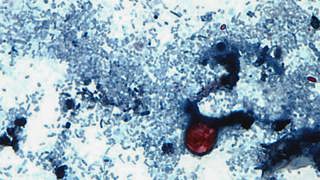
First up on the podcast, Senior International Correspondent Richard Stone joins host Sarah Crespi to discuss the surprising commonalities between our immune systems and the tools bacteria use to defend themselves against viruses. These unexpected parallels have become rich ground for researchers investigating new molecular biology tools and model systems for immune research. Next on the show, Dominic Rohner, a professor of economics at the Geneva Graduate Institute and University of Lausanne, talks about the impact of cuts in international aid on violent conflict in Africa. His team harnessed the natural experiment of the U.S. Agency for International Development (USAID) work stoppage ordered by the Trump administration in early 2025 to find links between the sudden withdrawal of high levels of aid to increases in conflict. See also Science’s 2025 news series on the impact of USAID cuts on children. Finally, Valerie Thompson, Science’s books and media editor, interviews undergraduate student and author Theo Baker. Baker wrote the book How to Rule the World: An Education in Power at Stanford University, which covers the heavy involvement of Silicon Valley investors in Stanford University and his investigation of research misconduct by former Stanford President Marc Tessier-Lavigne. See the full review here. This week’s episode was produced with help from Podigy. About the Science Podcast Learn more about your ad choices. Visit megaphone.fm/adchoices

Denne episoden er hentet fra en åpen RSS-feed og er ikke publisert av Podme. Den kan derfor inneholde annonser.

Episoder(644)

Disembodied human brains, immortal bits of sea cucumber, and fame in Galileo’s time

Disembodied human brains, immortal bits of sea cucumber, and fame in Galileo’s time

First up on the podcast, a company is using whole brains—maintained with specialized life support—to study new drugs. Freelance science journalist Sara Reardon joins host Sarah Crespi to talk about th...

28 Mai 45min

Fighting deepfakes, and using bacteria to deliver medicine inside the body

Fighting deepfakes, and using bacteria to deliver medicine inside the body

First up on the podcast, Meagan Cantwell produced a segment with Contributing Correspondent Kai Kupferschmidt on the fight against deepfakes. Kupferschmidt talks with Hany Farid, professor at the Univ...

14 Mai 31min

A team effort to save a giant fish, the power of moonlight, and how scientists can navigate a tough political environment

A team effort to save a giant fish, the power of moonlight, and how scientists can navigate a tough political environment

First up on the podcast, along Brazil’s Juruá River, local residents have been working with scientists to manage a giant fish called the arapaima—affecting the land, the people, and the economy. Contr...

7 Mai 53min

Watching a spiders’ heart beat, epigenetic ethics, and what science biographies reveal about fame

Watching a spiders’ heart beat, epigenetic ethics, and what science biographies reveal about fame

First up on the podcast, Online News Editor David Grimm shares a batch of fun stories with podcast host Sarah Crespi—from spider hearts racing when traffic gets loud to a disease-preventing house. Sta...

30 Apr 46min

Cleaning up uranium mining, and how the heart avoids cancer

Cleaning up uranium mining, and how the heart avoids cancer

First up on the podcast, freelance science and environmental journalist Quentin Septer joins host Sarah Crespi to talk about a controversial uranium mine getting fast-tracked in South Dakota. Septer c...

23 Apr 30min

The normals | Episode 3

The normals | Episode 3

The final of a three-part limited Science Podcast series that looks at the history of normal human subjects in research In episode two, we heard what happened to the normals program after church volu...

21 Apr 33min

How to keep quantum computers cool, whether prediction markets harm public health, and podcasting on podcasting

How to keep quantum computers cool, whether prediction markets harm public health, and podcasting on podcasting

First up on the podcast, quantum computers require extremely low temperatures—less than 1°C away from absolute zero. But getting down to those temperatures has usually required dilution fridges using ...

16 Apr 50min

Populært innen Politikk og nyheter

giver-og-gjengen-vg
aftenpodden
aftenpodden-usa
forklart
fotballpodden-2
popradet
stopp-verden
nokon-ma-ga
rss-espen-lee-usensurert
rss-gukild-johaug
lydartikler-fra-aftenposten
det-store-bildet
hanna-de-heldige
rss-ness
dine-penger-pengeradet
aftenbla-bla
rss-dannet-uten-piano
rss-penger-polser-og-politikk
chit-chat-med-helle
e24-podden