Australia claims it's 'on track' to meet its environment targets. Scientists disagree

Australia claims it's 'on track' to meet its environment targets. Scientists disagree

Australia is one of 17 "megadiverse" countries that account for 70% of Earth's biodiversity. However, Australia is unique in having the highest mammalian extinction rate in the world. That makes conservation on the island continent, where most of the wildlife is found nowhere else on Earth, all the more urgent.

Conservation and environmental scientists have come out against the Australian federal government's claim that it's "on track" to meet most of its targets under the Kunming-Montreal Global Biodiversity Framework agreed upon at the U.N. biodiversity summit in 2022. This week on the Mongabay Newscast, Euan Ritchie, a professor of wildlife ecology and conservation at Australia's Deakin University, and a councilor with the Biodiversity Council, an academic alliance in the country, argues why conservationists say the Australian government is failing its commitments.

"The short answer, unfortunately, is that Australia is doing terribly in terms of honoring its international obligations to meet those targets in the agreement. If we look at the number of threatened species in Australia, it's more than 2,200 now, and that list continues to increase," Ritchie says.

Despite being a relatively wealthy nation by gross domestic product per capita, Australia funds conservation at a diminutive scale compared to other industrialized countries. The latest annual budget allocates 0.06% of federal spending to nature. Ritchie and some 60 fellow experts suggest that it would only take about 1% of the federal budget to save most threatened species and restore soils and rivers. In 2024, the Wentworth Group of Concerned Scientists published its findings, which took six years to complete.

The Biodiversity Council has separately found that around 95% of Australians surveyed would support increased spending on the environment.

"Essentially, the federal government is ignoring a majority of Australians by not doing that," Ritchie says.

He argues the money to fund conservation already exists — or at least could easily exist by reducing subsidies for harmful industries (such as the fossil fuel industry), which currently amount to around A$26 billion ($19 billion) a year. Separately, a 25% tax on liquefied natural gas exports could generate A$17 billion ($12 billion) a year, a move nationwide polling suggests is supported by 70% of Australians.

Despite the perceived strong public support, Australian Prime Minister Anthony Albanese has ruled out a 25% tax on gas exports for the time being, which Ritchie says is very hard to understand, pointing to countries like Norway, which built its own sovereign wealth fund off similar measures. As of this writing, the Australian government has lost about A$70 billion ($50 billion) in revenue it could have collected had it taxed these resources, according to an online tracker by the Australia Institute, an independent think tank.

"We could bring in tens of billions of dollars in additional revenue if we taxed the resources that we are giving away, essentially in many cases for free," Ritchie says.

Instead of increasing direct conservation funding, the Australian government intends to close the gap by launching a "Nature Repair Market," a voluntary biodiversity offset scheme. It's essentially a way for industry and private investors to pay for the damage they cause. Research indicates this is unlikely to protect endangered wildlife and biodiversity without taxpayer funding. Other researchers from the University of Melbourne and the University of New South Wales have also weighed in, explaining that a biodiversity market is unlikely to work.

Ritchie says this is problematic for a number of other reasons, ranging from the complexity of biodiversity itself, to the way the government intends to measure environmental impacts from various projects. Currently, the national environmental standards in the Environment Protection and Biodiversity Conservation Act (EPBC) doesn't "account for cumulative impacts," Ritchie says.

"So if you imagine that you're a threatened species and you're widely distributed … Individual projects are not being assessed in relation to other projects that may also impact on that same species," he says. "So it is literally death by a thousand cuts."

Listen to a conversation on biodiversity offsets in Australia with Yung En Chee here.

Please take a minute to let us know what you think of our podcast here.

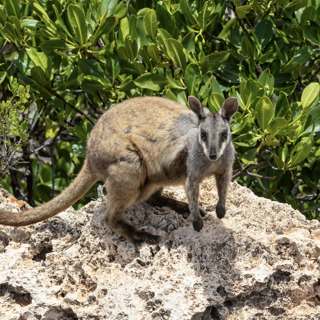
Image Credit: Black-flanked rock wallaby (Petrogale lateralis) in Cape Range National Park, Western Australia, Australia. The Australian government has classed the species as endangered under the EPBC Act. Image by Dsyzdek via Wikimedia Commons (CC BY-SA 4.0).

—-

Time codes

(00:00) 'Failing miserably' on the environment

(10:21) A 'Nature Repair Market' is not a solution

(23:47) New nature reform laws passed

(29:44) Plentiful sources of funding

(35:37) Native forest logging harms

Denne episoden er hentet fra en åpen RSS-feed og er ikke publisert av Podme. Den kan derfor inneholde annonser.

Episoder(378)

The exotic pet trade fuels biodiversity and disease risks. Here's how to curb it

The exotic pet trade fuels biodiversity and disease risks. Here's how to curb it

The global pet trade, particularly in exotic reptiles and amphibians, poses significant biodiversity and potential human health risks, scientists say; yet compared to other pressing crises like climat...

13 Okt 35min

Kynan Tegar wants 'a future that exists' for Indonesia's Indigenous communities

Kynan Tegar wants 'a future that exists' for Indonesia's Indigenous communities

Indigenous activist and filmmaker Kynan Tegar joins the Mongabay Newscast this week to discuss the impacts of the fires devastating Kalimantan, the Indonesian portion of the island of Borneo. Some 48,...

6 Okt 39min
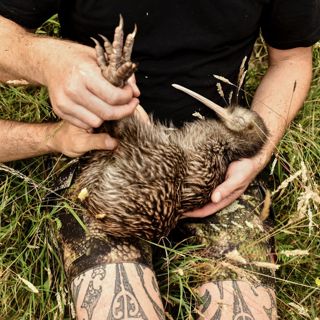
Iwi and communities bring kiwi back to Wellington after 150 years

Iwi and communities bring kiwi back to Wellington after 150 years

For the first time in 150 years, kiwi once again live in the hills surrounding Wellington, Aotearoa New Zealand. More than 250 manu ("birds" in the Māori language) were successfully translocated back ...

29 Sep 57min
Home Planet Fund succeeds in conservation by investing in local knowledge

Home Planet Fund succeeds in conservation by investing in local knowledge

This week on the Newscast, we're joined by Dilafruz Khonikboyeva, the founder of the Home Planet Fund, an independent, Indigenous-led nonprofit that provides funding for local and Indigenous communiti...

22 Sep 51min
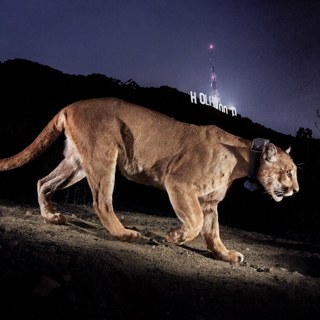
'Big Cats' highlights the remarkable power of photojournalism

'Big Cats' highlights the remarkable power of photojournalism

Jeff Sikich, the biologist for the National Park Service in Griffith Park, Los Angeles, thought that Steve Winter "was crazy" for wanting to capture a photograph of a mountain lion in front of the Hol...

15 Sep 47min
A health crisis for Peru's recently contacted people brings planetary health to the fore

A health crisis for Peru's recently contacted people brings planetary health to the fore

Mongabay staff writer Aimee Gabay joins the Newscast this week to discuss her reporting trip to the Peruvian Amazon, where she spoke with the Indigenous Matsés community. She made the trip initially ...

8 Sep 38min
Christiana Figueres and Garik Israelian on Jane Goodall's legacy and the search for truth

Christiana Figueres and Garik Israelian on Jane Goodall's legacy and the search for truth

A new award has been created in honor of late conservation icon Jane Goodall by the board of the Starmus Festival, an international gathering of scientists and artists to be held from Oct. 17-22 in Te...

1 Sep 51min

In Bhutan, the pursuit of happiness extends to the food system

In Bhutan, the pursuit of happiness extends to the food system

Bhutan is a Himalayan kingdom sandwiched between China and India. Forty percent of its 800,000 citizens work in the agriculture sector. The mountainous country is famous for its breathtaking landscape...

25 Aug 33min

Populært innen Vitenskap

fastlegen
tingenes-tilstand
romkapsel
sinnsyn
dekodet-2
liberal-halvtime
rss-nysgjerrige-norge
forskningno
rekommandert
fjellsportpodden
rss-paradigmepodden
rss-rekommandert
grunnstoffene
tidlose-historier
villmarksliv
nordnorsk-historie
rss-bondevennen
hva-er-greia-med
vett-og-vitenskap-med-gaute-einevoll
noen-har-snakket-sammen