

The Lifesaving Power of … Paperwork?
The Daily14 Mai 2023

The Lifesaving Power of … Paperwork?

In the final days of Marleny Mesa’s pregnancy, she could not shake the feeling that something was wrong. She could barely breathe, for one thing. For another, her anxiety and physical discomfort were approaching what felt like an unbearable peak. A week or so later, she delivered a tiny, squirming boy with jet black hair and soft, curious eyes. She and her husband, Andrés Noscue, named him Eliad. Marleny thought he was perfect, but her mother, a retired midwife, insisted that the placenta contained a hint of trouble. It was far too big, she said, and Eliad was too small, probably because he did not have enough room in her womb to grow. His grandmother thought he might need an incubator. Marleny thought he was fine, but when the baby was a few days old, she and Andrés traveled from the Jerusalén-San Luis Alto Picudito Indigenous reservation in Putumayo, Colombia, to take him to Villagarzón for a checkup, just to be safe.

This proved harder than they expected. The baby could not be seen at the hospital there until he had a civil identification or registration number, which he could not get without a birth certificate, which the hospital could not provide because the baby was born at home. Go to the registrar’s office, the nurses told Marleny and Andrés. But the registrar’s office only sent Andrés back to the hospital, where a different nurse told them to try the notary’s office instead. By then it was almost noon. The only bus of the day would be heading back to San Luis soon; if Andrés and his family missed it, they would have to cough up more money for room and board in town than they normally spent in a week. So they went home.

The problem of inadequate registries is most pressing in the low-income nations of Africa and Southeast Asia. But it is not confined to those regions. In Colombia, birth and death registration is especially spotty in Indigenous and Afro-descendant communities, where the national government tends to have little presence and registrars and notaries tend to apply the rules arbitrarily. A program known as Colombia Rural Vital was created to simplify and democratize this process.

This story was recorded by Audm. To hear more audio stories from publications like The New York Times, download Audm for iPhone or Android.

Subscribe today at nytimes.com/podcasts or on Apple Podcasts and Spotify. You can also subscribe via your favorite podcast app here https://www.nytimes.com/activate-access/audio?source=podcatcher. For more podcasts and narrated articles, download The New York Times app at nytimes.com/app.


Hosted by Simplecast, an AdsWizz company. See pcm.adswizz.com for information about our collection and use of personal data for advertising.

Episoder(2787)

Trump’s D.O.J. Went After the Fed. It Backfired.

Trump’s D.O.J. Went After the Fed. It Backfired.

The Trump administration’s decision to open a criminal investigation into the Federal Reserve chairman, Jerome H. Powell, has stunned the worlds of business and politics.Colby Smith and Glenn Thrush, ...

15 Jan 28min

Iran on the Brink

Iran on the Brink

Iran is experiencing expansive protests after economic grievances snowballed over the past two weeks into a broader challenge to the country’s authoritarian clerical rulers.In recent days, a full pict...

14 Jan 28min
The United States' Aspirations for Venezuela's Oil

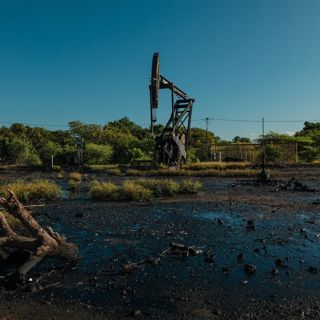
The United States' Aspirations for Venezuela's Oil

In the days since deposing Nicolás Maduro, President Trump has given several justifications for his dramatic actions in Venezuela. But perhaps most central to his ambitions is opening Venezuela’s oil ...

13 Jan 40min

‘A Breaking Point’: The Minneapolis Police Chief on ICE

‘A Breaking Point’: The Minneapolis Police Chief on ICE

Warning: This episode contains strong language.Just hours before a federal immigration officer killed Renee Good in her car, Brian O’Hara, the Minneapolis police chief, warned that a tragedy involving...

12 Jan 34min

'The Wirecutter Show': The True Cost of Recovering from the L.A. Wildfires, Part 1

'The Wirecutter Show': The True Cost of Recovering from the L.A. Wildfires, Part 1

On January 7, 2025, the Palisades and Eaton Fires erupted, eventually burning down more than 16,000 structures and killing at least 31 people, becoming among the most destructive and deadly wildfires ...

11 Jan 36min
'The Interview': George Saunders Says Ditching These Three Delusions Can Save You

'The Interview': George Saunders Says Ditching These Three Delusions Can Save You

The celebrated author on the challenges of being kind, the benefits of meditation and the reality check of death.Thoughts? Email us at theinterview@nytimes.comWatch our show on YouTube: youtube.com/@T...

10 Jan 52min

An Interview With the President

An Interview With the President

Four White House reporters from The New York Times sat down with President Trump on Wednesday for an extended interview in the Oval Office.David E. Sanger, one of the reporters, walks us through their...

9 Jan 50min
The R.F.K. Jr. Era of Childhood Vaccines

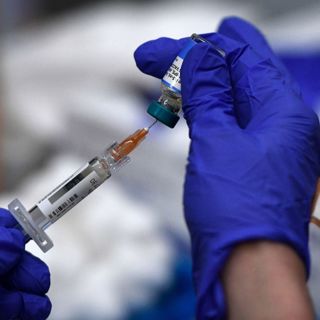
The R.F.K. Jr. Era of Childhood Vaccines

Warning: This episode contains strong language.The Centers for Disease Control and Prevention on Monday released new guidelines that dramaticaly cut down the number of childhood vaccines recommended b...

8 Jan 26min

Populært innen Politikk og nyheter

giver-og-gjengen-vg
aftenpodden
aftenpodden-usa
forklart
i-retten
stopp-verden
popradet
det-store-bildet
lydartikler-fra-aftenposten
rss-gukild-johaug
dine-penger-pengeradet
fotballpodden-2
rss-ness
nokon-ma-ga
hanna-de-heldige
aftenbla-bla
frokostshowet-pa-p5
unitedno
rss-penger-polser-og-politikk
rss-utenrikskomiteen-med-bogen-og-grasvik