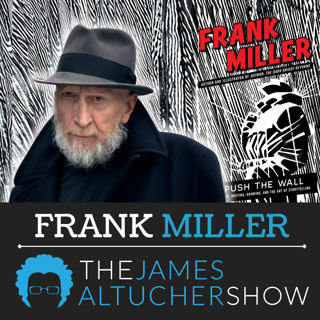
Frank Miller on Push the Wall, Batman, and Having No Plan B

Frank Miller on Push the Wall, Batman, and Having No Plan B

A Note from James:

This is a very special episode for me.

There have only been a few times in the history of this podcast when I’ve had the chance to sit down with one of my heroes. This is one of those times.

Frank Miller is one of the most important storytellers of my life. When I first picked up Batman: The Dark Knight Returns in 1986, it completely changed what I thought comics could be. This wasn’t just another Batman story. It was a revolution. Frank took Batman out of the colorful, campy world I grew up with and turned him into something darker, mythic, terrifying, and psychologically real.

There is a comic book industry before The Dark Knight Returns, and there is a comic book industry after The Dark Knight Returns. Every Batman movie since then carries Frank’s fingerprints in some way. But it wasn’t just Batman. Frank changed Daredevil. He created Ronin. He created Sin City. He showed that comics could handle adult stories, painful arcs, crime, tragedy, mythology, obsession, and moral ambiguity.

But what matters most to me is that Frank is a master storyteller. And I love storytelling. Whether it’s books, podcasts, articles, comics, or just how we make sense of our lives, story is everything.

So getting to sit down with Frank Miller and talk about Batman, myth, creativity, mentorship, discipline, and his new book, Push the Wall: My Life, Writing, Drawing, and the Art of Storytelling, was a dream come true.

This was my first in-person podcast in years. Jay drove up from Atlanta. I flew into the city. And yes, I brought my copy of The Dark Knight Returns for Frank to sign.


Episode Description:

Frank Miller didn’t just write and draw some of the most influential comics of the modern era. He changed the grammar of comics.

In this conversation, James sits down with Miller to talk about Batman: The Dark Knight Returns, Daredevil, Ronin, Sin City, and Miller’s new book, Push the Wall. The conversation begins with Batman, but quickly becomes a larger discussion about how characters become myths.

For Miller, Batman was never just a rich detective in a costume. The material was already there from the beginning: a child witnessing the murder of his parents, growing up without powers, building himself into a force through discipline, intelligence, and obsession. Miller’s goal was to pull that core truth out and make Batman stand beside older pulp and mythic figures like Zorro, The Shadow, and the hard-edged heroes of crime cinema.

James and Frank also talk about how myths are built around simple central values. Superman is hope. Batman is justice, vengeance, effort, and fear. The art is not in making those ideas complicated. The art is in placing them inside a human context so they feel emotionally true.

The discussion moves into the craft of comics itself: page layouts, panel borders, visual rhythm, and how the pictures carry most of the story. Miller reflects on the influence of Jack Kirby, Neal Adams, Denny O’Neil, Japanese samurai films, martial arts movies, Greek tragedy, Jean Giraud/Moebius, Lone Wolf and Cub, and the creative power of combining worlds that do not obviously belong together.

They also talk about mentorship. Miller describes calling Neal Adams from the phone book, bringing him drawings, and enduring brutally honest criticism. That toughness, he says, was part of the training. To survive as an artist, you need egoism without egotism: enough belief to keep coming back, but enough humility to keep learning.

The episode closes with practical advice for young artists today: go to conventions, build the strongest portfolio you can, seek out hard criticism, don’t chase only the biggest titles, protect your original ideas, and look for “losers” you can make great.


What You’ll Learn:

  • Why Frank Miller wanted Batman to become a myth, not just another superhero.
  • How The Dark Knight Returns helped move comics toward darker, more adult storytelling.
  • Why Batman’s lack of superpowers is exactly what makes him compelling.
  • How mythic characters are built around simple core themes like hope, vengeance, justice, or discipline.
  • Why comics are not just written stories with pictures, but a visual storytelling machine.
  • How Miller learned from Jack Kirby, Neal Adams, Denny O’Neil, samurai films, noir, Greek tragedy, and European comics.
  • Why creativity often comes from combining unrelated influences.
  • What Miller means by “egoism, but not egotism.”
  • Why young artists should seek out hard lessons instead of easy praise.
  • How to enter comics today without giving away original work too early.
  • Why determination, stamina, and a lack of Plan B shaped Miller’s career.
  • What Miller is working on next, including a new Western-style Sin City story.


Timestamped Chapters:

  • [03:41] Meeting Frank Miller
  • James begins by holding up Batman: The Dark Knight Returns and asking what it means to be known through one defining work.
  • [04:00] Before and After The Dark Knight Returns
  • Why James sees Miller’s Batman as a dividing line in comic book history.
  • [05:07] Turning Batman Into a Psychological Condition
  • James asks how Miller transformed Batman from a campy hero into something darker, mythic, and terrifying.
  • [05:49] Batman as Myth
  • Frank explains that his first impulse was to make Batman stand with figures like The Shadow, Zorro, and the hard-edged heroes of crime cinema.
  • [06:37] Pulling Comics Out of Childhood
  • Miller describes his desire to push comics into adolescence and beyond the conventions of disposable monthly stories.
  • [06:59] The Origin Was Always There
  • Why Batman’s trauma, lack of powers, and self-made discipline were already embedded in the character from the beginning.
  • [07:50] Superman Descends, Batman Rises
  • Frank contrasts Superman as a figure of light with Batman as something that comes up from the darkness.
  • [08:44] What Makes a Character Mythic?
  • Miller explains that great characters usually have a simple central theme: hope, justice, vengeance, effort, or fear.
  • [10:30] King Arthur, Luke Skywalker, and the Power of Objects
  • The conversation turns to swords, lightsabers, utility belts, and how mythic symbols carry stories across generations.
  • [11:54] Breaking the Page
  • James and Frank discuss how Kirby, Neal Adams, and others shattered conventional panel layouts before Miller pushed those techniques further.
  • [12:35] A Tradition of Revolution
  • Frank explains why creativity means breaking a few eggs while still working inside a lineage.
  • [13:00] When the Page Tells the Story
  • How panel size, shape, and visual composition can carry emotional meaning without words.
  • [14:10] What Would Frank Do With Batman Now?
  • Miller says the point is not to reinvent Batman for novelty’s sake, but to find a good story.
  • [15:00] Moving Daredevil Into Hell’s Kitchen
  • James asks how Miller brought his own New York experience into Daredevil’s world.
  • [15:45] Fear, Editors, and Media Conglomerates
  • Frank reflects on how creative fear moves through artists, editors, bosses, and corporate structures.
  • [16:17] Are New Comic Stories Still Possible?
  • Miller argues that the talent and creative energy are still there, even if it does not always come from predictable places.
  • [17:40] How Comics Survived Their Own Deaths
  • Frank traces comic books from the attacks of the 1950s to Marvel, underground comics, and the direct market.
  • [19:30] What Young Artists Need Today
  • When James asks what skill matters beyond drawing and storytelling, Miller answers: determination.
  • [20:01] No Plan B
  • Frank explains that he never had a concept of failure because comics were what he had wanted to do since his earliest memories.
  • [20:47] Writing vs. Storytelling
  • Why, in comics, most of the storytelling happens in the pictures.
  • [21:00] Neal Adams and the Hard Lessons
  • Miller remembers calling Neal Adams from the phone book and receiving tough critiques that tested his character.
  • [22:34] Egoism, Not Egotism
  • Frank explains the balance an artist needs: enough ego to return after criticism, but not so much that they stop learning.
  • [22:51] Stealing From the Greats
  • Why artists must study and learn from earlier practitioners rather than pretending genius arrives fully formed.
  • [23:47] Batman Is Possessed, Not Obsessed
  • Frank corrects James’s description of Batman and explains that Batman is filled with an eternal force.
  • [24:50] Daredevil, Samurai, Crime, and Greek Tragedy
  • How Miller fused martial arts films, ninja stories, crime movies, and Greek tragedy into his Daredevil run.
  • [27:01] Stick, Elektra, and the Sensei Archetype
  • James and Frank trace the mentor-student relationship through Daredevil, samurai stories, and mythic training narratives.
  • [27:47] Lone Wolf and Cub, Moebius, and Ronin
  • How Forbidden Planet exposed Miller to Japanese and European comics, leading to the hybrid world of Ronin.
  • [28:35] The Power of Intersections
  • Why combining Westerns, samurai stories, science fiction, noir, and mythology can create something new.
  • [30:08] Discipline vs. Chaos
  • James identifies a recurring theme in Miller’s work: taking chaos and molding it into purpose.
  • [30:40] Batman Becomes the Father
  • Frank explains the final image of The Dark Knight Returns: the orphan becoming the father.
  • [31:24] Why So Many Heroes Are Orphans
  • Miller says the lone child against the elements is at the heart of heroic storytelling.
  • [32:36] Guilt, Control, and Batman’s Unhealed Wound
  • James and Frank discuss whether Batman is driven by guilt or by the need to take control after childhood trauma.
  • [33:43] Pushing Batman to the Extreme
  • Why Miller made the Batmobile a tank and amplified the character’s core qualities.
  • [33:50] How Frank Would Start Today
  • Miller advises young artists to attend conventions, show their work, use the internet, and seek honest feedback.
  • [34:36] Seek Hard Criticism
  • Why young creators should avoid people who only make them feel good.
  • [34:59] Don’t Chase the Biggest Titles
  • Miller advises artists to look for overlooked characters—or better yet, create something themselves.
  • [35:21] Find a Loser and Do It Right
  • A practical creative strategy: identify something bad, understand why it fails, and build the better version.
  • [35:41] Gatekeepers and New Avenues
  • Frank weighs the traditional obstacles against new channels for artists to get discovered.
  • [36:27] Protect Your Original Ideas
  • Why young artists should be careful about handing over original material too early.
  • [37:00] Humility, Listening, and Surviving the Business
  • Miller adds that determination must be paired with humility and a willingness to learn how the industry works.
  • [37:58] Batman at 55—and What Comes Next
  • James reflects on Batman’s age in The Dark Knight Returns, and Frank jokes that next time Batman may be 80.
  • [38:36] A New Western Sin City
  • Frank talks about working on a new Sin City story with a Western angle.
  • [38:52] Push the Wall and the Art of Creativity
  • James closes by describing Miller’s new book as a guide to creativity and inspiration.
  • [39:20] A Dream Interview Comes Full Circle
  • James thanks Frank, explains the personal significance of the episode, and asks him to sign The Dark Knight Returns.


Additional Resources:


See Privacy Policy at https://art19.com/privacy and California Privacy Notice at https://art19.com/privacy#do-not-sell-my-info.

Denne episoden er hentet fra en åpen RSS-feed og er ikke publisert av Podme. Den kan derfor inneholde annonser.

Episoder(1422)

Dr. David Sinclair: The First Human Trial of an Age-Reversal Therapy

Dr. David Sinclair: The First Human Trial of an Age-Reversal Therapy

A Note from James:I’ve been obsessed with anti-aging and longevity science for a long time. I’ve had many longevity researchers on the podcast, but this episode feels different because something we’ve...

3 Jul 49min

How to Find Sure Things on Kalshi | Prediction Markets #1

How to Find Sure Things on Kalshi | Prediction Markets #1

Episode Description:Prediction markets allow people to trade contracts tied to real-world events—from elections and weather to rocket launches, airport traffic, awards, and the words a public figure m...

26 Jun 22min

Zynga Founder Mark Pincus: Why All New Fails + How to Copy to Millions

Zynga Founder Mark Pincus: Why All New Fails + How to Copy to Millions

A Note from James:Mark Pincus is one of the true OGs of the internet. You probably know him as the founder of Zynga, the company behind FarmVille, Zynga Poker, and Words With Friends. Zynga was eventu...

25 Jun 1h 21min

From the Archive: The 7 Techniques to Influence Anyone of Anything | Robert Cialdini

From the Archive: The 7 Techniques to Influence Anyone of Anything | Robert Cialdini

A Note from James:If I could tell my children to read one post of mine, it would be this post.Influence is how they will navigate a world of uncertainty.Robert Cialdini is the most influential person ...

19 Jun 1h 7min

From the Archive: Your Money Blueprint: Why You Keep Earning and Losing the Same Amount | T. Harv Eker

From the Archive: Your Money Blueprint: Why You Keep Earning and Losing the Same Amount | T. Harv Eker

Episode Description:In this episode from the early days of The James Altucher Show, James sits down with T. Harv Eker, author of Secrets of the Millionaire Mind, to examine why earning money, keeping ...

13 Jun 58min

The Viral Chess Cheating Scandal with Anal Beads: Ben Mezrich Reveals the Full Story

The Viral Chess Cheating Scandal with Anal Beads: Ben Mezrich Reveals the Full Story

A Note from James:Oh my gosh, one of my favorite guests ever: Ben Mezrich.Ben wrote Bringing Down the House, which became the movie 21. He wrote The Accidental Billionaires, which became The Social Ne...

2 Jun 59min

Opus Dei: The Cult of Dark Money, Human Trafficking, and Right-Wing Conspiracy inside the Catholic Church | Gareth Gore

Opus Dei: The Cult of Dark Money, Human Trafficking, and Right-Wing Conspiracy inside the Catholic Church | Gareth Gore

A Note from James:Have you ever read The Da Vinci Code?That book was definitely a page-turner. Before I read it, I had never really heard of Opus Dei. And after today’s conversation with Gareth Gore, ...

26 Mai 58min

Populært innen Business og økonomi

stopp-verden
lydartikler-fra-aftenposten
dine-penger-pengeradet
e24-podden
rss-penger-polser-og-politikk
rss-borsmorgen-okonominyhetene
rss-skravla-gar
pengepodden-2
finansredaksjonen
livet-pa-veien-med-jan-erik-larssen
rss-pa-konto
utbytte
okonomiamatorene
morgenkaffen-med-finansavisen
aftenbladet-intervjuer
lederpodden
tid-er-penger-en-podcast-med-peter-warren
liberal-halvtime
pengesnakk
rss-impressions-2