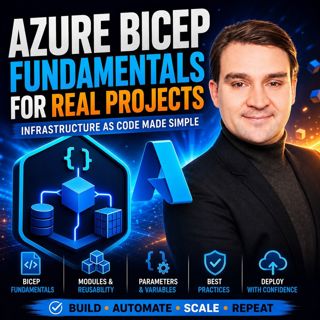
Azure Bicep Fundamentals for Real Projects

Azure Bicep Fundamentals for Real Projects

Learning Azure Bicep is easy. Building infrastructure that survives real-world enterprise environments is something entirely different. In this episode of the M365 FM Podcast, host Mirko Peters explores what separates hobbyist Infrastructure as Code from production-ready cloud architecture. Rather than focusing on syntax alone, this episode dives into the architectural thinking behind Azure Bicep, showing how modern organizations design scalable, secure, and governable Azure environments using Infrastructure as Code, Azure Policy, Deployment Stacks, Azure Verified Modules, Management Groups, and enterprise governance. You'll learn why Bicep is far more than a replacement for ARM Templates. It has become Microsoft's strategic language for defining Azure infrastructure, enforcing governance, automating deployments, and enabling cloud platforms that remain maintainable as organizations grow. Whether you're deploying your first storage account or designing enterprise landing zones across hundreds of Azure subscriptions, this episode provides the principles needed to build infrastructure that lasts.

WHY BICEP IS MORE THAN BETTER SYNTAX
Many developers view Bicep simply as an easier way to write ARM Templates. While the cleaner syntax, reusable modules, and improved readability are significant improvements, Microsoft's long-term vision goes much further. Bicep has evolved into the language that defines Azure governance, policy, security baselines, and infrastructure lifecycle management. Modern Infrastructure as Code is no longer about automating deployments—it's about codifying architectural decisions that remain consistent across teams, subscriptions, and cloud environments.

THINKING LIKE A CLOUD ARCHITECT
One of the central themes throughout the episode is the difference between automation and architecture. Real-world Bicep projects are built around organizational standards rather than individual deployments. Topics include:
  • Infrastructure as Code
  • Enterprise architecture
  • Governance as Code
  • Management Groups
  • Azure Landing Zones
  • Resource ownership
  • Organizational standards
  • Platform engineering
  • Cloud operating models
  • Infrastructure lifecycle
You'll discover why enterprise Bicep templates become long-term blueprints that survive team changes, organizational growth, and evolving business requirements.

BUILDING REUSABLE BICEP MODULES
As Azure environments become larger, reusable modules become the foundation of maintainable infrastructure. The episode explains how well-designed modules encapsulate organizational decisions including security baselines, naming conventions, monitoring requirements, compliance standards, and networking patterns. Rather than copying infrastructure between projects, organizations build internal module libraries that allow development teams to deploy secure infrastructure while automatically following corporate standards. The discussion covers:
  • Azure Verified Modules (AVM)
  • Resource modules
  • Pattern modules
  • Platform modules
  • Module registries
  • Versioning
  • Parameter validation
  • Variables
  • Outputs
  • Semantic versioning
DEPLOYMENT STACKS AND INFRASTRUCTURE LIFECYCLE
One of Microsoft's biggest Infrastructure as Code innovations is Deployment Stacks. Unlike traditional ARM deployments, Deployment Stacks introduce state awareness, allowing Azure to understand which resources belong together throughout their lifecycle. The episode explores how Deployment Stacks simplify environment management, resource cleanup, brownfield migrations, and governance while reducing orphaned resources and configuration drift. You'll also learn how Deployment Stacks compare with Terraform's state management model and why this represents a major architectural shift for Azure-native deployments.

MANAGEMENT GROUPS, POLICY, AND GOVERNANCE
Enterprise Azure environments cannot be managed one subscription at a time. This episode explains why Management Groups form the true control plane for Azure governance. Topics include:
  • Azure Policy
  • Policy Initiatives
  • RBAC
  • Least Privilege
  • Management Group hierarchy
  • Subscription governance
  • Compliance
  • Security baselines
  • Governance as Code
  • Platform engineering
By defining governance at the Management Group level, organizations can automatically enforce consistent security, compliance, and operational standards across hundreds of subscriptions.

BUILDING ENTERPRISE LANDING ZONES
Azure Landing Zones are much more than preconfigured subscriptions. They provide complete enterprise-ready cloud environments including networking, monitoring, identity integration, governance, security controls, and operational best practices. The discussion explores how organizations compose Landing Zones using reusable Bicep modules, allowing application teams to deploy workloads into standardized cloud environments without sacrificing flexibility.

BICEP VS TERRAFORM
One of the most common questions facing cloud architects is whether to standardize on Azure Bicep or Terraform. Rather than declaring a winner, this episode explains the strengths of both platforms. Bicep provides immediate support for new Azure services, seamless Azure integration, and simplified Azure-native deployments. Terraform remains an excellent choice for organizations operating across Azure, AWS, Google Cloud, and hybrid environments. The right decision depends on business requirements, governance strategy, and long-term platform goals—not simply personal preference.

WHO SHOULD LISTEN?
This episode is perfect for:
  • Azure Architects
  • Cloud Engineers
  • DevOps Engineers
  • Platform Engineers
  • Infrastructure Engineers
  • Azure Administrators
  • Enterprise Architects
  • Cloud Consultants
  • IT Decision Makers
  • Microsoft MVPs
  • Anyone learning Azure Bicep
Whether you're writing your very first Bicep file, migrating from ARM Templates, implementing Azure Landing Zones, designing enterprise governance, or building reusable Infrastructure as Code libraries, this episode provides practical guidance drawn from real-world cloud architecture. If you want to move beyond simple deployments and start building Azure environments that are secure, scalable, reusable, and maintainable for years to come, this episode offers a comprehensive foundation for mastering Azure Bicep in real enterprise projects.

Become a supporter of this podcast: https://www.spreaker.com/podcast/m365-fm-modern-work-security-and-productivity-with-microsoft-365--6704921/support.

Denne episoden er hentet fra en åpen RSS-feed og er ikke publisert av Podme. Den kan derfor inneholde annonser.

Episoder(704)

Designing the Future. AI, UX, and the Next Generation of Microsoft Power Platform with Tchesco Ayih [MVP-MCT]

Designing the Future. AI, UX, and the Next Generation of Microsoft Power Platform with Tchesco Ayih [MVP-MCT]

In this episode of the M365 Podcast, Mirko Peters sits down with Tchesco Ayih, Microsoft MVP, Microsoft Certified Trainer (MCT), international speaker, mentor, and Power Platform expert. Tchesco share...

10 Jul 50min

Beyond Prompt a Page: Building Enterprise-Ready AI Experiences in Power Apps with Sara Lagerquist [MVP]

Beyond Prompt a Page: Building Enterprise-Ready AI Experiences in Power Apps with Sara Lagerquist [MVP]

Artificial Intelligence is changing how organizations build business applications, but moving beyond simple demos requires much more than adding a chatbot or generating code with AI. In this episode o...

9 Jul 45min
ARM Templates Were a Mistake: Lessons from the Bicep Shift

ARM Templates Were a Mistake: Lessons from the Bicep Shift

Infrastructure as Code transformed cloud computing by replacing manual portal clicks with version-controlled, repeatable deployments. But while Azure Resource Manager (ARM) templates represented a maj...

9 Jul 1h 19min
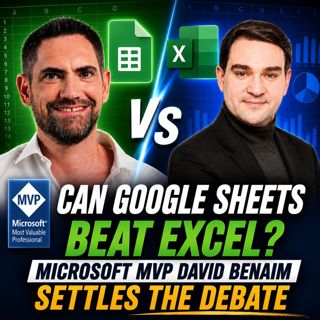
Can Google Sheets Beat Excel: Microsoft MVP David Benaim Settles the Debate

Can Google Sheets Beat Excel: Microsoft MVP David Benaim Settles the Debate

For decades, Microsoft Excel has been the undisputed king of spreadsheets. It powers everything from personal budgets to enterprise reporting, financial modeling, and business intelligence. But Google...

8 Jul 52min
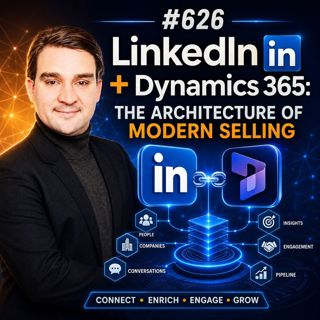
LinkedIn + Dynamics 365: The Architecture of Modern Selling

LinkedIn + Dynamics 365: The Architecture of Modern Selling

Modern B2B sales is undergoing a fundamental transformation. For years, organizations have treated LinkedIn and Dynamics 365 as separate systems. One platform managed relationships and professional ne...

8 Jul 1h 14min

Azure Networking Unlocked: Secure Azure Functions, Virtual Network Manager & Infrastructure as Code with Rex de Koning [MVP-MCT]

Azure Networking Unlocked: Secure Azure Functions, Virtual Network Manager & Infrastructure as Code with Rex de Koning [MVP-MCT]

Cloud adoption has accelerated at an incredible pace, but modern cloud infrastructure is no longer just about deploying virtual machines or Azure services. Networking has become the backbone of every ...

7 Jul 54min
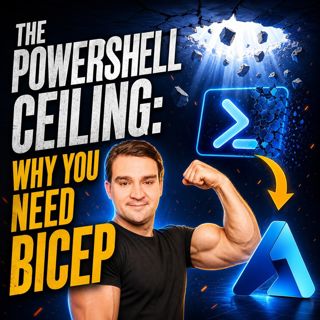
The PowerShell Ceiling: Why You Need Bicep

The PowerShell Ceiling: Why You Need Bicep

Every IT professional eventually reaches a point where automation stops feeling like freedom and starts becoming a burden. What begins as a handful of PowerShell scripts quickly grows into dozens of a...

7 Jul 1h 9min

Populært innen Politikk og nyheter

giver-og-gjengen-vg
aftenpodden
aftenpodden-usa
fotballpodden-2
popradet
forklart
stopp-verden
det-store-bildet
lydartikler-fra-aftenposten
rss-gukild-johaug
rss-ness
hanna-de-heldige
nokon-ma-ga
dine-penger-pengeradet
ta-dokumentar
aftenbla-bla
rss-penger-polser-og-politikk
e24-podden
rss-espen-lee-usensurert
rss-utenrikskomiteen-med-bogen-og-grasvik