407: SLC11A2 withholds metals from Salmonella in the gut epithelium

407: SLC11A2 withholds metals from Salmonella in the gut epithelium

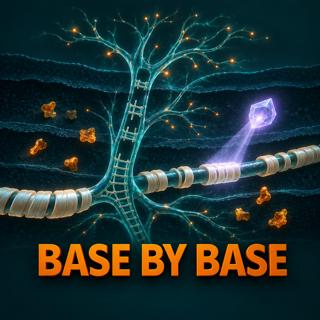
Norberg ES et al., Proceedings of the National Academy of Sciences - Using metal‑responsive fluorescent Salmonella reporters, calf intestinal loops, and CRISPR edited epithelial cells, this study shows that the divalent metal transporter SLC11A2 is recruited to Salmonella‑containing vacuoles and restricts Fe2+ and Mn2+, limiting intracellular bacterial replication. Key terms: SLC11A2, nutritional immunity, Salmonella enterica, iron and manganese, intestinal epithelium.

Study Highlights:
The authors used metal‑sensing GFP reporters in Salmonella and a calf ligated ileal loop model to map metal availability and found a subpopulation of bacteria in IECs and lamina propria cells exposed to ≤0.1 µM Fe2+ and Zn2+, and possibly Mn2+, early in infection. SLC11A2 localized to the apical surface and endosomal network of IECs and was recruited to maturing Salmonella‑containing vacuoles; CRISPR knockout of SLC11A2 in HCT116 epithelial cells increased bacterial replication. Fluorescent reporters and ICP‑MS indicate vacuolar STm are less starved for Fe2+ and Mn2+ in the absence of SLC11A2, while Zn2+ and Mg2+ sensing was unchanged. Salmonella counters SLC11A2‑mediated restriction through the Mn2+/Fe2+ transporter MntH and siderophore production.

Conclusion:
SLC11A2 mediates epithelial nutritional immunity by sequestering Fe2+ and Mn2+ in Salmonella‑containing vacuoles, reducing vacuolar metal availability and limiting intracellular Salmonella replication.

Music:
Enjoy the music based on this article at the end of the episode.

Article title:
SLC11A2 withholds divalent metals from
Salmonella
in the gut epithelium

First author:
Norberg ES

Journal:
Proceedings of the National Academy of Sciences

DOI:
10.1073/pnas.2532675123

Reference:
Norberg ES, Knodler LA, et al. SLC11A2 withholds divalent metals from Salmonella in the gut epithelium. PNAS. 2026;123:e2532675123. doi:10.1073/pnas.2532675123

License:
This episode is based on an open-access article published under the Creative Commons Attribution 4.0 International License (CC BY 4.0) – https://creativecommons.org/licenses/by/4.0/

Support:
Base by Base is independent and ad-free — no sponsors, no paywall. If an episode was worth your time, chip in and keep the papers audited and the original songs coming:
❤️ Support monthly: https://buy.stripe.com/cNifZhclVebvagk2JDgEg01
☕ One-time donation: https://donate.stripe.com/7sY4gz71B2sN3RWac5gEg00
More at basebybase.com

On PaperCast Base by Base you'll discover the latest in genomics, functional genomics, structural genomics, and proteomics.

Episode link: https://basebybase.com/episodes/slc11a2-withholds-divalent-metals-from-salmonella

QC:
This episode was checked against the original article PDF and publication metadata for the episode release published on 2026-07-05.

QC Scope:
- article metadata and core scientific claims from the narration
- excludes analogies, intro/outro, and music
- transcript coverage: Audited transcript sections covering nutritional immunity concepts, IEC-localized SLC11A2 function, calf ileal loop in vivo model, metal-responsive STm reporters, SLC11A2 recruitment to SCVs, SLC11A2 knockout effects in HCT116 cells, bacterial countermeasures (MntH and siderophores), intracellular niches (SCV vs cytoso
- transcript topics: Nutritional immunity and trace metal tug-of-war; SLC11A2 (NRAMP2) in intestinal epithelial cells; Calf ligated ileal loop model and metal availability; Metal-responsive Salmonella reporters (iroN, sitA, zinT); SLC11A2 recruitment to Salmonella-containing vacuoles; SLC11A2 knockout in HCT116 cells and impact on Salmonella replication

QC Summary:
- factual score: 10/10
- metadata score: 10/10
- supported core claims: 6
- claims flagged for review: 0
- metadata chec...

Denne episoden er hentet fra en åpen RSS-feed og er ikke publisert av Podme. Den kan derfor inneholde annonser.

Episoder(440)

438: Mapping AIRE: a proactive atlas of 9,790 missense variants

438: Mapping AIRE: a proactive atlas of 9,790 missense variants

Axakova A et al., The American Journal of Human Genetics - Axakova et al. generated a variant effect map for AIRE using an insulin‑promoter GFP reporter in HEK293 cells to measure the functional impac...

10 Aug 24min

437: Cell villages and Dirichlet modeling map human cell fitness genetics

437: Cell villages and Dirichlet modeling map human cell fitness genetics

Hanson C et al., The American Journal of Human Genetics - Hanson et al. combine pooled multi-donor human neural progenitor cell "villages" with Townlet, a hierarchical Dirichlet regression model, to e...

9 Aug 28min

436: KIAP4 and the ARND family: building the Leishmania adhesion plaque

436: KIAP4 and the ARND family: building the Leishmania adhesion plaque

Owino BO et al., PNAS - Using TurboID proximity proteomics and microscopy, researchers identify KIAP4 as the canonical member of a conserved Adhesion Related NTPase-like Domain (ARND) family that loca...

8 Aug 24min

435: E. coli TGT binds two tRNAs — cryo-EM reveals dual engagement

435: E. coli TGT binds two tRNAs — cryo-EM reveals dual engagement

Ember M et al., PNAS - This episode examines a cryo-EM study of Escherichia coli tRNA-guanine transglycosylase (TGT) that solves the enzyme structure and its covalent intermediate with tRNATyr. Unexpe...

7 Aug 19min

434: High‑coverage genomes recast Japan's prehistoric demography

434: High‑coverage genomes recast Japan's prehistoric demography

Ishiya K et al., PNAS - This episode examines a PNAS study that reports two high-coverage ancient human genomes from mainland Japan (an Initial Jomon >67× and a Middle Yayoi >46×). The genomes enable ...

6 Aug 27min

433: Lactate, HSP90α and the Mitochondrial Switch

433: Lactate, HSP90α and the Mitochondrial Switch

Wu G et al., Proceedings of the National Academy of Sciences - This episode examines a PNAS study that identifies site-specific lactylation of HSP90α as a metabolic signal linking glycolysis to mitoch...

23 Jul 23min

432: Echovirus 18: Capsid opening releases the genome

432: Echovirus 18: Capsid opening releases the genome

Mukhamedova L et al., Proceedings of the National Academy of Sciences - Using cryo-electron tomography and single-particle cryo-EM of infected Cos-7 cells, the authors show that echovirus 18 (E18) rel...

23 Jul 18min

431: KIAP4 and the ARND family: essential proteins for Leishmania–sand fly adhesion

431: KIAP4 and the ARND family: essential proteins for Leishmania–sand fly adhesion

Owino BO et al., Proceedings of the National Academy of Sciences - TurboID proximity labeling and proteomics identify KIAP4 as the canonical member of a conserved Adhesion Related NTPase-like Domain (...

23 Jul 21min

Populært innen Vitenskap

fastlegen
tingenes-tilstand
abels-tarn
liberal-halvtime
romkapsel
jss
rekommandert
vett-og-vitenskap-med-gaute-einevoll
sinnsyn
dekodet-2
villmarksliv
fjellsportpodden
rss-rekommandert
tomprat-med-gunnar-tjomlid
rss-inn-til-kjernen-med-sunniva-rose
rss-nysgjerrige-norge
rss-overskuddsliv
diagnose
abid-nadia-skyld-og-skam
forskningno