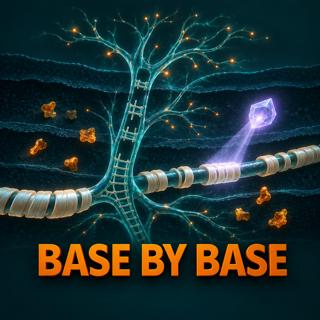
410: Nucleotide diversity is a poor predictor of short-term adaptive potential

410: Nucleotide diversity is a poor predictor of short-term adaptive potential

Abson KL et al., PNAS - A cross-species synthesis and theory paper showing that simple molecular diversity metrics poorly predict short-term adaptive potential. The authors compiled >2,100 quantitative genetics estimates (evolvability and heritability) across ~193 eukaryotic species and compared them to nucleotide diversity (π) and microsatellite heterozygosity (He). They find nucleotide diversity explains only ~1.1% of interspecific variation in evolvability and that doubling π corresponds to a modest ~11.7% increase in evolvability. Theoretical models indicate this weak relationship is expected when trait variance is shaped by stabilizing selection, mutation rates, and effective population size dynamics. Key terms: nucleotide diversity, evolvability, adaptive potential, conservation genetics, microsatellites.

Study Highlights:
The authors compiled 2,113 evolvability estimates across 193 eukaryotic species and matched these to measures of nucleotide diversity (π) and microsatellite heterozygosity (He). They found no meaningful association between ln(IA) (evolvability) and ln(π): π explained ~1.1% of interspecific variation and doubling π predicts only an ~11.7% increase in evolvability. Microsatellite and nucleotide diversity were uncorrelated across species, and both molecular measures were weak predictors of quantitative genetic variation. Theoretical mutation–selection–drift models show weak associations are expected under stabilizing selection and when VA depends more on mutation rate and selection than on neutral diversity.

Conclusion:
Simple, genome-wide molecular diversity metrics (π, He) are poor predictors of short-term adaptive potential (evolvability); conservation assessments should not rely on these alone and should incorporate trait-based or functionally informed genomic data.

Music:
Enjoy the music based on this article at the end of the episode.

Article title:
Nucleotide diversity is a poor predictor of short-term adaptive potential

First author:
Abson KL

Journal:
PNAS

DOI:
10.1073/pnas.2536181123

Reference:
Abson KL, Zijmers L, Mittell EA, Young EA, Postma E, Eyre-Walker A, Hadfield JD. Nucleotide diversity is a poor predictor of short-term adaptive potential. Proc Natl Acad Sci U S A. 2026;123(27):e2536181123. doi:10.1073/pnas.2536181123

License:
This episode is based on an open-access article published under the Creative Commons Attribution 4.0 International License (CC BY 4.0) – https://creativecommons.org/licenses/by/4.0/

Support:
Base by Base is independent and ad-free — no sponsors, no paywall. If an episode was worth your time, chip in and keep the papers audited and the original songs coming:
❤️ Support monthly: https://buy.stripe.com/cNifZhclVebvagk2JDgEg01
☕ One-time donation: https://donate.stripe.com/7sY4gz71B2sN3RWac5gEg00
More at basebybase.com

On PaperCast Base by Base you'll discover the latest in genomics, functional genomics, structural genomics, and proteomics.

Episode link: https://basebybase.com/episodes/nucleotide-diversity-poor-predictor-adaptive-potential

QC:
This episode was checked against the original article PDF and publication metadata for the episode release published on 2026-07-08.

QC Scope:
- article metadata and core scientific claims from the narration
- excludes analogies, intro/outro, and music
- transcript coverage: Audited the transcript's coverage of core scientific claims: relationship between π and IA, the π vs He relationship, functional variation (πN/πS), the theoretical basis (stabilizing selection), and conservation implications/policy directions.
- transcript topics: Adaptive potential and evolvability (IA) concept; Nucleotide diversity (π) as predictor of evolvability; Microsatellite diversity (He) and its relation to π and IA; Theoretical mutation–selection...

Denne episoden er hentet fra en åpen RSS-feed og er ikke publisert av Podme. Den kan derfor inneholde annonser.

Episoder(462)

461: Adult Ank3 loss quiets neurons and lowers a myelin protein

461: Adult Ank3 loss quiets neurons and lowers a myelin protein

Yoon et al., Proceedings of the National Academy of Sciences - ANK3, which encodes the scaffolding protein ankyrin-G, is a major risk gene for bipolar disorder and schizophrenia, yet what it does in a...

24 Sep 24min

460: The lupus variant that also sharpens antiviral defense

460: The lupus variant that also sharpens antiviral defense

Virolainen et al., The American Journal of Human Genetics - A lupus signal on chromosome 11p15 narrows to a coding haplotype in IRF7 that most people in the world carry. This study shows the risk form...

21 Sep 24min

459: Cerebral palsy genetics: 515 candidate genes, evidence for 89

459: Cerebral palsy genetics: 515 candidate genes, evidence for 89

Arterbery et al., The American Journal of Human Genetics - Hundreds of genes have been reported as causes of cerebral palsy, yet there is no agreed model of what a pathogenic variant in a child with C...

13 Sep 24min
458: Somatic or inherited? Reading TP53 risk from shared DNA

458: Somatic or inherited? Reading TP53 risk from shared DNA

MacGregor et al., The American Journal of Human Genetics - Pathogenic TP53 variants found in blood have long been read as inherited Li-Fraumeni alleles, but many turn out to be somatic clones that gre...

10 Sep 25min

457: A deletion that raises Alzheimer risk, a duplication that lowers it

457: A deletion that raises Alzheimer risk, a duplication that lowers it

Quenez O et al., The American Journal of Human Genetics - Rare copy-number variants were called from 22,319 exomes covering early-onset Alzheimer disease, late-onset disease and unaffected controls, t...

9 Sep 24min

456: Beyond exons: where heritability hides as traits get more polygenic

456: Beyond exons: where heritability hides as traits get more polygenic

Fuhrer J et al., The American Journal of Human Genetics - Across 34 complex traits and disorders, a MiXeR-based framework partitions SNP heritability over 74 functional annotations and finds that exon...

8 Sep 45min

455: Agentic genomics: the bottleneck moves from code to judgment

455: Agentic genomics: the bottleneck moves from code to judgment

Corpas M et al., Cell Genomics - A Perspective arguing that autonomous AI agents which discover, configure and chain bioinformatics operations from natural-language instructions have shifted the bottl...

7 Sep 13min

454: Efavirenz retarda a doença priônica mexendo no colesterol do cérebro [PT]

454: Efavirenz retarda a doença priônica mexendo no colesterol do cérebro [PT]

Ali T et al., JCI Insight - Um antirretroviral aprovado para HIV, dado por via oral em microdose, prolongou a sobrevida de camundongos que carregam a proteína priônica humana e foram infectados com pr...

2 Sep 17min

Populært innen Vitenskap

fastlegen
romkapsel
jss
tingenes-tilstand
liberal-halvtime
sinnsyn
villmarksliv
forskningno
rekommandert
rss-paradigmepodden
fjellsportpodden
grunnstoffene
nordnorsk-historie
rss-nysgjerrige-norge
smart-forklart
rss-inn-til-kjernen-med-sunniva-rose
rss-rekommandert
psykopoden
tidlose-historier
rss-overskuddsliv