
The Schmidt Observatory System unlocking the Transient Universe

The Schmidt Observatory System unlocking the Transient Universe

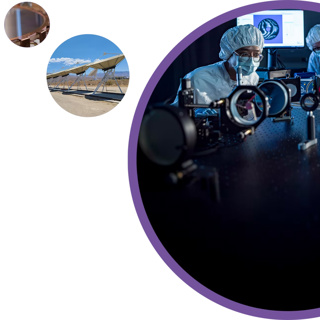
In this episode, we dive into the Eric and Wendy Schmidt Observatory System, a groundbreaking initiative designed to pioneer a new paradigm for astronomical research through rapid development, modular designs, and a commitment to open data. We explore the system's four major next-generation facilities: the Argus Array, the Deep Synoptic Array (DSA), the Large Fiber Array Spectroscopic Telescope (LFAST), and the Lazuli Space Observatory.


Our discussion highlights how these facilities act as a comprehensive end-to-end system capable of discovering and rapidly characterizing transient events. We focus on two thrilling examples of what this network will achieve:

  • Gamma-Ray Burst (GRB) Prospects: The Argus Array (optical) and the DSA (radio) will serve as ultimate discovery engines, serendipitously detecting hundreds of GRB afterglows per year. This completely bypasses the limitations of targeted follow-up observations, finally providing scientists with an unbiased sample of these massive cosmic explosions across their entire lifecycle.
  • Multi-Messenger Astronomy: We examine how the system will hunt for the electromagnetic counterparts to gravitational wave events, such as neutron star mergers (kilonovae). The Lazuli Space Observatory's rapid-response architecture will allow it to slew and capture its first photons in under four hours (with best-case scenarios under 90 minutes), providing critical early-time optical and near-infrared spectroscopy before these fast-fading transients disappear.


Tune in to learn how this interconnected network of observatories is closing the gap between discovery and follow-up, ensuring we never miss the universe's most fleeting and energetic events!


References Discussed in this Episode:

  • Freeburn, J., et al. (2026). "Prospects for GRB Afterglow Discovery with the Eric and Wendy Schmidt Observatory System".
  • Wevers, T., et al. (2026). "The Lazuli Space Observatory: Opportunities for time-domain and multi-messenger astronomy".


Acknowledements: Podcast prepared with Google/Gemini Notebook. Illustration credits: Schmidt Sciences

Denne episoden er hentet fra en åpen RSS-feed og er ikke publisert av Podme. Den kan derfor inneholde annonser.

Episoder(123)

Supernovae, TDEs, and Scintillation: How ASKAP and Rubin Are Mapping the Variable Universe

Supernovae, TDEs, and Scintillation: How ASKAP and Rubin Are Mapping the Variable Universe

In this episode, we dive into how astronomers are combining the power of the Australian Square Kilometre Array Pathfinder (ASKAP) and the Vera C. Rubin Observatory to capture the dynamic, ever-changin...

16 Okt 20min

JWST and MeerKAT Team Up: Uncovering the Most Distant Fast Radio Burst Yet

JWST and MeerKAT Team Up: Uncovering the Most Distant Fast Radio Burst Yet

Fast Radio Bursts (FRBs) are millisecond-duration radio signals originating from deep space. In this episode, we explore the groundbreaking discovery of FRB 20240304B, detected by the MeerKAT radio te...

12 Okt 20min

GRB 221009A: Measuring Relativistic Jets using Radio Interferometry

GRB 221009A: Measuring Relativistic Jets using Radio Interferometry

In this episode, we explore high-precision Very Long Baseline Interferometry (VLBI) radio observations of GRB 221009A, the brightest gamma-ray burst ever detected. Using the Global-VLBI network at 5 G...

8 Okt 21min

Unveiling GRB 240825A: Cosmic Dust, JWST, and a Supernova in Hiding

Unveiling GRB 240825A: Cosmic Dust, JWST, and a Supernova in Hiding

In this episode, we explore the cosmic mystery of GRB 240825A, a gamma-ray burst detected at redshift z = 0.659. Its short rest-frame duration and hard prompt emission initially pointed toward a compa...

5 Okt 14min

From GeV to EeV: A Data-Driven View of Cosmic Rays

From GeV to EeV: A Data-Driven View of Cosmic Rays

How do high-energy particles traveling across the universe reach Earth, and what are they made of? In this episode, we explore the Global Spline Fit (GSF), a comprehensive framework that unifies cosmi...

2 Okt 24min

From Blazars to Supernovae: Fermi’s Deepest High-Energy Sky Survey

From Blazars to Supernovae: Fermi’s Deepest High-Energy Sky Survey

In this episode, we dive into the release of the Fourth Catalog of Hard Fermi-LAT Sources (4FHL). Utilizing 16 years of continuous data from NASA's Fermi Gamma-ray Space Telescope, this catalog provid...

29 Sep 23min

GRB 220706A: The Longest-Lived Gamma-Ray Burst Engine Ever Seen

GRB 220706A: The Longest-Lived Gamma-Ray Burst Engine Ever Seen

In this episode, we explore the extraordinary discovery of GRB 220706A, a record-shattering cosmic explosion at redshift z = 0.8577. While most gamma-ray burst engines die down within minutes, X-ray f...

24 Sep 19min

Chasing Kilonovae: How LIGO-India Multiplies Multimessenger Discoveries

Chasing Kilonovae: How LIGO-India Multiplies Multimessenger Discoveries

In this episode, we explore the future of multimessenger astronomy as neutron star–black hole (NSBH) mergers take center stage. While binary neutron star collisions have delivered iconic multimessenge...

18 Sep 21min

Populært innen Vitenskap

fastlegen
tingenes-tilstand
romkapsel
sinnsyn
dekodet-2
liberal-halvtime
rss-nysgjerrige-norge
forskningno
rekommandert
fjellsportpodden
rss-paradigmepodden
rss-rekommandert
grunnstoffene
tidlose-historier
villmarksliv
nordnorsk-historie
rss-bondevennen
hva-er-greia-med
vett-og-vitenskap-med-gaute-einevoll
noen-har-snakket-sammen