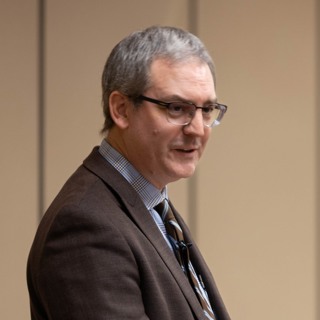
"The Philosophic Implications of AI" - Rev. Philip Larrey, Ph.D. | The Mind and the Machine

"The Philosophic Implications of AI" - Rev. Philip Larrey, Ph.D. | The Mind and the Machine

How should we understand artificial intelligence, and what place should it have in a genuinely human future? Held at Thomas Aquinas College August 3–6, 2026, The Mind and the Machine brought together philosophers, technologists, educators, and industry leaders to examine artificial intelligence through the perennial questions of the Western intellectual and Catholic traditions. Across lectures, seminars, and panel discussions, speakers explored whether machines can truly reason or become conscious, the promises and dangers of artificial general intelligence, the distinction between intelligence and wisdom, and the implications of AI for human freedom, education, work, faith, and flourishing. Rather than asking only what increasingly powerful machines can do, the symposium returned to a more fundamental question: What is the human person, and what constitutes a truly good human life? The talks examine AI not simply as a technological development, but as an occasion to reconsider reason, virtue, freedom, judgment, wisdom, and the purpose of education. This playlist contains the lectures and conversations from The Mind and the Machine, offering perspectives ranging from optimism about AI as a powerful intellectual tool to serious warnings about its potential to reshape human society and our understanding of ourselves.

Denne episoden er hentet fra en åpen RSS-feed og er ikke publisert av Podme. Den kan derfor inneholde annonser.

Episoder(442)

“Queen Dido and the Ivory Gate”

“Queen Dido and the Ivory Gate”

“Queen Dido and the Ivory Gate,” a Tutor Talk by Dr. Joseph Hattrup (Thomas Aquinas College, California). Given on September 30, 2026.

5 Okt 1h 21min
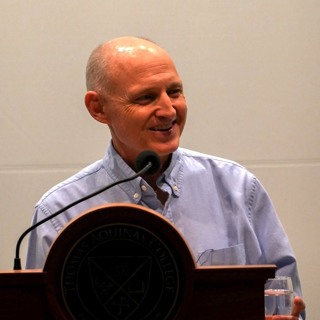
“How Can Evil Be a Species of Human Actions?”

“How Can Evil Be a Species of Human Actions?”

“How Can Evil Be a Species of Human Actions?”, a lecture by Dr. Steven Jensen (University of St. Thomas, Houston). Given on September 11, 2026, at Thomas Aquinas College, New England, as part of the 2...

15 Sep 55min
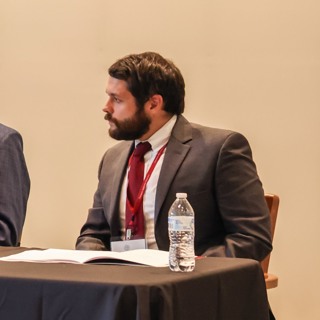
“The Analogy of Proper Proportion and the Metaphysics of Gift in the Thought of Ferdinand Ulrich”

“The Analogy of Proper Proportion and the Metaphysics of Gift in the Thought of Ferdinand Ulrich”

“The Analogy of Proper Proportion and the Metaphysics of Gift in the Thought of Ferdinand Ulrich” by Gregory Warner (John Paul II Institute, D.C.). Presented at the Thomas Aquinas College 2026 Thomist...

14 Sep 21min
“The Science of the One qua One: Aristotle and Aquinas on Henology”

“The Science of the One qua One: Aristotle and Aquinas on Henology”

“The Science of the One qua One: Aristotle and Aquinas on Henology” by Conor Stark (The Catholic University of America). Presented at the Thomas Aquinas College 2026 Thomistic Summer Conference.

14 Sep 26min
“The Instrumental-Efficient Causality of Christ’s Past Actions: The Metaphysical Basis of a Disagreement Among Thomists”

“The Instrumental-Efficient Causality of Christ’s Past Actions: The Metaphysical Basis of a Disagreement Among Thomists”

“The Instrumental-Efficient Causality of Christ’s Past Actions: The Metaphysical Basis of a Disagreement Among Thomists” by Dominic Spiekermann (Thomas Aquinas College, California). Presented at the T...

14 Sep 23min
“The Metaphysics of Martyrdom and the Being of Truth”

“The Metaphysics of Martyrdom and the Being of Truth”

“The Metaphysics of Martyrdom and the Being of Truth” by J. Marianne Siegmund (University of Dallas). Presented at the Thomas Aquinas College 2026 Thomistic Summer Conference.

14 Sep 17min
“The Dignity of God: An Aspect of Divine Wisdom”

“The Dignity of God: An Aspect of Divine Wisdom”

“The Dignity of God: An Aspect of Divine Wisdom” by Julian Sicam (University of St. Thomas, Houston). Presented at the Thomas Aquinas College 2026 Thomistic Summer Conference.

14 Sep 26min

“Hic et Nunc: Intelligible Matter and the Origins of Mathematical Knowledge”

“Hic et Nunc: Intelligible Matter and the Origins of Mathematical Knowledge”

“Hic et Nunc: Intelligible Matter and the Origins of Mathematical Knowledge” by Maureen Ryland (University of St. Thomas, Houston). Presented at the Thomas Aquinas College 2026 Thomistic Summer Confer...

14 Sep 22min

Populært innen Fakta

fastlegen
dine-penger-pengeradet
relasjonspodden-med-dora-thorhallsdottir-kjersti-idem
rss-strid
foreldreradet
rss-bisarr-historie
jakt-og-fiskepodden
rss-orjasater
treningspodden
takk-og-lov-med-anine-kierulf
rss-impressions-2
hverdagspsyken
mikkels-paskenotter
fryktlos
gravid-uke-for-uke
rss-kunsten-a-leve
sinnsyn
gode-dager
lederskap-nhhs-podkast-om-ledelse
rss-kull