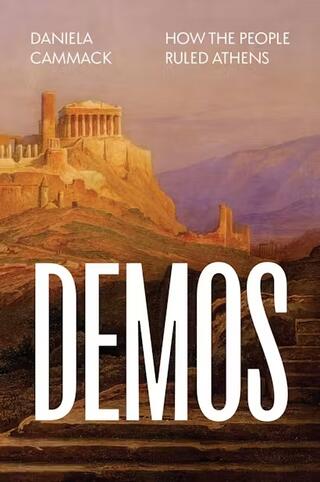

Authors Meet Critics: "Demos: How the People Ruled Athens" by Daniela Cammack

Authors Meet Critics: "Demos: How the People Ruled Athens" by Daniela Cammack

Recorded on October 1, 2026, this video features an Authors Meet Critics panel on the book Demos: How the People Ruled Athens, by Daniela Cammack, Assistant Professor of Political Science at UC Berkeley, with a courtesy appointment in the Department of Ancient Greek and Roman Studies (formerly Classics).

Professor Cammack was joined in conversation by James Porter, Distinguished Professor and Irving Stone Chair in Literature in the Department of Rhetoric at UC Berkeley, and Kinch Hoekstra, Chancellor's Professor of Political Science and Law at UC Berkeley. Dylan Riley, Professor of Sociology at UC Berkeley, moderated.

This event was co-sponsored by the UC Berkeley Institute of Governmental Studies and the Departments of Political Science and Ancient Greek & Roman Studies.

The Social Science Matrix Authors Meet Critics book series features lively discussions about recently published books authored by social scientists at UC Berkeley. For each event, the author discusses the key arguments of their book with fellow scholars.

A transcript of this podcast is available at https://matrix.berkeley.edu/research-article/demos.

About the Book

In ancient Greece, demokratia meant "rule by the people"—but what people, and how did they rule? Scholars have long argued that demokratia signified the rule of all adult male citizens over themselves. In Demos, Daniela Cammack counters this view by arguing that demokratia meant rule by the crowd that assembled when a public meeting was held. This crowd was the demos, which the Greeks distinguished from orators, generals, councilors, public benefactors, and other civic leaders.

Drawing on literary and epigraphical evidence as well as the key theoretical insights of Aristotle and Hobbes, Cammack explains how constantly changing masses of ordinary ancient Greek men ruled while their leaders were ruled over. This political system relied on kratos, the power to prevail militarily, epitomized by the victories of the Athenian demos in civil conflicts around 508 and 404 BC. In peacetime, the superior strength of the demos revealed itself in large, frequently summoned crowds of ordinary citizens acting as policymakers, legislators, and (crucially) judges, who wielded great power over politicians.

Aristotle characterized the years 403 to 322 as the era of "ultimate democracy," and it was during this period that the Athenians pulled off a feat unmatched by modern democrats: making use of talented and ambitious leaders without being ruled by them. By contrast, the Greeks called rule by elected office-holders "oligarchy." As people today lose faith in democratic institutions, Cammack's account prompts us to ask if we've been doing democracy all wrong—or even at all.

Denne episoden er hentet fra en åpen RSS-feed og er ikke publisert av Podme. Den kan derfor inneholde annonser.

Episoder(114)

California Spotlight: Wealth & Poverty

California Spotlight: Wealth & Poverty

California is one of the wealthiest states in the country, yet it also faces persistent poverty, stark economic inequality, and some of the highest costs of living in the nation. These tensions raise ...

14 Okt 59min

Authors Meet Critics: "Normalizing Inequality: How Californians Make Sense of the Growing Divide"

Authors Meet Critics: "Normalizing Inequality: How Californians Make Sense of the Growing Divide"

Recorded on September 9, 2026 at the University of California, Berkeley, this Authors Meet Critics panel centered on the book Normalizing Inequality: How Californians Make Sense of the Growing Divide,...

22 Sep 1h 8min

Benjamin Recht: "The Irrational Decision: How We Gave Computers the Power to Choose for Us"

Benjamin Recht: "The Irrational Decision: How We Gave Computers the Power to Choose for Us"

Recorded on May 5, 2026, this video features a talk by Benjamin Recht, Professor of Electrical Engineering and Computer Sciences at UC Berkeley, focused on his book, The Irrational Decision: How We G...

14 Mai 1h 21min

Incommunicable: Toward Communicative Justice in Health and Medicine

Incommunicable: Toward Communicative Justice in Health and Medicine

Recorded on April 9, 2026, this Authors Meet Critics panel features the book Incommunicable: Toward Communicative Justice in Health and Medicine, by Charles Briggs, the Alan Dundes Distinguished Profe...

23 Apr 1h 12min
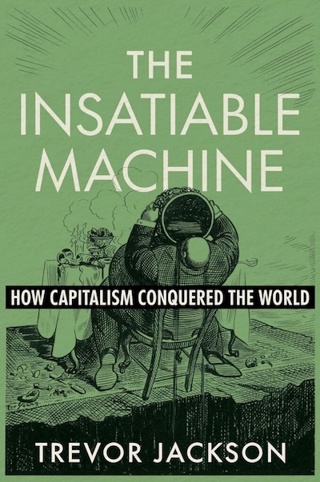
Authors Meet Critics: Trevor Jackson, "The Insatiable Machine: How Capitalism Conquered the World"

Authors Meet Critics: Trevor Jackson, "The Insatiable Machine: How Capitalism Conquered the World"

On April 7, 2026, Social Science Matrix hosted an Authors Meet Critics panel on the book The Insatiable Machine: How Capitalism Conquered the World, by Trevor Jackson, Associate Professor of History a...

23 Apr 1h 21min

Matrix on Point: The U.S. Dollar Hegemony in Transition

Matrix on Point: The U.S. Dollar Hegemony in Transition

The global dominance of the U.S. dollar has long shaped international trade, financial markets, and geopolitical power. Amid shifting global dynamics and the rapid development of stablecoins and other...

23 Apr 1h

Julien Migozzi: "Algorithms of Distinction: Class, Credit Scores, and Property in South Africa"

Julien Migozzi: "Algorithms of Distinction: Class, Credit Scores, and Property in South Africa"

Recorded on March 18, 2026, this podcast features a lecture by Julien Migozzi, an economic geographer and Assistant Professor in Development Studies at the University of Cambridge. Dr Migozzi's lectur...

1 Apr 43min

Populært innen Vitenskap

fastlegen
tingenes-tilstand
romkapsel
dekodet-2
sinnsyn
liberal-halvtime
rekommandert
rss-paradigmepodden
forskningno
rss-nysgjerrige-norge
fjellsportpodden
rss-rekommandert
nordnorsk-historie
grunnstoffene
noen-har-snakket-sammen
vett-og-vitenskap-med-gaute-einevoll
tidlose-historier
villmarksliv
rss-bondevennen
rss-overskuddsliv