Episode 14 — Overview – Protecting sensitive data

Episode 14 — Overview – Protecting sensitive data

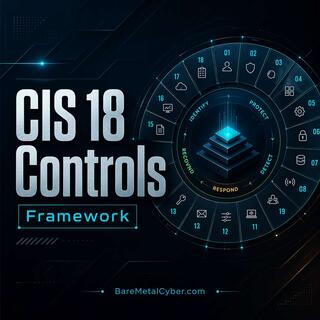
Data protection is the third pillar of the CIS Controls, and it addresses one of the most critical aspects of cybersecurity: safeguarding the organization’s most valuable asset—its information. Control 3 emphasizes the need to identify, classify, and secure data throughout its entire lifecycle, from creation to destruction. Unlike purely technical controls, data protection requires coordination across departments, blending security, legal, and operational responsibilities. Sensitive data can include financial records, customer information, intellectual property, and regulated content governed by laws such as GDPR, HIPAA, or CCPA. Because this information frequently moves beyond the organization’s physical boundaries—into cloud services, vendor platforms, and remote devices—traditional perimeter defenses are no longer sufficient. Protecting data means embedding security principles directly into storage, transmission, and handling processes, ensuring that even if attackers penetrate defenses, they cannot easily access or misuse the information they find.

Effective data protection begins with understanding where data resides and how it flows through the organization. Classification schemes label data according to sensitivity, enabling tailored controls for encryption, retention, and access management. Network segmentation, access control lists, and endpoint protections further prevent exposure by limiting movement of sensitive information. Encryption—both at rest and in transit—forms a technical safeguard that renders stolen data unreadable. Beyond technology, enterprises must define clear data-handling policies that establish ownership, retention timelines, and disposal procedures aligned with business and regulatory requirements. Comprehensive data protection reduces the likelihood of breaches, minimizes their impact, and strengthens trust with customers and regulators alike. It also integrates naturally with other CIS Controls: asset inventories reveal where data lives, secure configurations protect how it’s stored, and audit logs record who accessed it. In this way, Control 3 transforms data security from an isolated discipline into a unified, organization-wide responsibility that upholds confidentiality, integrity, and availability at every stage of information management.
Produced by BareMetalCyber.com, where you’ll find more cyber audio courses, books, and information to strengthen your educational path. Also, if you want to stay up to date with the latest news, visit DailyCyber.News for a newsletter you can use, and a daily podcast you can commute with.

Denne episoden er hentet fra en åpen RSS-feed og er ikke publisert av Podme. Den kan derfor inneholde annonser.

Episoder(83)

Welcome to the CIS 18 Control Framework

Welcome to the CIS 18 Control Framework

18 Okt 20251min

Episode 82 — Safeguard 18.2 – Internal and red team exercises

Episode 82 — Safeguard 18.2 – Internal and red team exercises

Safeguard 18.2 extends penetration testing to include internal assessments and red team exercises that emulate an attacker with initial access. Internal testing evaluates how far a threat could move l...

18 Okt 202512min

Episode 81 — Safeguard 18.1 – External testing programs

Episode 81 — Safeguard 18.1 – External testing programs

Safeguard 18.1 requires organizations to establish and maintain a formal penetration testing program that includes recurring external assessments. External tests simulate real-world attackers operatin...

18 Okt 202510min

Episode 80 — Overview – Why penetration testing validates defenses

Episode 80 — Overview – Why penetration testing validates defenses

Control 18—Penetration Testing—closes the CIS framework by validating how well all other controls perform under real-world conditions. While vulnerability scanning identifies potential weaknesses, pen...

18 Okt 202510min

Episode 79 — Remaining safeguards summary (Control 17)

Episode 79 — Remaining safeguards summary (Control 17)

The remaining safeguards in Control 17 reinforce the full lifecycle of incident response—spanning preparation, communication, testing, and continuous improvement. These include assigning key response ...

18 Okt 20259min

Episode 78 — Safeguard 17.2 – Tabletop exercises

Episode 78 — Safeguard 17.2 – Tabletop exercises

Safeguard 17.2 emphasizes the importance of testing the incident response plan through structured tabletop exercises. These simulations bring together key personnel—from technical teams to executives—...

18 Okt 202510min

Episode 77 — Safeguard 17.1 – IR plan and playbooks

Episode 77 — Safeguard 17.1 – IR plan and playbooks

Safeguard 17.1 requires organizations to establish and maintain a comprehensive incident response process that defines scope, roles, responsibilities, and communication procedures. This process must i...

18 Okt 202510min

Episode 76 — Overview – Incident response principles

Episode 76 — Overview – Incident response principles

Control 17—Incident Response Management—defines how an organization prepares for, detects, responds to, and learns from security incidents. Even the most robust defenses can be breached, and when that...

18 Okt 202511min

Populært innen Fakta

fastlegen
dine-penger-pengeradet
fryktlos
relasjonspodden-med-dora-thorhallsdottir-kjersti-idem
rss-strid
treningspodden
rss-ekteskapet
foreldreradet
rss-bisarr-historie
rss-kunsten-a-leve
jakt-og-fiskepodden
sinnsyn
rss-kull
rss-orjasater
mikkels-paskenotter
gravid-uke-for-uke
rss-impressions-2
branncast
rss-flydilla
rss-mind-body-podden