
#12 - Caroline Lee: Death, Grief, and Ibogaine

#12 - Caroline Lee: Death, Grief, and Ibogaine

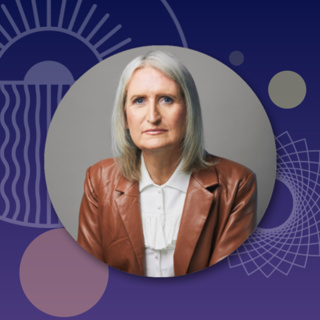
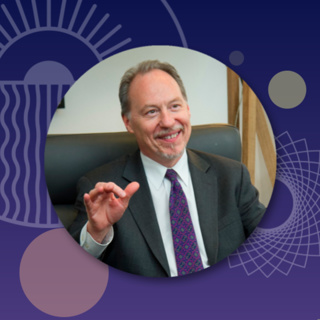
Caroline Lee is a death doula, therapist, and photographer based in Oakland, California, where she is currently training to become a somatic psychologist and psychedelic therapist. She had the opportunity to receive ibogaine treatment about eight months ago.

What we discuss:

  • What is a death doula? What does it mean to be in relationship with death, and why is this an important relationship to consider?

  • How Caroline envisions psychedelics fitting into our rituals around death, if laws were changed and psychedelics were available at end-of-life for people suffering from palliative anxiety

  • The potential applications of ibogaine for palliative anxiety and more, from a therapist’s perspective

  • Should therapists be required to take psychedelics if they want to offer psychedelic-assisted therapy?

  • How ibogaine helped Caroline process the grief she experienced after a divorce that marked the end of a 16-year relationship

  • What death and the end of relationships have in common

  • What Caroline’s work as a doula and a therapist have taught her about the role of grief

Why it’s important:

You’ve heard it said before but I feel like it needs to be said more often: death is a part of life – and this conversation really showed me that talking about it openly isn’t morbid or negative or inherently bad in any way - it’s a way for us to stay more connected to the present moment. Feeling into the grief that we feel when someone dies, or when a relationship ends, expands our capacity for emotion – and using psychedelics including ibogaine can allow us to not only come to terms with those emotions, but arrive at a feeling of peace around our own mortality.

Relevant Links:

Episoder(55)

#07 - Flor Bollini: A Medicine Woman's Most Impactful Journey

#07 - Flor Bollini: A Medicine Woman's Most Impactful Journey

Flor Bollini is a creative entrepreneur, strategist, and medicine carrier – and the founder of NANA Heals. She’s also trained as a Iyanifa, a priestess of the IFA divination system, and is a student of  Ayurveda, Shamanism, and Africanism. She has been receiving and serving medicine for more than 15 years, and says her recent treatment with ibogaine was the most impactful psychedelic experience she’s ever had.What we discuss: Flor, a seasoned psychonaut who has had hundreds of psychedelic experiences, speaks to her profound recent experience with ibogaine in Mexico, where she took almost 1 gram of the medicine Flor’s approach to the medicine: to explore her light, to see herself fully, to gain an understanding of how she is perceived, to surrender, and to get out of her own way. The intense visions and representations Flor witnessed: full blown virtual reality at scale of divine proportion, and cartoonish characters in sophisticated theatrical outfits that felt so real, Flor confused them with nurses in the treatment room How these visions made Flor feel (while ibogaine may have a reputation for being “scary,” Flor says what she witnessed was more beautiful than anything she’d ever seen while sitting with other medicines) The important messages she received from ibogaine, and how it allowed her to embrace her femininity in a new wayWhy it’s important: Ibogaine specifically and psychedelics more broadly are often discussed and used in the context of healing trauma and facing our shadow, but Flor’s experience with ibogaine shows that when used with intention, this medicine can also enable us to get more comfortable with our light.Relevant Links: Flor’s website Flor’s company, NANA Flor’s Instagram Flor’s LinkedIn VICE story about Flor’s work

1 Mar 20231h

#06 - Brigit Ritchie: 56 Questions for Ibogaine

#06 - Brigit Ritchie: 56 Questions for Ibogaine

Brigit is the founder and CEO of We, a learning studio that provides workshops and experiences to help people develop relational mindfulness within their relationships at work. She’s also an intimacy and relationship coach, a mom, and an artist.What we discuss: what life was like before a recent ibogaine experience at Beond how she struggled to maintain a work-life balance how her relationships with alcohol and tobacco had become problematic without much awareness of how these substances were affecting her how she had hoped that treatment with ibogaine might help her heal from the trauma of experiencing abuse as a child her intense preparation for her experience how she developed a list of not 2 or 3 but 56 questions for ibogaine how her ibogaine experience, which was wildly different than what she expected, could have gone in two very different directionsWhy it’s important: Brigit’s story is one that many of us can relate to: how many of us are struggling with burnout, numbing our pain with substances, and sitting with unresolved childhood trauma? There’s a lot to learn from Brigit’s understanding of relationships and intimacy, and from her experience navigating her ibogaine treatment.Relevant Links: Brigit’s company, WE Brigit’s Instagram Brigit’s Artwork Shoutout LA Feature on Brigit Ritchie

10 Feb 202346min

#05 - Kerry Rhodes: The Supporter’s Role

#05 - Kerry Rhodes: The Supporter’s Role

Kerry Rhodes is a former NFL safety who played in the league for 9 years, first for the New York Jets and then for the Arizona Cardinals, until 2013. Today he is a musician, writer, director, producer, and actor, who hasn’t exactly shied away from talking about his own personal use of psychedelics and how they have changed his life for the better.What we discuss: Kerry’s experiences with psychedelic medicine the role psychedelics could have for folks in professional sports leagues the role of the supporter: what does it look like to support a family member, a friend, a loved one through the ibogaine experience? How to best support someone who is about to undergo an ibogaine treatment The importance of preparation, integration, and community advice for those in a supporter’s roleWhy it’s important: Supporting a loved one through a traumatic period in their lives can be incredibly challenging, because it requires a level of surrender on the part of the supporter, too – a sense of trust in the process, and a willingness to let go of control. Kerry’s experience shows us how vital support from a loved one can be in taking the initial step to seek treatment, and how that support can allow a person to learn to trust the process, too.Relevant Links: Forbes story about Kerry Rhodes’ ayahuasca experience Trailer for The Medicine documentary featuring Kerry Rhodes The Medicine documentary website High Impact Healing: Kerry Rhodes interviewed about Ibogaine Kerry Rhodes on Twitter

24 Jan 202334min

#04 - Vianey “Nurse V.” Ariadna Perez: A Nurse’s Perspective on Ibogaine

#04 - Vianey “Nurse V.” Ariadna Perez: A Nurse’s Perspective on Ibogaine

Vianey Ariadna Perez, or Nurse V. as everyone at Beond calls her, is a registered nurse and the head of nursing at Beond. Nurse V. has overseen more than 500 ibogaine experiences, and a few months ago, she also had her own experience with the powerful medicine. Born in Mexico and raised in Atlanta, Georgia, she studied at a private nursing university and worked in Cancun’s General Hospital in several different departments before she began working with ibogaine in 2018.There are some obvious things required of Beond’s nursing staff, and some less obvious things. In this episode, Nurse V. discusses some of the finer points of being a nurse in this kind of setting, and shares about her experience of witnessing transformational changes in the people she cares for.Nurse V. opens up about her own experience with ibogaine in the spring of 2022, and she discusses a topic on the minds of several people in the psychedelic space: is it necessary for people who work with a psychedelic medicine like ibogaine to have their own experience with the medicine?She also offers up advice to folks with nursing experience who might be considering working in this growing space.Why it’s important: Nurse V presents a different perspective on ibogaine treatment: not one from the patient’s chair or the science lab but from directly opposite a patient, within the treatment room, and as the leader of a nursing team overseeing several patients who are at different points in their ibogaine treatment plan. Learning about Nurse V’s experiences with ibogaine, both personal and professional, provides a level of insight into treatment that could be new for listeners.Links: Youtube Video: What Happens on Ibogaine Treatment Day About Nurse V. on Beond’s website Nurse V. talking about her ibogaine experience on Instagram Beond’s online resources for professionals Life is a Festival podcast: Beond Ibogaine with Dr. Felipe Malacara and Vianey Ariadna Perez

9 Jan 202347min

#03 - Dr. Andrew Tatarsky: Abstinence Only Doesn't Work

#03 - Dr. Andrew Tatarsky: Abstinence Only Doesn't Work

Dr. Tatarsky is internationally recognized for his work in the treatment of problematic substance use and other risky behaviors. For the last 35 years he’s worked as a counselor, psychologist, program director, trainer, advocate and author, with a focus on harm reduction psychotherapy.When it comes to therapy for people suffering from substance use disorder, the focus is generally not on harm reduction but on complete abstinence. That’s where this discussion kicks off – talking about the standard practices in the psychotherapy field for addiction.The belief that people cannot benefit from psychotherapy until they are sober or they’ve stopped using is very common in the field.Dr. Tatarsky’s approach has been the opposite. He speaks to how the harm reduction approach in psychotherapy disproves the idea that one must be abstinent before they can benefit from therapy, and not only that, how traditional models of drug and alcohol treatment can often create further harm for people suffering from addiction. He has a name for this: treatment trauma.He also discusses the origins of harm reduction psychotherapy, his early involvement in the field, and how it has affected substance use disorder treatment on a broader level.Amanda asks Dr. Tatarsky some questions critics of harm reduction might have: if the goal of harm reduction therapy is not abstinence, what is it? What are the challenges of a harm reduction approach?Dr. Tatarsky shares about his work in New York City, the recent implementation of harm reduction measures in the state of New York, and finally, if a harm reduction approach and ibogaine treatment can be complimentary.Why it’s important:Dr. Tatarsky brings up valid points that challenge standard psychotherapy models for substance use disorder, which are not only ineffective but dehumanizing. Through the harm reduction model, clients are offered a holistic approach to healing rooted in empathy, one that humanizes them and often leads to improved quality of life. Looking at drug treatment more broadly and ibogaine more specifically through his lens might challenge some of the preconceived notions you have about substance use disorder and drug treatment, in a good way.Relevant links: Dr. Andrew Tatarsky’s website The Center for Optimal Living website Dr. Andrew Tatarsky’s book, Harm Reduction Psychotherapy: A New Treatment for Drug and Alcohol Problems Integrative Harm Reduction Psychotherapy: A Case of Substance Use, Multiple Trauma, and Suicidality by Andrew Tatarsky and Scott Kellog The Challenge of Harm Reduction: Changing Attitudes Toward Addiction Treatment by Dr. Andrew Tatarsky Dr. Andrew Tatarsky on Twitter

14 Des 202256min

#02 - Dr. Thomas Kingsley Brown: Ibogaine: Past and Present

#02 - Dr. Thomas Kingsley Brown: Ibogaine: Past and Present

Dr. Thomas Kingsley Brown, an anthropologist, chemist and a MAPS researcher who studies the potential for ibogaine-assisted therapy to treat drug addiction, among other things. He is the research program coordinator at the University of California San Diego McNair program, and an advisor to Beond.What’s covered: How ibogaine stacks up against standard treatment models for addiction Dr. Brown’s research on the long-term effects of ibogaine treatment: does it last? the recent history of ibogaine Who is Howard Lotsof? How and why ibogaine was scheduled in the United States Psychedelic drug policy What Dr. Brown’s research shows about the importance of integration and support after treatment Can a psychedelic experience feel like a religious conversion?Why it’s important:If you’re interested in learning more about both the long-term effects of ibogaine, and ibogaine’s history, this episode is for you. Dr. Kingsley Brown also does an excellent job of explaining why ibogaine is where it’s at right now as far as policy and research. His explanations of his own work on ibogaine’s long-term effects speak to the potential that it has in treating addiction effectively.Relevant links: Dr. Brown’s TEDx Venice Beach 2019 talk on YouTube: The Case for Ibogaine Dr. Brown’s presentation at the 2021 Nordic Reform Conference on YouTube: Treating Addiction with Ibogaine Dr. Brown’s 2003 research on religious conversions on Google Books: Mystical Experiences, American Culture, and Conversion to Christian Spiritualism Dr. Brown’s 2017 paper published with Dr. Kenneth Alper: Treatment of opioid use disorder with ibogaine: detoxification and drug use outcomes Dr. Brown’s 2019 paper published with Dr. Geoff Noller and Julie Denenberg: Ibogaine and Subjective Experience: Transformative States and Psychopharmacotherapy in the Treatment of Opioid Use Disorder

29 Nov 202238min

#01 - Talia Eisenberg: Beyond Addiction with Ibogaine

#01 - Talia Eisenberg: Beyond Addiction with Ibogaine

Talia Eisenberg, co-founder of Beond, a serial entrepreneur involved in psychedelic healthcare who is most passionate about democratizing access to safe, scientifically backed treatment for addiction and traumaWhat’s covered: Talia’s discovery of ibogaine Her experience at an ibogaine treatment center 13 years ago The evolution of the ibogaine treatment community Moving beyond opiate dependency and healing the underlying cause The importance of meeting people where they are at What happens during ibogaine treatment What happens after treatment Modalities that are complimentary to the post-treatment integration process Beond’s scholarship program and new Reset programsWhy it’s important:Talia’s story is a wonderful example of the potential ibogaine has to completely turn someone’s life around – and not just that, but how that can 180 can inspire changes that go far beyond one person’s individual journey.Relevant links: Beond’s YouTube channel: Beond Ibogaine Treatment for Addiction & Trauma Talia Eisenberg interviewed in Authority Magazine: How Talia Eisenberg of Beond Is Helping To Battle One of Our Most Serious Epidemics The Beond Manifesto More information on Beond’s new Reset programs Beond on Instagram

28 Nov 202239min

Populært innen Helse

hvordan-har-du-det-mann
fastlegen
rss-gukild-johaug
psykodrama
relasjonspodden-med-dora-thorhallsdottir-kjersti-idem
leger-om-livet
foreldreradet
bak-fasaden-en-reise-i-livet-med-sykepleier-ine
morten-ramm-lar-kakla-ga-til-du-sovner
klimaks
helsetipspodden
hjernesterk
g-punktet
rss-lopedrommen
sovnlos
hverdagspsyken
apent-forhold
treningsprat
fryktlos
sinnsyn