AI at the NASA Frontier Development Lab with Sara Jennings, Timothy Seabrook and Andres Rodriguez

AI at the NASA Frontier Development Lab with Sara Jennings, Timothy Seabrook and Andres Rodriguez

This week on the podcast we’re featuring a series of conversations from the NIPs conference in Long Beach, California. I attended a bunch of talks and learned a ton, organized an impromptu roundtable on Building AI Products, and met a bunch of great people, including some former TWiML Talk guests. In this episode i'm joined by Sara Jennings, Timothy Seabrook and Andres Rodriguez to discuss NASA’s Frontier Development Lab or FDL. The FDL is an intense 8-week applied AI research accelerator, focused on tackling knowledge gaps useful to the space program. In our discussion, Sara, producer at the FDL, provides some insight into its goals and structure. Timothy, a researcher at FDL, describes his involvement with the program, including some of the projects he worked on while on-site. He also provides a look into some of this year’s FDL projects, including Planetary Defense, Solar Storm Prediction, and Lunar Water Location. Last but not least, Andres, Sr. Principal Engineer at Intel's AIPG, joins us to detail Intel’s support of the FDL, and how the various elements of the Intel AI stack supported the FDL research. This is a jam packed conversation, so be sure to check the show notes page at twimlai.com/talk/89 for all the links and tidbits from this episode.

Denne episoden er hentet fra en åpen RSS-feed og er ikke publisert av Podme. Den kan derfor inneholde annonser.

Episoder(797)

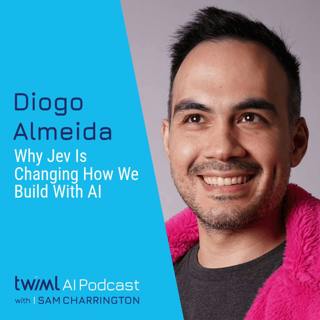
Why Jev Is Changing How We Build With AI with Diogo Almeida - #779

Why Jev Is Changing How We Build With AI with Diogo Almeida - #779

In this episode, Diogo Almeida, co-founder and CEO of TypeSafe, joins us to discuss Jev, TypeSafe’s recently released model for bringing fast, reliable intelligence directly into software. We explore ...

6 Okt 1h 30min
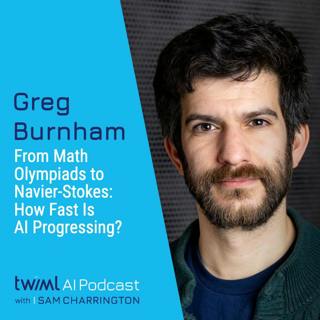
From Math Olympiads to Navier-Stokes: How Fast Is AI Progressing? with Greg Burnham - #778

From Math Olympiads to Navier-Stokes: How Fast Is AI Progressing? with Greg Burnham - #778

AI systems have gone from struggling with grade-school math to helping solve research problems that have resisted mathematicians for decades, including Navier-Stokes. In this episode, Greg Burnham, w...

29 Sep 1h 7min
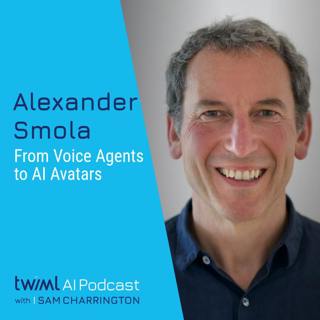
From Voice Agents to AI Avatars with Alexander Smola - #777

From Voice Agents to AI Avatars with Alexander Smola - #777

Voice AI has gotten remarkably good, but natural conversation remains a high bar. Small delays, awkward interruptions, or the wrong tone can quickly break the illusion—and adding vision and visual pre...

17 Sep 1h 4min
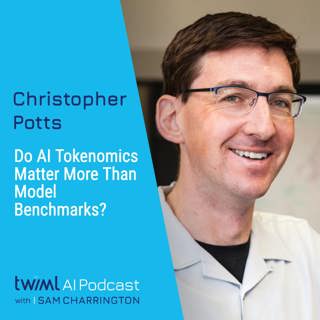
Do AI Tokenomics Matter More Than Model Benchmarks? with Chris Potts - #776

Do AI Tokenomics Matter More Than Model Benchmarks? with Chris Potts - #776

As reasoning models consume more tokens and AI systems become more expensive to run, understanding what those tokens actually buy is becoming increasingly important. In this episode, Stanford professo...

9 Sep 59min
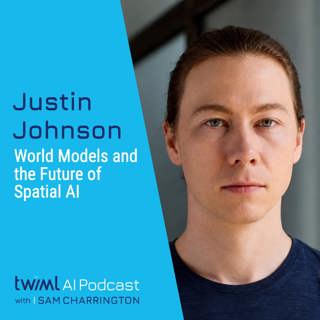
World Models and the Future of Spatial AI with Justin Johnson - #775

World Models and the Future of Spatial AI with Justin Johnson - #775

In this episode, Justin Johnson, co-founder of World Labs, joins us to discuss world models and the emerging field of spatial AI. We explore why many researchers see capabilities beyond language as an...

1 Sep 1h 6min
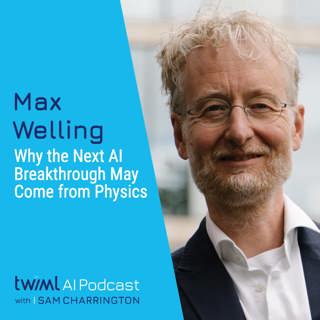
Why the Next AI Breakthrough May Come from Physics with Max Welling - #774

Why the Next AI Breakthrough May Come from Physics with Max Welling - #774

The conventional wisdom in AI is that the next breakthrough will come from more compute, more data, and larger models. But what if the next leap comes from somewhere else? In this episode, Max Wellin...

26 Aug 58min

Why Image Generation Needs More Than Bigger Models with Fatih Porikli - #773

Why Image Generation Needs More Than Bigger Models with Fatih Porikli - #773

Text-to-image models have become remarkably good at producing realistic images. But realism isn’t the same as correctness. Ask for several distinct people, a specific composition, or a high-resolution...

12 Aug 56min

Why Models Are AI’s Next Training Dataset with Damian Borth - #772

Why Models Are AI’s Next Training Dataset with Damian Borth - #772

For more than a decade, AI has advanced by training ever-larger models on ever-larger datasets. But as high-quality training data becomes harder to find and pretraining grows increasingly expensive, r...

27 Jul 47min

Populært innen Politikk og nyheter

giver-og-gjengen-vg
aftenpodden
forklart
aftenpodden-usa
popradet
stopp-verden
fotballpodden-2
det-store-bildet
dine-penger-pengeradet
rss-gukild-johaug
rss-espen-lee-usensurert
hanna-de-heldige
nokon-ma-ga
rss-penger-polser-og-politikk
rss-ness
aftenbla-bla
bt-dokumentar-2
frokostshowet-pa-p5
e24-podden
ta-dokumentar