What does Iran want?
The Inquiry25 Jan 2024

What does Iran want?

After months of tension and hostility in the Middle East over the Gaza-Israel conflict, Iran has publicly stated its desire to avoid a regional conflict. It has however displayed its military force on several fronts.

There have been missile strikes. Iran targeted militant bases in western Pakistan leading to a retaliatory back-and-forth with Pakistan. With attacks on Iraq and Syria, Tehran said it was targeting Islamic State and Israel's Mossad spy agency - both of whom it claimed were behind the deadliest domestic attack on Iranian soil since the Islamic revolution – an attack in early January that killed almost a hundred people in the southern city of Kerman.

Iran has been using proxy groups too - the so-called “Axis of Resistance” – to carry out attacks on Israel and its allies to show solidarity with the Palestinians. The axis is a grouping of Iran-backed militant groups including Houthi militants in Yemen who have been responsible for disrupting shipping in the Red Sea and have been targeted by US and UK air strikes aimed at deterring them. Other members of the axis include Hezbollah in Lebanon and various groups in Syria and Iraq. Tehran insists that the groups act independently but that the coalition shares its goals. Iran’s stated aim is to roll back US influence in the Middle East and it stands ideologically opposed to Israel. Iran’s grown closer to China and Russia too, the latter more so since the start of the Ukraine war in 2022. What does Iran hope to gain from these relationships?

We also ask how Iran wants the current Israel-Gaza conflict to end.

So this week on The Inquiry we’re asking ‘What does Iran want?’

Experts: Negar Mortazavi, Iranian journalist and Senior Fellow at the Center for International Policy. Kirsten Fontenrose is a non-resident fellow at the Scowcroft Middle East Security Initiative in the Atlantic Council’s Middle East Programs. Professor Maryam Alemzadeh, Associate Professor in History and Politics of Iran at the Oxford School of Global and Area Studies (OSGA) and a Middle East Centre Fellow. Suzanne Maloney is the vice president and director of the Foreign Policy program at the Brookings Institution, where her research focuses on Iran and Persian Gulf energy.

CREDITS: Presenter: Charmaine Cozier Producer: Philip Reevell Researcher: Matt Toulson Production Coordinator: Tim Fernley Editor: Tara McDermott Technical Producer: Nicky Edwards

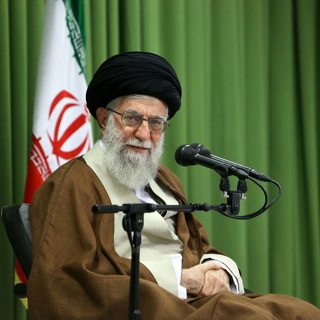
Image: Iran's Supreme Leader Ayatollah Ali Khamanei

Image Credit: Anadolu/Getty

Denne episoden er hentet fra en åpen RSS-feed og er ikke publisert av Podme. Den kan derfor inneholde annonser.

Episoder(594)

Is Portugal’s drugs policy in need of reform?

Is Portugal’s drugs policy in need of reform?

In 2001, Portugal decriminalised the possession and use of all illicit drugs. It was a move designed to mitigate the country’s public health crisis, which at the time meant Portugal had one of the wor...

2 Jun 23min

What’s the future for monetary unions?

What’s the future for monetary unions?

At the beginning of this year Bulgaria, considered as one of the poorest countries in the European Union, became the latest to officially join the eurozone. Bulgaria’s legal tender since 1881 had been...

26 Mai 23min

Are the Himalayan glaciers at a tipping point?

Are the Himalayan glaciers at a tipping point?

The Himalayan glaciers are melting more rapidly as global temperatures rise, raising concerns about the future of ecosystems and communities across the Himalayan mountain range. Glaciers store more th...

19 Mai 24min

What is the future of the European Union?

What is the future of the European Union?

The recent election result in Hungary has been seen as a welcome relief within the European Union.The bloc of 27 nations has, at times, felt frustrated with the country for blocking what the other 26 ...

12 Mai 23min

Are countries really running out of jet fuel?

Are countries really running out of jet fuel?

Global oil markets have been affected by the US Israel war with Iran, leading to higher jet fuel prices and increased attention on supply risks.But how serious is the situation? While some experts poi...

2 Mai 24min

Should we mine the Moon?

Should we mine the Moon?

The recent Nasa Artemis II crewed mission to the far side of the Moon is a further step towards a long-term return to the lunar surface and future missions to Mars. The plan is that before the end of ...

28 Apr 23min

Cycling: Is it time to swap four wheels for two?

Cycling: Is it time to swap four wheels for two?

Conflict in the Middle East has led to volatility in global oil prices, pushing up fuel costs worldwide. Previous oil shocks prompted some countries to reconsider their reliance on cars, investing in ...

21 Apr 24min

How will countries boycotting Eurovision affect the contest?

How will countries boycotting Eurovision affect the contest?

Broadcasters from The Netherlands, Ireland, Iceland, Spain and Slovenia are all boycotting May’s Eurovision Song Contest because Israel is participating. Sources within Israel’s broadcaster say calls ...

14 Apr 24min

Populært innen Politikk og nyheter

giver-og-gjengen-vg
aftenpodden
aftenpodden-usa
popradet
forklart
fotballpodden-2
stopp-verden
nokon-ma-ga
rss-espen-lee-usensurert
det-store-bildet
hanna-de-heldige
rss-gukild-johaug
lydartikler-fra-aftenposten
dine-penger-pengeradet
rss-ness
aftenbla-bla
rss-dannet-uten-piano
e24-podden
rss-utenrikskomiteen-med-bogen-og-grasvik
rss-penger-polser-og-politikk