
The ‘Clean’ Technology That’s Poisoning People
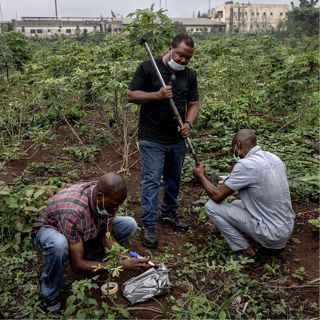
Lead is an essential but toxic element of car batteries. The U.S. auto industry promotes the recycling of it as an environmental success story. An investigation by The New York Times and The Examination reveals that the initiative comes at a major human cost, especially abroad.Peter S. Goodman, who covers the global economy, explains the dirty business of a supposedly clean technology.Guest: Peter S. Goodman, who covers the global economy for The New York Times.Background reading: The U.S. auto industry was warned for years that battery recycling was poisoning people, an investigation by The Times and The Examination showed.Read more about the investigation.Photo: Finbarr O'Reilly for The New York TimesFor more information on today’s episode, visit nytimes.com/thedaily. Transcripts of each episode will be made available by the next workday. Subscribe today at nytimes.com/podcasts or on Apple Podcasts and Spotify. You can also subscribe via your favorite podcast app here https://www.nytimes.com/activate-access/audio?source=podcatcher. For more podcasts and narrated articles, download The New York Times app at nytimes.com/app.
2 Des 202532min

The Fallout From the National Guard Shooting
What began as a horrific shooting of two National Guard members in downtown Washington last week has now led to a set of far-reaching changes to the U.S. immigration system.The suspect, Rahmanullah Lakanwal, was among the Afghans who came to the United States after the Taliban’s takeover of Afghanistan. Earlier, he served in a paramilitary unit that worked with U.S. forces.Hamed Aleaziz discusses Mr. Lakanwal’s journey to the United States, as well as the Trump administration’s wide-ranging response.Guest: Hamed Aleaziz, a Times correspondent covering the Department of Homeland Security and immigration policy.Background reading: The suspect in the shooting had traveled a long path of conflict from Afghanistan to America.Afghans who assisted the United States during the war underwent rigorous vetting.Photo: The New York TimesFor more information on today’s episode, visit nytimes.com/thedaily. Transcripts of each episode will be made available by the next workday. Subscribe today at nytimes.com/podcasts or on Apple Podcasts and Spotify. You can also subscribe via your favorite podcast app here https://www.nytimes.com/activate-access/audio?source=podcatcher. For more podcasts and narrated articles, download The New York Times app at nytimes.com/app.
1 Des 202529min

Sunday Special: Gifting Books for the Holidays
The holiday season is here, which means it’s the time to think of great gifts for everyone on your list. While it can feel like a daunting task to choose thoughtful, personalized presents, we’ve got a fix for you: books.On this edition of The Sunday Special, Gilbert is joined by Joumana Khatib and Sadie Stein, editors at the Book Review, for a conversation about the best books to give your family and friends. Joumana and Sadie will share what excited them most this year and also provide recommendations for giftees in very specific categories.Books mentioned in this episode:“The Colony,” Annika Norlin“Perfection,” Vincenzo Latronico“Things: A Story of the 60s,” Georges Perec“The Bee Sting,” Paul Murray“The Loneliness of Sonia and Sunny,” Kiran Desai“The Director,” Daniel Kehlmann“Playworld: A Novel,” Adam Ross“A Marriage at Sea,” Sophie Elmhirst“Entertaining is Fun!,” Dorothy Draper“The Thursday Murder Club,” Richard Osman“The Mysterious Case of the Alperton Angels,” Janice Hallett“Roald Dahl’s Revolting Recipes,” Roald Dahl“Mrs. Manders’ Cook Book,” Sarah Manders, edited by Rumer Godden“Halleluja! The Welcome Table,” Maya Angelou“The Pat Conroy Cookbook: Recipes of My Life,” Pat Conroy“Les diners de Gala,” Salvador Dalí“Diaghilev’s Empire: How the Ballets Russes Enthralled the World,” Rupert Christiansen“Finishing the Hat and Look I Made a Hat,” Stephen Sondheim“Tonight in Jungleland: The Making of Born to Run,” Peter Ames Carlin“The Uncool: A Memoir,” Cameron Crowe“The Gales of November,” John U. Bacon“The Journals of Ralph Waldo Emerson,” Ralph Waldo Emerson“Cats in Color,” Stevie Smith“Archie and the Strict Baptists,” John Betjeman“Stories 1,2,3,4,” Eugène Ionesco“Trip: A Novel,” Amy BarrodaleOn Today’s Episode:Joumana Khatib is an editor at The New York Times Book Review.Sadie Stein is an editor at The New York Times Book Review. Subscribe today at nytimes.com/podcasts or on Apple Podcasts and Spotify. You can also subscribe via your favorite podcast app here https://www.nytimes.com/activate-access/audio?source=podcatcher. For more podcasts and narrated articles, download The New York Times app at nytimes.com/app.
30 Nov 202550min
Inside 'The Morgue' at The New York Times
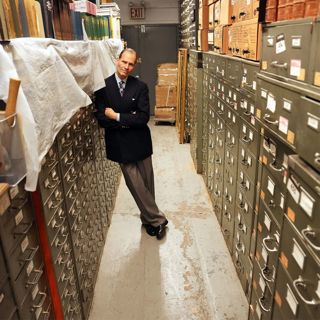
In this subscriber-only episode, the host Rachel Abrams ventures deep into the basement of The New York Times in Manhattan to visit a place affectionately known by staff members as “the morgue.”There, she meets Jeff Roth, the sole guardian of the vast and eclectic archive that houses the paper’s historical news clippings and photographic prints, along with its large book and periodicals library dating back to the 19th century.Guest:Jeff Roth, archivist at The New York TimesFor more information on today’s episode, visit nytimes.com/thedaily. Transcripts of each episode will be made available by the next workday. Subscribe today at nytimes.com/podcasts or on Apple Podcasts and Spotify. You can also subscribe via your favorite podcast app here https://www.nytimes.com/activate-access/audio?source=podcatcher. For more podcasts and narrated articles, download The New York Times app at nytimes.com/app.
30 Nov 202525min
'The Interview': Simon Cowell Is Sorry, Softer and Grieving Liam Payne
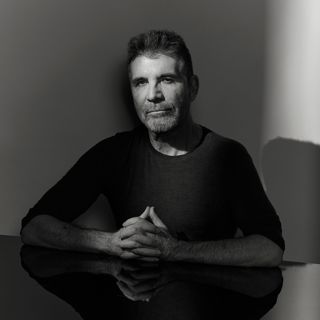
The competition-TV judge changed the music industry. Now he says he’s changed too.Thoughts? Email us at theinterview@nytimes.comWatch our show on YouTube: youtube.com/@TheInterviewPodcastFor transcripts and more, visit: nytimes.com/theinterview Subscribe today at nytimes.com/podcasts or on Apple Podcasts and Spotify. You can also subscribe via your favorite podcast app here https://www.nytimes.com/activate-access/audio?source=podcatcher. For more podcasts and narrated articles, download The New York Times app at nytimes.com/app.
29 Nov 202554min

Eating What You Kill This Thanksgiving
Here at “The Daily,” we take our annual Thanksgiving episode very seriously.A few years ago, we rang up an expert from the Butterball Turkey Talk-Line, who told us that yes, in a pinch, you can cook a turkey in the microwave. Last year, we invited ourselves over to Ina Garten’s house to learn the timeless art of holiday entertaining (Ina’s tip: flowers that match your napkins complete a table.).This year, determined to outdo ourselves, we traveled to Montana to hunt our very own food. Our guest, Steven Rinella — perhaps the country’s most famous hunter — is an avid conservationist and a lifelong believer in eating what you kill.What first drew us to Rinella was the provocative argument he put forth in his best-selling book, “Meat Eater.”“To abhor hunting,” he wrote, “is to hate the place from which you came, which is akin to hating yourself in some distant, abstract way.”So, a few weeks ago, we spoke with Rinella at his podcast studio in Bozeman, Mont, about the forces that turned him into what he describes as an “environmentalist with a gun”. The next morning, we hunted ducks with him, and then, inspired by Rinella, we ate what we had killed.Photo: Will Warasila for The New York TimesAudio Produced by Tina Antolini. Edited by Wendy Dorr. Engineered by Efim Shapiro and Alyssa Moxley. Fact-checking by Susan Lee. Original music by Daniel Powell and Marion Lozano. Subscribe today at nytimes.com/podcasts or on Apple Podcasts and Spotify. You can also subscribe via your favorite podcast app here https://www.nytimes.com/activate-access/audio?source=podcatcher. For more podcasts and narrated articles, download The New York Times app at nytimes.com/app.
27 Nov 202556min

The Ukrainian Peace Plan Written by ... Russia?
When President Trump’s peace plan to end the war in Ukraine was leaked last week, many felt as though Russia had written the proposal, and to a large degree, it reflected the Kremlin’s demands. The plan set off a global outcry that has forced American officials to revise their approach in the days since.Kim Barker and David E. Sanger explain the process that led to the contentious plan and why it comes at a vulnerable moment for Ukrainian leadership.Guest: Kim Barker, a reporter for The New York Times covering the war in Ukraine.David E. Sanger, the White House and national security correspondent for The New York Times.Background reading: Analysis: Mr. Trump offers a Ukraine peace plan the Kremlin can love.To many Ukrainians, the U.S. proposal looks like “capitulation.”Photo: Tyler Hicks/The New York TimesFor more information on today’s episode, visit nytimes.com/thedaily. Transcripts of each episode will be made available by the next workday. Subscribe today at nytimes.com/podcasts or on Apple Podcasts and Spotify. You can also subscribe via your favorite podcast app here https://www.nytimes.com/activate-access/audio?source=podcatcher. For more podcasts and narrated articles, download The New York Times app at nytimes.com/app.
26 Nov 202527min
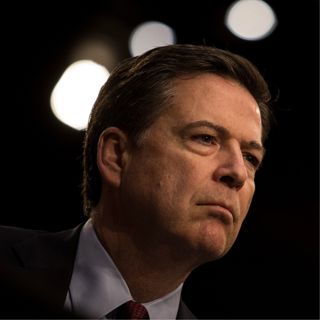
A Disastrous Day in Court for Trump
A federal judge on Monday tossed out separate criminal charges against the former F.B.I. director James B. Comey and New York’s attorney general, Letitia James.The manner in which the judge dismissed the Comey indictment could now lead to a legal fight over whether the government can try to refile the charges with another grand jury.Devlin Barrett, who covers the Justice Department and the F.B.I. for The New York Times, discusses President Trump’s campaign of retribution against his perceived enemies and walks us through the judge’s rulingsGuest: Devlin Barrett, a New York Times reporter covering the Justice Department and the F.B.I..Background reading: The cases against Mr. Comey and Ms. James are dismissed.Photo: Drew Angerer for The New York TimesFor more information on today’s episode, visit nytimes.com/thedaily. Transcripts of each episode will be made available by the next workday. Subscribe today at nytimes.com/podcasts or on Apple Podcasts and Spotify. You can also subscribe via your favorite podcast app here https://www.nytimes.com/activate-access/audio?source=podcatcher. For more podcasts and narrated articles, download The New York Times app at nytimes.com/app.
25 Nov 202522min