Copland Symphony No. 3

Copland Symphony No. 3

There has always been a debate about "The Great American Symphony." By the time most prominent American composers got around to writing large scale symphonic works, the symphony had very nearly gone out of fashion. To many musicians and thinkers, the symphony had passed on with the death of Mahler. With the advent of atonality, which essentially destroyed the developmental structure that symphonies rested on, there seemed to be nowhere for the symphonic genre to go. The traditional udnerstanding is that composers like Shostakovich, Prokofiev, and Sibelius, among others, picked the symphony back up from its deathbed and resurrected it. But there was a generation of American composers also writing symphonies around this time, and many of them have never quite gotten the consideration they deserve. Ives wrote 4 brilliant symphonies, Bernstein wrote 3 ambitious symphonies, there are the symphonies by the first generation of Black American composers, namely William Dawson's Negro Folk Symphony, and then there are much less known symphonies by composers like Roy Harris, which were huge successes at the time of their premiers, but which have faded into obscurity. Despite many strong efforts, very few American symphonies have made their way into the standard "canon." That is, except for one: Copland's 3rd Symphony, which is almost certainly the most played American symphony. It was written as World War II was coming to an end, and it is one of Copland's most ardent and life-affirming works. Naturally, connections were made to the Allied triumph in World War II, but Copland insisted that the symphony wasn't a reflection of the era, writing: "if I forced myself, I could invent an ideological basis for the Third Symphony. But if I did, I'd be bluffing—or at any rate, adding something ex post facto, something that might or might not be true but that played no role at the moment of creation."

Whatever the inspiration, this symphony has become one of Copland's most enduring works, even though it is also in many ways one of his most complex. It is a massive work, nearly 40 minutes in length, and it requires a huge and virtuosic orchestra. It also features some of Copland's most recognizable tunes, including of course, the Fanfare for the Common Man, which permeates the symphony and is in many ways its central theme. So today, on this Patreon Sponsored episode, we'll dig deep into this symphony, mapping out its unusual form, and savoring the energy, optimism, and creativity with which Copland attacked the well-worn genre of the symphony. Join us!

Episoder(283)

Deborah Borda, President of the New York Philharmonic

Deborah Borda, President of the New York Philharmonic

Of all the interviews I've done this year on Sticky Notes, this might be my favorite. I sat down a few weeks ago with Deborah Borda, the new CEO and President of the New York Philharmonic, to talk ab...

21 Feb 201849min
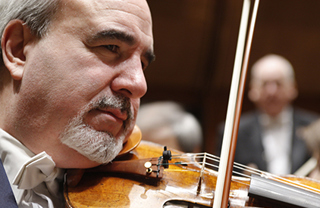
42 Years on the New York Phil Front: A Conversation with Glenn Dicterow

42 Years on the New York Phil Front: A Conversation with Glenn Dicterow

This week on Sticky Notes, I'm really happy to welcome Glenn Dicterow, the former concertmaster of the New York Philharmonic, to the show. Glenn was a concertmaster for an incredible 42 years, giving...

7 Des 201745min
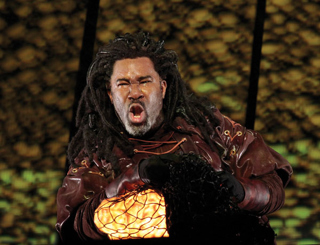
A Conversation w/ Bass-Baritone Eric Owens

A Conversation w/ Bass-Baritone Eric Owens

Part 2 of The Week of the Voice is here with the incredible bass-baritone Eric Owens! We talk about the joy of getting to play bad guys in opera, his professional-level oboe playing(!!), conducting, ...

19 Okt 201739min
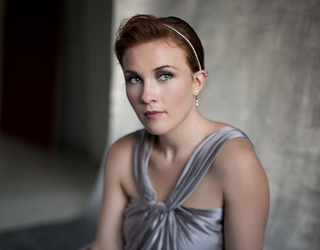
A Conversation w/ Mezzo Soprano Sasha Cooke

A Conversation w/ Mezzo Soprano Sasha Cooke

Welcome to the Week of the Voice! Join conductor and host Joshua Weilerstein, back from a brief illness-inspired hiatus(!), as he welcomes in the amazing Mezzo-Soprano Sasha Cooke for a chat about Ma...

17 Okt 201747min
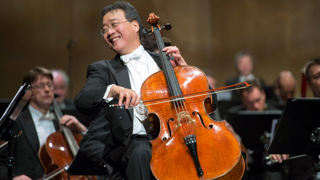
How to Change the World w/ Yo-Yo Ma

How to Change the World w/ Yo-Yo Ma

Join conductor and host Joshua Weilerstein as he welcomes the legendary cellist and humanitarian Yo-Yo Ma for a full-length interview! In the interview, we discuss what it means to be a musical citiz...

20 Sep 201739min
Emanuel Ax Interview

Emanuel Ax Interview

Join conductor and host Joshua Weilerstein for a conversation with the world-renowned pianist Emanuel Ax! We cover crossword puzzles, growing up in the Soviet Union, moving to Canada, and then to New...

20 Jun 201755min

Eun Lee, Founder of The Dream Unfinished

Eun Lee, Founder of The Dream Unfinished

Concluding a week-long focus on Composers of Color, join host Joshua Weilerstein as he welcomes Eun Lee, the founder of The Dream Unfinished, an activist orchestra using classical music as a platform ...

8 Jun 201731min
10 things to change about classical concerts

10 things to change about classical concerts

Join your host, conductor Joshua Weilerstein, as he welcomes Aram Demirjian, the Music Director of the Knoxville Symphony, and Matt Szymanski, the Founder and Music Director of Phoenix, to discuss an ...

23 Mai 20171h 4min

Populært innen Underholdning

papaya
enkel-servering
tore-og-haralds-podkast
harm-og-hegseth
storefri-med-mikkel-og-herman
konspirasjonspodden
folk-flest-med-linn-og-nils
topp-3-med-wold-og-fladseth
tusvik-tnne
ma-pa-behandling-med-morten-ramm
kjendiscrush-med-sofie-karlstad
hovla
big-5-med-nils-og-harald-2
nare-venner
vitnemal
gi-meg-alle-detaljene
feedback-med-egon-holstad
rss-gammal-maiden
christine-dancke
rss-ls-the-next-episode