OS Conversations: Afghanistan
This audio was updated on 16th August.The Taliban is advancing towards Afghanistan’s capital, Kabul, as foreign forces prepare to fully withdraw from the country. Thousands of people are being displaced and many more are fearful about what lies ahead. Reporting the news in the country can result in death threats and loss of life, and host Nuala McGovern hears from Afghan journalists who are determined to continue working despite the dangers, including losing colleagues. Two women also share their fears for the future, concerned that their rights will go back two decades, to a time when women were not allowed to work or leave the house without an escort.
16 Aug 202123min
World of Wisdom: Self-help for the spirit
Life presents many personal challenges. Three spiritual advisors – Sister Dang Nghiem, Dr Shefali Tsabary and Eckhart Tolle offer guidance to members of the public from across the world on coping with anxiety, the pressures of parenting and how to learn life-lessons from the pandemic.
13 Aug 202118min
What’s Killing Israel’s Arabs?
Israel’s Arab population is in the grip of a violent and deadly crime wave. Since the start of the year, scores of Arab citizens have lost their lives and increasingly, even women and children are victims of drive-by killings, point-blank shootings and escalating gang warfare. Arabs account for only around one in five of all Israelis, yet they are now the majority of the country’s murder victims. Many say the problem of organised crime has grown out of control within their communities; others argue that the police do little to combat it. Some claim that Israel’s Jewish majority simply does not care. With a new coalition government now in office, which includes an Arab party, the BBC’s Yolande Knell meets victims’ families and those in authority to find out what is going on, and what hope there is for an end to the carnage. Producers: Quique Kierszenbaum in Israel and Michael Gallagher in London Editor: Bridget Harney
12 Aug 202126min
Hiroshima successors
When photographer Haruka Sakaguchi set out to Hiroshima to document atomic bomb survivors' stories, she discovered they were far more difficult to find than she expected. Stigmatisation and survivor’s guilt discourage many from disclosing their past, and with dwindling survivors left to tell their story, memories of the atomic bomb are fading. But a new generation has developed an unusual method of keeping those memories alive. Denshosha are the designated guardians of survivors’ memories. They act as storytellers, working with survivors to record their story and pass it down to future generations, embodying the survivor in a deeply personal way, so they do not permanently disappear.
10 Aug 202127min
Two smiley faces: Episode six
In the future, 10 years from now, will our fingers still reach for a laughing face with crying eyes? Will Unicode and its strict approval process for new emoji be relevant at all? Possibly not. We travel to Zimbabwe to hear how some designers are bypassing Silicon Valley by building their own emoji and sticker sets that reflect life in Africa. And we end the series in Shanghai, where we hear how in some parts of Asia, emoji have already been forgotten.
7 Aug 202123min
OS Conversations: Olympic golden moments
The Tokyo 2020 Olympics were always going to be different. They took place a year later than planned and were the first to be held during a pandemic, with fans banned. So as the Games come to an end, host James Reynolds hears the experiences of three gold medallists: Australian swimmer Ariarne Titmus; triathlete Flora Duffy, who won Bermuda’s first ever gold medal; and Qatari high jumper Mutaz Essa Barshim. He delighted the world when he shared that coveted top spot with Italian counterpart Gianmarco Tamberi.Italy enjoyed an incredible few hours in Japan’s National Stadium and Viviana Masini reveals her son’s challenging childhood that ultimately put him on a path to become the fastest man on the planet. Lamont Marcell Jacobs was also the first Italian to claim the men’s 100 metres Olympic gold.We also hear from residents in Tokyo. Two of them explain their change of heart about holding the Games in the capital. Meanwhile, the pandemic remains an emergency and two doctors in the city discuss the latest rise in Covid rates.
7 Aug 202123min
Malta and the El Hiblu 3
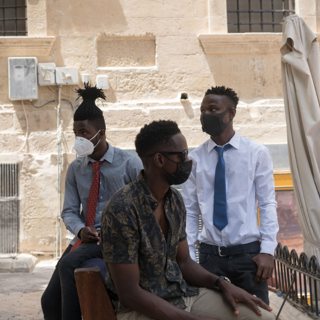
This is the curious story of how a child refugee ended up in Malta accused of the most serious crime - of being a terrorist. Lamin was 13 when he ran away from his home in Guinea in search of a better life. He had never even heard of Malta. But after attempting the perilous sea crossing to Europe, he and two other teenagers were accused of hijacking the ship, the El Hiblu, that rescued them and brought them to shore. If found guilty he and the young men could face life in prison. Two years on the case has still not been taken to trial and the three remain in limbo. For Assignment, the BBC’s Europe correspondent Jean Mackenzie travels to Malta to hear Lamin’s story, as she searches for answers about what happened on board the ship that day and why Malta is taking such a tough stance on these young migrants. Producer Kate Vandy.
5 Aug 202126min
Africa’s vaccine ambitions
Africa is a continent of 1.3 billion people, but makes less than 1% of the lifesaving vaccines it needs. The continent’s 54 nations are almost entirely dependent on agencies like Unicef and Gavi, the Vaccine Alliance, for these essential pharmaceuticals. But the pandemic of 2020 has been a harsh lesson in the dangers of relying on other countries and agencies for support. Numerous vaccine clinical trials have been conducted in Africa, yet these nations still find themselves at back of the queue for Covid-19 jabs. However, efforts are now underway to change this. At a conference in early April, African leaders pledged to manufacture 60% of the vaccines they need by 2040. But is this an achievable goal?
3 Aug 202127min