79: Let My People Go (Exodus and Slavery?)

79: Let My People Go (Exodus and Slavery?)

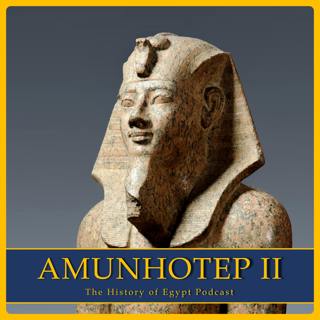
Amunhotep II (Part 3): Slavery and the Bible. In 1435 BCE, King Amunhotep II led a devastating war in Syria. He took thousands of captives and transported them to Egypt by force. Once there, they became captive workers of the Egyptian elite. Was this the historical inspiration for the Biblical "Captivity"? We go in search of answers... Website: www.egyptianhistorypodcast.com. Support the show via Patreon www.patreon.com/egyptpodcast. Make a one-time donation via PayPal payments. Music by Keith Zizza www.keithzizza.com. Additional Music by Michael Levy www.ancientlyre.com. Select Bibliography: Osiris.net – Tomb of Nakht (website) Yohanan Aharoni, “Some Geographical Remarks Concerning the Geography of the Campaigns of Amenhotep II,” Journal of Near Eastern Studies, 1960. Manfred Bietak, “Peru-Nefer: The Principle New Kingdom Naval Base,” Egyptian Archaeology, 2009. Edwin C.M. van den Brink, Tombs and Burial Customs at Tell el-Dab’a, 1982. Barbara Cummings, Egyptian Historical Records of the Later Eighteenth Dynasty, 1982. Norman de Garis Davies, The Tomb of Ken-Amun at Thebes, 1917. Norman de Garis Davies, The Tomb of Rekh-mi-Re at Thebes, 1944. James K. Hoffmeier, “Out of Egypt,” Ancient Israel and the Exodus, 2012. A. Lucas, Ancient Egyptian Materials and Industries, 4th Edition 1989. Peter der Manuelian, Studies in the Reign of Amenophis II, 1987. Patrick E. McGovern, Ancient Wine: The Search for the Origins of Viniculture, 2013. Google Books. Ellen Fowles Morris, The Architecture of Imperialism, 2005. Ellen Morris, “Mitanni Enslaved: Prisoners of War, Pride, and Productivity in a New Imperial Regime,” Creativity and Innovation in the Reign of Hatshepsut, 2014. Paul T. Nicholson & Ian Shaw, Ancient Egyptian Materials and Technology, 2003. Google Books. William H. Peck, The Material World of Ancient Egypt, 2013. James B. Pritchard, “Syrians as Pictured in the Paintings of the Theban Tombs,” Bulletin of the American Schools of Oriental Research, 1951. Anson F. Rainey, “Whence Came the Israelites and Their Language?” Israel Exploration Journal, 2007. Anson F. Rainey, “Unruly Elements in Late Bronze Canaanite Society,” Pomegranates and Golden Bells: Studies in Biblical, Jewish, and Near Eastern Ritual, Law, and Literature in Honor of Jacob Milgrom 1995. Catharine A. Roehrig, Life Along the Nile: Three Egyptians of Ancient Thebes, 2002. J.J. Shirley, “Kenamun/Qenamun,” The Encyclopedia of Ancient History, 2013. William Kelly Simpson (editor), The Literature of Ancient Egypt, 2003. Barbara J. Sivertsen, The Parting of the Sea, 2009. Rachael Thyrza Sparks, “Canaan in Egypt: Archaeological Evidence for a Social Phenomenon,” Invention and Innovation: Social Context of Technological Change (2), 2004. B.G. Trigger et al., Ancient Egypt: A Social History, 1983. William A. Ward, “The Shasu ‘Bedouin’: Notes on a Recent Publication,” Journal of the Economic and Social History of the Orient, 1972. William A. Ward, “Foreigners Living in the Village,” Pharaoh’s Workers: The Villagers of Deir el-Medina, 1994. Learn more about your ad choices. Visit megaphone.fm/adchoices

Episoder(402)

Let's visit Egypt? Tour 2026 November, "Roaming with Ramesses"

Let's visit Egypt? Tour 2026 November, "Roaming with Ramesses"

In November of 2026, I’d like to take you on a tour I’m calling “Roaming with Ramesses.” Themed around the 19th Dynasty, and the days of the Ramessid pharaohs, we’ll explore multiple sites across northern and southern Egypt. The tour is organised by my long-time collaborators, Ancient World Tours. They’ve been in the business for over 30 years, and every tour we’ve run has been a marvel of smooth sailing and general delights. So, we're in good hands. Tour costs, details, and sign-up form at https://www.ancient.co.uk/holiday/roaming-with-ramesses/ Password ROAMING Learn more about your ad choices. Visit megaphone.fm/adchoices

28 Nov 202514min

Ramesses II War and Peace with Prof. Peter Brand

Ramesses II War and Peace with Prof. Peter Brand

The ultimate pharaoh makes the ultimate agreement. In this interview, Prof. Peter Brand offers us his insights on the cultures of Egypt and Hatti around the time of the Year 21 Treaty. From the background details of diplomatic correspondence, to the larger context of empires at war, we deep-dive the history of this important treaty. Learn more about Prof. Peter Brand's work at https://memphis.academia.edu/PeterBrand. Find Prof. Brand's book Ramesses II, Egypt's UIltimate Pharaoh via Lockwood Press and all good retailers. Learn more about your ad choices. Visit megaphone.fm/adchoices

21 Nov 202552min

222: Peace Sells... But Who's Buying? The Egyptian-Hittite Treaty

222: Peace Sells... But Who's Buying? The Egyptian-Hittite Treaty

The Egyptian-Hittite Treaty. In regnal year 21 (c.1272 BCE), Ramesses II announced a treaty with Hattusili III. The two kings united in "peace and brotherhood, forever," and agreed to a raft of provisions regarding their territories, vassals, rules-of-succession, and more. As the first (surviving) treaty between the two Great Powers, the year 21 agreement is a landmark in the history of diplomacy. We explore the text and its impact... Music: Luke Chaos. Learn more about your ad choices. Visit megaphone.fm/adchoices

14 Nov 202536min

221: Ramesses II Raiders of Syria

221: Ramesses II Raiders of Syria

The later wars of Ramesses II (Years 8 to 15). Following Kadesh, Ramesses led or despatched further campaigns into Canaan and Syria. These battles are documented on his temple walls, preserving some details of the geopolitical situation. From the death of a rival, to the plundering of Syria's heartland, we go in search of these "lost campaigns." Music: Ancient Lyric and Luke Chaos. Logo image: Ramesses II attacks Dapur (Wikimedia public domain). Learn more about your ad choices. Visit megaphone.fm/adchoices

7 Nov 202526min

220: Ramesses II Dead Sea to Galilee

220: Ramesses II Dead Sea to Galilee

Moves and counter-moves. In the aftermath of Kadesh, Muwattalli (King of Hatti) seems to consoldiated hold over Syria. Border territories like Amurru fell to Hittite influence. At home, Ramesses spent at least one year regrouping before launching his reponse. Soon, pharaonic armies were marching into northern Canaan (around Galilee) and east, into Moab (Mwibw). The pharaoh's imperial authority had taken a beating; it was time to assert his strength. The History of Egypt Podcast: Website: www.egyptianhistorypodcast.com. Support the show via Patreon www.patreon.com/egyptpodcast. Make a one-time donation via PayPal payments https://www.paypal.com/ncp/payment/BHC6MGDBC6SXU. We have merch! Browse our designs at Dashery by TeePublic https://egyptpodcast.dashery.com/ . Learn more about your ad choices. Visit megaphone.fm/adchoices

31 Okt 202524min

219: Abu Simbel, Ramesses' Great Temple

219: Abu Simbel, Ramesses' Great Temple

Holy mountain. Around 1286 BCE, builders started work at Abu Simbel. Sacred to a local form of Horus, this sandstone mountain would become one of the most famous monuments in the Nile Valley. It was called the “House of Ramesses, Beloved of Amun,” and provided a home for dozens of deities. Within, sunlight illuminated its sanctuary on certain days, and the King could honour himself in a “Temple of Millions of Years.” Thanks to some lesser-known records, we explore the function and creation of this renowned shrine, and try to answer some nagging questions... I’ll do a Livestream about Abu Simbel soon. Subscribe to my YouTube channel to learn more https://www.youtube.com/@dominicperryae Epilogue: Around 593 BCE, soldiers of Psamtik II (or Psammetichus) marched to war in Nubia. Along the way, they visited Abu Simbel... Music by Luke Chaos. Learn more about your ad choices. Visit megaphone.fm/adchoices

17 Okt 202545min

218: Give Me Back My Donkey! and Other Tales

218: Give Me Back My Donkey! and Other Tales

Daily Life in Ramessid Egypt (Part 1). Starting around 1300 BCE, the (surviving) corpus of written documents from Egypt begins to increase dramatically. It's not clear why, but papyrus and ostraca are far more abundant for this era than anything before. Thanks to these records, we get many glimpses of daily life and personal concerns, from the society of the time; and we can enjoy some Small Stories of life in Ramessid Egypt. Logo image: Dancers and musicians from the 18th Dynasty tomb of Neb-Amun, now in the British Museum (via Wikimedia Commons public domain). The dancers wear "string" garments that may be the ruwedj referenced by Ise in her letter to her sister. The History of Egypt Podcast: Website: www.egyptianhistorypodcast.com. Support the show via Patreon www.patreon.com/egyptpodcast. Make a one-time donation via PayPal payments https://www.paypal.com/ncp/payment/BHC6MGDBC6SXU. We have merch! Browse our designs at Dashery by TeePublic https://egyptpodcast.dashery.com/ Learn more about your ad choices. Visit megaphone.fm/adchoices

10 Okt 202529min

217: The Art of Kadesh (Livestream)

217: The Art of Kadesh (Livestream)

Our final part of the Kadesh story is Ramesses' art. Wall carvings, on major temples, present the pharaohs' summary of Kadesh and the conflict. They include many fun details, including enemy combatants, and comparing some scenes with artefacts allows us to imagine aspects of the ancient battle. Video version available on my YouTube channel https://www.youtube.com/@dominicperryae under "Live." Direct link here https://youtube.com/live/mos4jf6oVbk. Learn more about your ad choices. Visit megaphone.fm/adchoices

3 Okt 20251h 14min

Populært innen Samfunn

rss-spartsklubben
giver-og-gjengen-vg
aftenpodden
aftenpodden-usa
konspirasjonspodden
popradet
rss-nesten-hele-uka-med-lepperod
rss-henlagt-andy-larsgaard
lydartikler-fra-aftenposten
wolfgang-wee-uncut
grenselos
fladseth
synnve-og-vanessa
frokostshowet-pa-p5
min-barneoppdragelse
relasjonspodden-med-dora-thorhallsdottir-kjersti-idem
alt-fortalt
vitnemal
den-politiske-situasjonen
rss-dette-ma-aldri-skje-igjen