

367 | How to Calculate Your FI Number: Retirement Planning Basics

367 | How to Calculate Your FI Number: Retirement Planning Basics

Most retirement calculators are lying to you—they base your FI number on income, not on what you actually spend. Brad and Jonathan break down why this matters and how to fix it. If you spend $40,000 annually, you need $1 million to retire comfortably using the 4% withdrawal rule. That's your real FI number—not some inflated figure based on replacing your current salary. The hosts walk through the math, expose common calculator flaws, and explain why understanding your actual expenses (including taxes and insurance) is the foundation of any realistic retirement plan. The discussion also covers financial advice for recent graduates: start 401(k) contributions immediately, avoid charging more on credit cards than you can pay off monthly, and resist lifestyle inflation. A high savings rate from the beginning compounds over decades, making early career choices disproportionately powerful. Key Takeaways Understanding Your FI Number: Your FI number is determined by your actual annual expenses. Spending $40,000 per year means aiming for a $1 million FI number. Starting 401(k) Contributions Early: Begin contributions with your first paycheck to maximize growth through compounding and employer matching. Avoid Lifestyle Inflation: Maintaining a modest lifestyle significantly increases your savings rate. Chapters [00:00:12] Introduction and Episode Overview [00:01:05] Audience Feedback Interaction [00:07:01] Understanding Annual Expenses [00:08:22] Common Misconceptions with Retirement Calculators — Traditional retirement calculators often rely on current income rather than actual expenses. [00:32:09] Financial Lessons for College Graduates Key Quotes "Understand your FI number through your expenses." [00:20:03] "High savings rates lead to financial security." [00:41:06] "Keep your lifestyle in check to boost savings!" [00:41:45] Action Items Calculate your annual expenses accurately to set your FI number. [00:20:03] Start 401(k) contributions early in your career. [00:33:17] Develop a personal budgeting system to track expenses and savings. [00:41:06] Terminology FI number: The amount of money needed to retire, typically calculated by multiplying annual expenses by 25. [00:20:03] Retirement calculator: Tools used to estimate savings needs based on income and expenses. [00:08:22] Flexible spending rules: Strategies that allow spending adjustments based on market conditions and personal circumstances. [00:32:28] Related Resources Episode 176: Flexible Spending Rules ▶ Listen Next: Ep. 368 — Goal Setting for Financial Independence Part 1 | Essential Listening

Denne episoden er hentet fra en åpen RSS-feed og er ikke publisert av Podme. Den kan derfor inneholde annonser.

Episoder(682)

609 | How to Talk to Your Partner about FI | Jasper Lee

609 | How to Talk to Your Partner about FI | Jasper Lee

Your spouse shoots down every FI conversation with "we can't afford it" or "retirement at 35 sounds crazy." You respond with better spreadsheets, tighter logic, more compelling numbers—and somehow mak...

27 Jul 0s

608 | Die With Zero, Revisited

608 | Die With Zero, Revisited

Brad Barrett's daughter just graduated high school. She's heading to college in a few months. The number of times he'll see her for the rest of his life? Already countable. This realization—visceral a...

20 Jul 1h 13min

607 | Other Mountains I Want to Climb | Diania Merriam

607 | Other Mountains I Want to Climb | Diania Merriam

Reaching financial independence is supposed to be the goal—but what if you get there and realize the real skill isn't earning or saving, but learning to spend? And what if the metric for business succ...

13 Jul 1h 21min
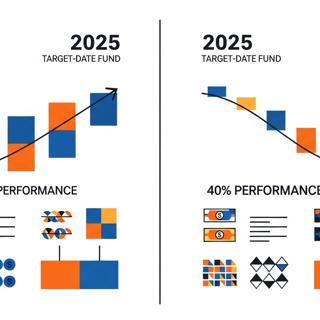
606 | Deep Dive: Target-Date Retirement and Bond Funds | Cody Garrett

606 | Deep Dive: Target-Date Retirement and Bond Funds | Cody Garrett

Most investors think they're buying the same thing when they choose a target date fund—but two people who bought 2025 target date funds 15 years ago could have 40% different returns today. Same target...

6 Jul 1h 8min

605 | Retire in Less Than 10 Years

605 | Retire in Less Than 10 Years

At 21, Cody Berman appeared on ChooseFI as a college student discovering financial independence. Three years later, he retired at 26. Now 30 with a $5 million net worth, he's back to reveal exactly ho...

29 Jun 1h 7min

604 | Getting Personal With Personal Finance: Bill Yount

604 | Getting Personal With Personal Finance: Bill Yount

Bill Yount reached financial independence at 60—then froze. His financial advisor confirmed 100% security, yet instead of relief, he felt disoriented fog. The emergency medicine physician who transfor...

22 Jun 1h

603 | Crash Proof: The Science Of Stock Market Resilience | Brian Feroldi

603 | Crash Proof: The Science Of Stock Market Resilience | Brian Feroldi

The stock market crashes about once every three years—at least a 20% drop. Most investors panic and sell. But if you understood why markets always recover, you'd do the opposite. Brian Feroldi reveals...

15 Jun 51min
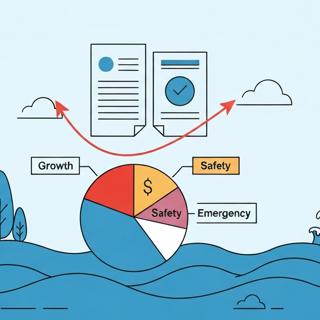
602 | FI 201 Beyond FI Basics: Asset Allocation & Market Psychology Mastery

602 | FI 201 Beyond FI Basics: Asset Allocation & Market Psychology Mastery

Most investors lose to the market because they're trying to pick winners in a game where only 4% of stocks have created 100% of market wealth over the past century. The math isn't in your favor—but th...

8 Jun 1h 1min

Populært innen Business og økonomi

stopp-verden
dine-penger-pengeradet
e24-podden
lydartikler-fra-aftenposten
rss-penger-polser-og-politikk
rss-pa-konto
pengepodden-2
tid-er-penger-en-podcast-med-peter-warren
utbytte
morgenkaffen-med-finansavisen
rss-borsmorgen-okonominyhetene
liberal-halvtime
finansredaksjonen
livet-pa-veien-med-jan-erik-larssen
rss-skravla-gar
pengesnakk
lederpodden
paretopodden
rss-kron-podden
rss-renters-rente