
You Must Live Below Your Means
The Daily Stoic29 Okt 2019

You Must Live Below Your Means

The Roman elite were constantly living beyond their means. Leaders like Cicero lived lavishly—he owned something like nine different villas at the same time. Other Romans believed the path to political power lay in essentially bribing the public with extravagant games and public spectacles. Julius Caesar was constantly spending money he didn’t have to impress people he didn’t respect. Even the Roman empire itself was constantly overspending, leaving it to more austere emperors like Marcus Aurelius to pay down the country’s debts by selling off palace furnishings.

Seneca, for his part, wrote eloquently about the meaningless of wealth and the importance of the simple life. And yet, money is partly what attracted him to Nero’s service. In 13 years working for a man who was clearly deranged and evil, Seneca became one of Rome’s richest men. This afforded him an incredible lifestyle. He threw enormous parties. He accumulated huge land holdings and impressive estates. But his taste for the finer things meant swallowing a bitter moral pill...and eventually, this association cost him his reputation and his life.

If only Seneca and these other spendthrift Romans could have listened to the simple advice in Cato the Elder’s On Agriculture, one of the oldest works in the entire Latin language. There, Cato—the great grandfather of the Stoic Cato the Younger—talks about the importance of managing your money and your tastes.

“A farm is like a man,” he wrote, “however great the income, if there is extravagance but little is left.” His advice to the aspiring farmer is to build a house within their means—to put your money into your farm, into something that generates returns, not something that impresses your neighbors or assuages your ego. It was better, he said, to cultivate the selling habit, not the buying habit. Selling meant you were making, buying meant you were consuming. How does a business succeed? By things going out the door, not in the door.

It’s easy to acquire. It’s hard to say no. It’s tough to develop limits and to figure out what enough is. But like Cato said and Seneca’s fate painfully illustrates, if you can’t do that, eventually there will be nothing left and nowhere to go.

See Privacy Policy at https://art19.com/privacy and California Privacy Notice at https://art19.com/privacy#do-not-sell-my-info.

Denne episoden er hentet fra en åpen RSS-feed og er ikke publisert av Podme. Den kan derfor inneholde annonser.

Episoder(3087)

Who Can Teach Us More? | Stick With Just The Facts

Who Can Teach Us More? | Stick With Just The Facts

We don’t control the role we are assigned by circumstance…but we control how we play that role.💡 We designed our How To Read Epictetus (A Daily Stoic Guide) as a personal field guide —part book club,...

10 Aug 8min
BONUS | The Daily Routine That Built Marcus Aurelius

BONUS | The Daily Routine That Built Marcus Aurelius

Marcus Aurelius’ life looked nothing like ours, but the habits that kept him grounded still work today. In this episode, Ryan breaks down the daily practices Marcus used to stay focused, disciplined, ...

10 Aug 16min

11 Final Takeaways From The Odyssey

11 Final Takeaways From The Odyssey

What can a 3,000-year-old story about gods, monsters, and shipwrecks teach us today? Almost everything. In this episode, Ryan breaks down some of the most powerful lessons from The Odyssey and the anc...

9 Aug 32min

Stop Judging People. Go Meet Them. | Peter Santenello

Stop Judging People. Go Meet Them. | Peter Santenello

It is easy to judge people from a distance. It is much harder to reduce them to a stereotype once you have sat with them, listened to their story, and tried to understand how they see the world. In th...

8 Aug 58min

Ask Yourself For Peace (And You’ll Find It At Your Feet) | A Week Without Complaining

Ask Yourself For Peace (And You’ll Find It At Your Feet) | A Week Without Complaining

All you want is some quiet. All you want is some space. All you want is some calm. More than want it, you need it. You need it for your sanity. For your survival.🎶 Song lyrics: Future Islands - "A D...

7 Aug 7min

This Is Almost a Miracle | The Epictetus Lesson Kyle Carpenter Lives By

This Is Almost a Miracle | The Epictetus Lesson Kyle Carpenter Lives By

Epictetus’s work changed Marcus’ life. Both of them have changed Ryan's life. Both of them will change your life—if you let them.--Kyle Carpenter is a medically retired United States Marine who receiv...

6 Aug 11min

These Are Things You Cannot Buy

These Are Things You Cannot Buy

As Epictetus, the slave-turned-philosopher who inspired Marcus, reminds us, ”Wealth consists not in having great possessions, but in having few wants.”🎶 Song lyrics: A Satisfied Mind (Bon Iver versi...

5 Aug 2min
The Marcus Aurelius Quote Tom Junod Can’t Forget

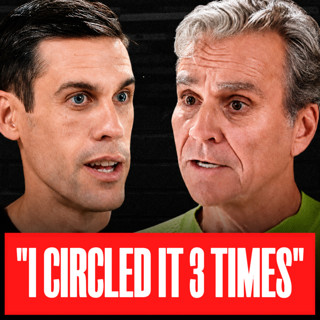
The Marcus Aurelius Quote Tom Junod Can’t Forget

One sentence from Marcus Aurelius made Tom Junod circle it three times, star it, and dog-ear the page. In this episode, Ryan talks with the acclaimed writer about reading Meditations for the first tim...

5 Aug 12min

Populært innen Business og økonomi

stopp-verden
dine-penger-pengeradet
lydartikler-fra-aftenposten
rss-penger-polser-og-politikk
e24-podden
rss-borsmorgen-okonominyhetene
rss-skravla-gar
pengepodden-2
rss-pa-konto
utbytte
tid-er-penger-en-podcast-med-peter-warren
morgenkaffen-med-finansavisen
liberal-halvtime
livet-pa-veien-med-jan-erik-larssen
okonomiamatorene
lederpodden
rss-markedspuls-2
rss-kron-podden
stockup
boligbobla