55. You’re not all at sea if you know where you are

55. You’re not all at sea if you know where you are

It may not come as a surprise to discover that many authorities believe that, if you’re doing a long journey at sea, it can be helpful to know where you are.

Working out your latitude was relatively simple and had been known for a long time before the eighteenth century. Longitude was another matter. The British government even put up a prize for the first to come up with a really viable solution.

Enter John Harrison, a remarkable craftsman. He started as a joiner, so a skilled woodworker. When he started building clocks, he used wood for the work. But he realised that, to build a chronometer, a device that could tell sailors at sea the time in a specified distant location, e.g. London, he would have to work in metals. So he taught himself to do so.

He impressed the Board of Longitude in 1737 with his first prototype, but he wasn’t happy with it himself. So he spent another 27 years building three more, with financial support from the Board. In 1764, his fourth prototype, the size of a large watch, passed the test required for the prize.

A lot of this work had been funded by the grants from the Longitude Board, a public body. That’s a model for research that persists to this day. As do the techniques that followed the success of his chronometer: mass production of the devices, exploring techniques that would be the hallmark of the industrial revolution.

The Longitude story is about helping sailors navigate at sea. But it’s also about ways of dealing with Research and Development, and with Manufacturing processes, that went far further still. It shows how much can be achieved by the clever use of government funds well invested.

Illustration: John Harrison by Thomas King, with his successful fourth prototype chronometer. Science Museum Group Collection, released under Creative Commons

Music: Bach Partita #2c by J Bu licensed under an Attribution-NonCommercial-No Derivatives (aka Music Sharing) 3.0 International License

Episoder(274)

249. Who governs Britain?

249. Who governs Britain?

How did Heath end up calling an election on the question of who governed the country? Especially as the choice he seemed to be offering was between him and the minders. This episode traces the impact ...

5 Jul 202514min
248. Withered Heath

248. Withered Heath

Ted Heath’s government had to deal with two problems drawn from Britain’s postimperial standing: • adapting to its loss of global status, by negotiating, at the third time of asking and for the first ...

22 Jun 202514min
247. Hopes dashed

247. Hopes dashed

After talking last week about his government’s achievements in the social sphere, this episode looks at the difficulties Wilson faced in economics and foreign affairs.One way Wilson explored to addres...

15 Jun 202514min

246. The sixties, swinging - high and low

246. The sixties, swinging - high and low

According to the English poet Philip Larkin, the sixties saw the invention of sexual intercourse. While that may not be quite the case, it was certainly a time when a lot of people decided that it was...

8 Jun 202514min
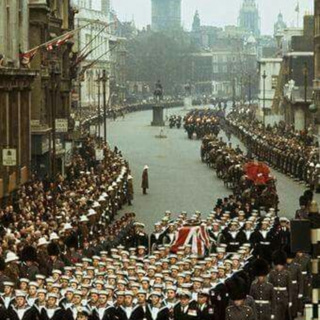
245. Pressures preventing progress

245. Pressures preventing progress

The Wilson government got off to a pretty sticky start, with the new Prime Minister learning, more or less as he arrived at Downing Street in October 1964, that the trade deficit for the year was like...

1 Jun 202514min
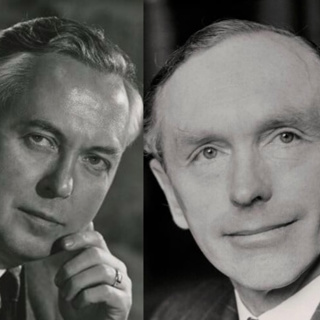
244. Harold gets Home

244. Harold gets Home

Here we’re focusing on the changes that took place in Britain after Supermac (Harold Macmillan) stood down as Prime Minister.A lot of how that went depended on the Opposition formed by the Labour Part...

25 Mai 202514min

243. Sex, spies and a slippery slope

243. Sex, spies and a slippery slope

Last time we looked at the continuing disintegration of the British Empire. In this episode we look at two other key aspects of Macmillan’s foreign policy, Britain’s relations with the US and with pot...

18 Mai 202515min
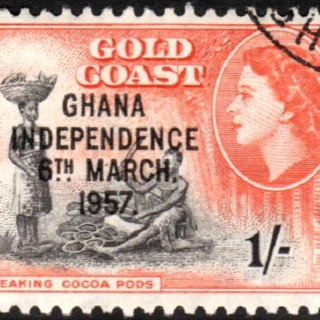
242. A wind of change driving the retreat from empire

242. A wind of change driving the retreat from empire

‘The wind of change’ was the other famous phrase of Harold Macmillan’s, along with ‘You’ve never had it so good’. It came in a speech in which he talked about how a movement had grown up in many count...

4 Mai 202514min

Populært innen Historie

rss-dette-ma-aldri-skje-igjen
historier-som-endret-norge
rss-katastrofe
rss-benadet
henrettelsespodden
historier-som-endret-verden
sektledere
aftenposten-historie
rss-nadelose-nordmenn-gestapo
med-egne-oyne
rss-strid-de-norske-borgerkrigene
rss-frontkjemperne
taakeprat
rss-gamle-greier
historiepodden
historiepodden-ww2
rss-historier-fra-gudbrandsdalen
liberal-halvtime
rss-politisk-preik
vare-historier