198. Unfit for heroes

198. Unfit for heroes

At the end of the First World War, a devastating worldwide flu pandemic killed perhaps as many as 50-100 million around the globe, and even 228,000 in Britain. That was a cruel addition to the 880,000 lost to the war itself.

Despite that blow, Lloyd George’s government did what it could to realise its objective of making Britain a ‘land fit for heroes’. That meant moving on with the programme of social reforms he’d already launched before the war. He made considerable progress in health, education, pensions and housing. However, Lloyd George was a Liberal Prime Minister in a Tory-dominated government. That imposed serious limitations on how far he could take a radical programme.

This was made worse by the economic downturn that hit the world economy in 1920. The Conservatives, never very keen on all this social radicalism, became increasingly concerned about Lloyd George when economic conditions it more difficult than ever to finance the kind of public spending that his reforms required. The Prime Minister, coming under growing pressure from his Conservative partners, tried to placate them by dumping a Minister most associated with this high spending, even though he was an important ally to him. Christopher Addison, perhaps the most distinguished medic ever to become a Member of the British Parliament, was driven from his position and soon afterwards resigned.

Something similar happened with Edwin Montagu who, as Secretary of State for India, had begun to introduce a programme of political reform there. Confused and far too limited, it was still a well-intentioned initiative, hated by the arch-imperialists, such as the Conservative MPs who had backed General Dyer, the man responsible for the Amritsar massacre. Eventually, Montagu too had to go.

The trouble was that throwing raw allies to the Tory so-called diehards in this way didn’t blunt their growing opposition to him. It did, however, deprive him of much-needed support.


Illustration: Christopher Addison in 18917, by Walter Stoneman, National Portrait Gallery x67932 (left), and Edwin Montagu, public domain.

Music: Bach Partita #2c by J Bu licensed under an Attribution-NonCommercial-No Derivatives (aka Music Sharing) 3.0 International License.


Episoder(275)

242. A wind of change driving the retreat from empire

242. A wind of change driving the retreat from empire

‘The wind of change’ was the other famous phrase of Harold Macmillan’s, along with ‘You’ve never had it so good’. It came in a speech in which he talked about how a movement had grown up in many count...

4 Mai 202514min
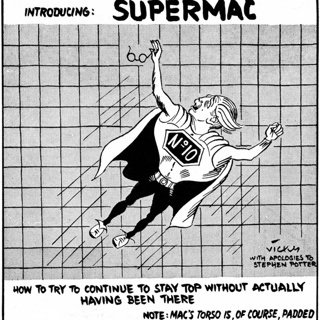
241. Supermac: you've never had it so good

241. Supermac: you've never had it so good

Macmillan overcame the terrible legacy of the Suez catastrophe and, running an economy focused on growth to fund increasing living standards, giving him the opportunity to annouce that people had neve...

27 Apr 202514min

240. Suez: nail in the imperial coffin

240. Suez: nail in the imperial coffin

Anthony Eden started his premiership well, chalking up a general election win and the lowest level of unemployment Britain has seen at any time since the Second World War. Little else went well, howev...

20 Apr 202514min
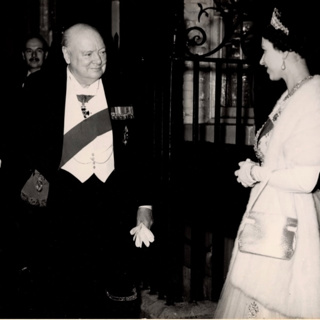
239. Winston back, Winston out

239. Winston back, Winston out

The old man was back. The Conservatives won the 1951 election and Winston Churchill returned to Downing Street. And he really was an old man – nearly 77 when he took office. To many, he it seemed incr...

13 Apr 202514min
238. Decline to defeat

238. Decline to defeat

Circumstances seemed unfavourable for a Labour victory in a 1950 election but, when it was held, Attlee managed to lead his party to the second win in its history. It took a majority of the popular vo...

6 Apr 202514min
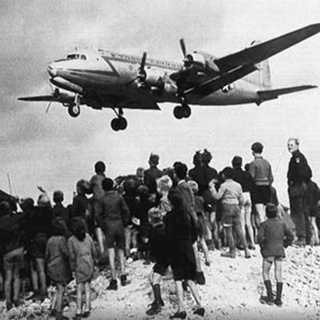
237. Citizen socialism at home, resisting the Soviets abroad

237. Citizen socialism at home, resisting the Soviets abroad

What Attlee’s government had shown was that, though it regarded itself as Socialist, it was a very distinctive kind of Socialism and heavily influenced by Liberal thinking. Where a more Marxist Social...

30 Mar 202514min
236. Greyness at home, decline abroad

236. Greyness at home, decline abroad

Of the five ‘giant evils’ William Beveridge identified, the Attlee government set out to deal with want through social security, squalor through better housing, ignorance through more schooling and di...

23 Mar 202514min
235. Clem against the Evil Giants

235. Clem against the Evil Giants

In the July 1945 general election, the British public offered Winston Churchill, as he put it himself, the ‘order of the boot’. A victorious war Prime Minister was kicked out. In his place, his deputy...

16 Mar 202514min

Populært innen Historie

rss-dette-ma-aldri-skje-igjen
med-egne-oyne
rss-katastrofe
henrettelsespodden
rss-benadet
historier-som-endret-norge
historier-som-endret-verden
rss-nadelose-nordmenn-gestapo
sektledere
aftenposten-historie
rss-frontkjemperne
rss-strid-de-norske-borgerkrigene
rss-politisk-preik
historiepodden
rss-bisarr-historie
liberal-halvtime
rss-historiepodden-ww2
undersattene
rss-gamle-greier
vare-historier