
Jaron Lanier on the Future of Our Digital Lives

Jaron Lanier on the Future of Our Digital Lives

Jaron Lanier is one of the foremost digital visionaries of our times. One of Silicon Valley’s key early innovators, this dreadlocked digital prophet has been dubbed the ‘father of virtual reality’ and named as one of Time’s 100 most influential people in the world. A former goatherd and midwife, and a virtuoso player of rare instruments, Lanier is sometimes called the ‘alternative Steve Jobs’. Neither a tech optimist nor a doom-monger, he is unique for always seeing the opportunities offered by technology as well as the dangers. In bestsellers such as You Are Not A Gadget and Who Owns the Future? he sounded an early warning about the perils of the internet – describing the tech giants as ‘spy agencies’ and ‘lords of the clouds’ for the way they reduce the value of humans to that of the data they provide. But he has also proposed another, more imaginative way to use technology. A ‘human-centered approach’, he argues, ‘leads to more interesting, more exotic, more wild, and more heroic adventures than the machine-supremacy approach, where information is the highest goal.’ Now Lanier is going back to the field where he did his pioneering work in the 1980s: virtual reality. VR has become the new frontier of human engagement with tech, and has become a medium that has transformed surgical trials, aircraft design and the treatment of injured war veterans. But it is not only about design, games and headsets, as he argues in his new book, Dawn of the New Everything. Virtual reality can extend the ‘intimate magic’ of childhood into the adult world, Lanier says, and allow us to imagine life beyond the limits of biology. But it will also test who we are. In the same way that he foresaw the dangers of web 2.0, Lanier offers a warning. Virtual reality has the potential to isolate us from each other – and render us even more in thrall to predatory tech companies. Lanier was joined om conversation by Economics editor at the BBC, Kamal Ahmed. Support this show http://supporter.acast.com/intelligencesquared. See acast.com/privacy for privacy and opt-out information. Learn more about your ad choices. Visit podcastchoices.com/adchoices

Episoder(1536)

Sir Sajid Javid – Lessons From the Front Bench (Part Two)

Sir Sajid Javid – Lessons From the Front Bench (Part Two)

For more than a decade, Sir Sajid Javid was at the heart of power in Britain. First elected in 2010, he rapidly rose to his first cabinet position as Culture Secretary. The son of a bus driver and com...

8 Feb 36min
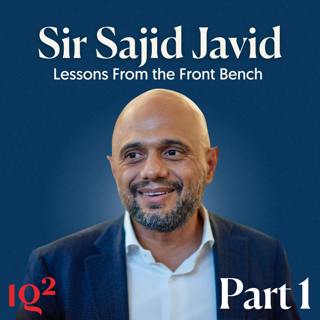
Sir Sajid Javid – Lessons From the Front Bench (Part One)

Sir Sajid Javid – Lessons From the Front Bench (Part One)

For more than a decade, Sir Sajid Javid was at the heart of power in Britain. First elected in 2010, he rapidly rose to his first cabinet position as Culture Secretary. The son of a bus driver and com...

6 Feb 41min
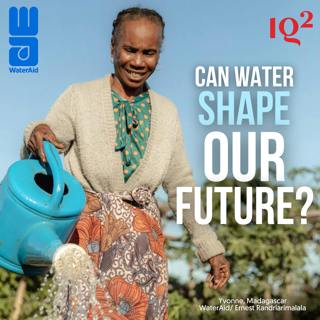
Can Water Shape Our Future?

Can Water Shape Our Future?

In today’s episode, the second in our series in partnership with WaterAid, journalist and author Coco Khan speaks to Helen Rumford, WaterAid’s Lead Policy Analyst for Climate Policy and Campaigns and ...

4 Feb 29min

Julian Barnes in conversation with Ian McEwan (Part Two)

Julian Barnes in conversation with Ian McEwan (Part Two)

Julian Barnes and Ian McEwan are widely celebrated as two of the finest writers of their generation. Along with Salman Rushdie and Kazuo Ishiguro, they were included on Granta’s prescient Best Young B...

3 Feb 43min

Julian Barnes in conversation with Ian McEwan (Part One)

Julian Barnes in conversation with Ian McEwan (Part One)

Julian Barnes and Ian McEwan are widely celebrated as two of the finest writers of their generation. Along with Salman Rushdie and Kazuo Ishiguro, they were included on Granta’s prescient Best Young B...

2 Feb 39min
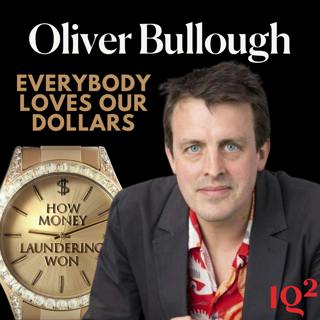
Why Can’t We Stop Money Laundering? With Oliver Bullough

Why Can’t We Stop Money Laundering? With Oliver Bullough

In an increasingly digital world, hardly anyone relies on cash. $100 bills are essentially absent from global commerce. So how come the US Federal Reserve printed 752 million and 867.2 million of them...

1 Feb 42min
Is the Arctic the World’s Next War Zone? With Kenneth R. Rosen

Is the Arctic the World’s Next War Zone? With Kenneth R. Rosen

Why Is Everyone Suddenly Fighting Over the Arctic? In this episode, Adam McCauley speaks to journalist and author Kenneth R. Rosen about the Arctic’s shifting geopolitical role in the new world order...

30 Jan 51min

Implementing and scaling AI agents in business

Implementing and scaling AI agents in business

Many organisations are experimenting with AI and AI agents. But far fewer are seeing real, measurable impact. The challenge isn’t ambition, it’s readiness. As we explored in the first episode of this ...

29 Jan 35min

Populært innen Politikk og nyheter

giver-og-gjengen-vg
aftenpodden
forklart
popradet
aftenpodden-usa
stopp-verden
lydartikler-fra-aftenposten
rss-gukild-johaug
det-store-bildet
fotballpodden-2
i-retten
dine-penger-pengeradet
rss-ness
nokon-ma-ga
aftenbla-bla
hanna-de-heldige
frokostshowet-pa-p5
rss-penger-polser-og-politikk
bt-dokumentar-2
rss-dannet-uten-piano