Dr Ruidi Shang on Crowdsourcing Human Risk Insights

Dr Ruidi Shang on Crowdsourcing Human Risk Insights

How can we use crowdsourcing to obtain human risk insights?

We’re all familiar with companies that have faced big issues in terms of misconduct. When there’s a big scandal — whether that’s banks engaging in bad behaviour or the diesel emissions cheating scandal in the motor industry - it’s very easy to look back with hindsight and point to things that could have been spotted at the time.

But wouldn’t it be better for regulators, shareholders, customers and the companies themselves, if we could identify warning signs early on?

That’s the challenge that my guest on this episode Dr Ruidi Shang, set to address. She’s an Associate Professor at Tilburg University in the Netherlands and a visiting scholar at Harvard Business School. Ruidi is the co-author of some new research entitled Tone At The Bottom: Measuring corporate misconduct from the text of employee reviews.

What she and co-author Professor Dennis Campbell set out to identify was whether it would be possible to take information that is already available about companies, and determine from that which are more or less likely to have misconduct issues. To get hold of that information they turned to an unexpected source, Glassdoor.com — a website that allows employees and former employees to leave anonymous reviews about what it is like to work for a particular company. It’s designed to help jobseekers understand the realities of working in a particular place before they decide to apply or join a company.

On the face of if this might sound odd. What can a website designed to help job seekers, tells us about the risk of misconduct? As it happens quite a lot. Because in talking about their employee experience, people end up describing the corporate culture. Since culture is a driver of misconduct, this is potentially highly relevant. Look at enough of those reviews, and you can start to build a pattern of what goes on in the organisation, and so form a picture of potential issues.

What’s clever about this dataset is that it recognises that asking people about directly misconduct is a heavily loaded question. Respondents might choose not to answer truthfully, or they might not actually recognise the fact that a high-pressure environment — which they might actually enjoy working in — could be a driver of potential misconduct. So the best way to get a good picture is not to ask people about it at all. Rather its to crowdsource insights from lots of anecdotal accounts of what it is like to work within the organisation.

It turns out that analysing the dataset on Glassdoor does have predictive capabilities. By backtesting the analysis with companies that had public scandals and exploring what was being said, before the scandals emerged, the researchers discovered that these reviews can provide advanced warning of potential misconduct issues. As we explore on the show.

To find out more about Ruidi and her work: https://www.tilburguniversity.edu/staff/r-shang

To find out more about her co-author Professor Dennis Campbell: https://www.hbs.edu/faculty/Pages/profile.aspx?facId=10677

To read Tone At The Bottom: Measuring corporate misconduct from the text of employee reviews: https://papers.ssrn.com/sol3/papers.cfm?abstract_id=3850554

Denne episoden er hentet fra en åpen RSS-feed og er ikke publisert av Podme. Den kan derfor inneholde annonser.

Episoder(368)

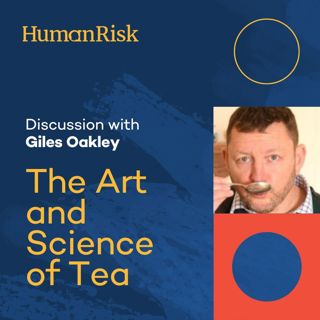
Giles Oakley on The Art & Science of Tea

Giles Oakley on The Art & Science of Tea

What does tea have to do with human behaviour? A lot more than you might think.  On this epusoed, I'm exploring one of the world's most popular drinks and what we can learn from it.SummaryMy guest is ...

15 Feb 202549min
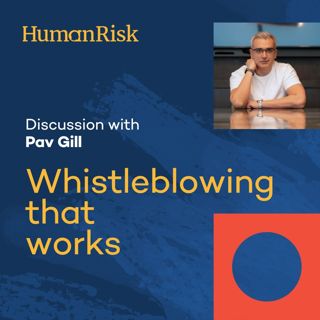
Pav Gill on Whistleblowing that works

Pav Gill on Whistleblowing that works

How do we create systems that encourage whistleblowing without incentivizing malicious reporting? Should we reward whistleblowers financially? Why is closure important, both for whistleblowers and the...

1 Feb 20251h 11min
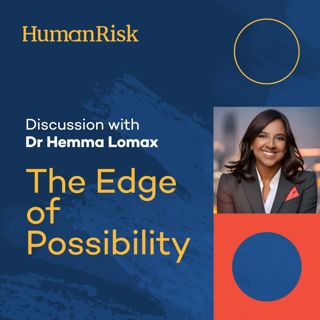
Dr Hemma Lomax on The Edge of Possibility

Dr Hemma Lomax on The Edge of Possibility

What is the edge of possibility and how can storytelling help us to find it?  My guest isn't a storyteller — she's a lawyer, working in compliance — but she's got some fascinating insights to share ab...

25 Jan 20251h 3min
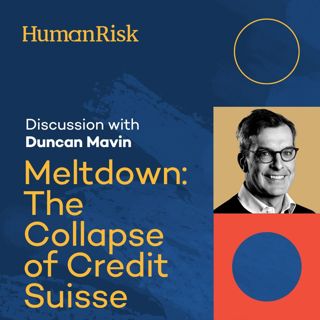
Duncan Mavin on Meltdown: The Collapse of Credit Suisse

Duncan Mavin on Meltdown: The Collapse of Credit Suisse

How does a major global bank keep surviving crises; until it doesn't?Episode SummaryOn this episode, I’m joined by Duncan Mavin, author of Meltdown: Scandal, Sleaze, and the Collapse of Credit Suisse....

12 Jan 20251h 1min

Kit Holden on Played in Germany -  a footballing journey through a nation's soul

Kit Holden on Played in Germany -  a footballing journey through a nation's soul

What can we learn about a country from its favourite sport?  A lot. Particularly when that country has a history and culture like Germany.  Which is what I'm exploring on this episode.Even if you're n...

5 Jan 202556min
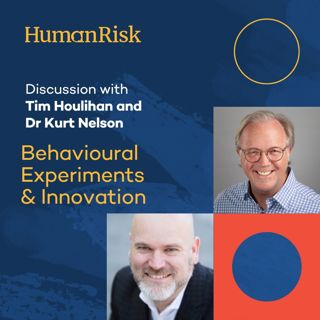
Tim Houlihan & Dr Kurt Nelson on Behavioural Experiments, Podcasting, and Innovation

Tim Houlihan & Dr Kurt Nelson on Behavioural Experiments, Podcasting, and Innovation

What role does experimentation play in making big life and creative decisions? What lessons can podcasters teach us about effective communication in business?Show Summary To answer these questions, in...

27 Des 20241h 32min
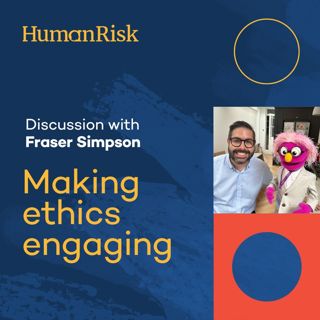
Fraser Simpson on Making Ethics Engaging

Fraser Simpson on Making Ethics Engaging

What does a pink puppet called Connie have to do with ethics? More than you might think. On this episode, I'm speaking with a lawyer, whose innovative approach to getting employees to engage in ethics...

21 Des 20241h 38min

Jono Hey on Sketchplanations

Jono Hey on Sketchplanations

Can you distill a complex concept into a single sketch? Jono Hey can and on this episode, he joins me to talk about Sketchplanations —a project that explains the world, one sketch at a time.SummaryI’v...

6 Des 20241h 7min

Populært innen Vitenskap

fastlegen
tingenes-tilstand
liberal-halvtime
jss
rss-zahid-ali-hjelper-deg
sinnsyn
forskningno
villmarksliv
rekommandert
rss-overskuddsliv
rss-paradigmepodden
vett-og-vitenskap-med-gaute-einevoll
nordnorsk-historie
tidlose-historier
dekodet-2
rss-inn-til-kjernen-med-sunniva-rose
fjellsportpodden
kvinnehelsepodden
diagnose
rss-nysgjerrige-norge