
Dr Jake Mazulewicz on Human Reliability

Dr Jake Mazulewicz on Human Reliability

What do you think of when you hear the word 'error'? It's highly likely you'll think of it negatively as a defect. The obvious way to manage defects, particularly in safety-critical industries, is to have detailed procedures, strict compliance, and zero tolerance for errors. But we know that this doesn't always work. After all, if it did, we'd have far fewer errors.

My guest on this episode takes a different approach. He specializes in helping organizations, particularly safety-critical ones where the cost of getting something wrong can be death or injury, to reduce errors, improve safety and build trust. He calls this human reliability. His name is Dr. Jake Mazulewicz, and he's been a firefighter, an emergency medical technician and a military paratrooper.

Nowadays, he brings all of those experiences to bear in helping organizations design processes and cultures that allow humans to manage the complexities that don't always allow themselves to be neatly codified into standard procedures. As you'll hear, he's got some fascinating ideas about designing safety models that flex to meet the situation's needs.

Key Moments In The Show (mins:secs)


02:14 — Dr. Jake’s background

05:25 — Mechanistic vs. Adaptive systems

06:28 — The big problem: too many leaders treat ALL systems as Mechanistic systems

09:10 — What to say to a commercial pilot when you’re walking off their aircraft after the flight lands

10:40 — Four work guidance modes

11:00 — 1) Procedures

11:53 — 2) Guidelines like, “To find out what an organization values, follow the money."

13:00 — 3) Principles like “A jury doesn’t decide what to believe. A jury decides who to believe."

21:20 — 4) Tacit KnowledgeYou can solve complex problems, but can’t explain how

26:40 — “All models are wrong, but some of them are useful.”

31:10 — How one team of electricians dramatically improved safety by using FEWER procedures

35:57 — Letter of the law vs. spirit of the law

38:20 — Have you heard of Philip K. Howard?... "Let’s pretend I haven’t.”

42:10 — We write rules when we don’t have enough trust

44:55 — Build trust by overcommunicating your intentions

45:25 — “Commander’s Intent” in military mission plans

47:55 — Listen for "Weak Signals" like hearing, “I’ll do whatever it takes…"

50:40 — Stay resilient by catching a system before it goes “exponential”

54:00 — Chris Argyris’ 17-word, 4-step recipe for creating a toxic work culture

57:10— A new Early Warning System

58:20 — Ask an expert, “What’s a 'Weak Signal' in your field, and what does it mean?”

1:04:55 — Why a non-punitive approach is so helpful and so uncommon

1:10:10 — How to get in touch with Dr. Jake — reliableorg.com

Further Information
To find out more about Praxtical Human Performance For Leaders visit www.reliableorg.com

LinkedIn: https://www.linkedin.com/in/jake-mazulewicz/


Denne episoden er hentet fra en åpen RSS-feed og er ikke publisert av Podme. Den kan derfor inneholde annonser.

Episoder(368)

Charlie Hurst, Tom Noble and Will Sudlow on Flat White or F*ck Off

Charlie Hurst, Tom Noble and Will Sudlow on Flat White or F*ck Off

What happens when someone runs with a business idea they've heard as a thought experiment on a podcast? Can a business have an expletive in its name? And is it possible to run a business that sells a ...

22 Feb 1h 15min
Amy Watson on Violence Against Women & Girls

Amy Watson on Violence Against Women & Girls

What if we stopped telling women how to stay safe, and started asking why violence against them keeps happening in the first place? On this episode, I’m joined for a second time, by Amy Watson, the fo...

15 Feb 1h 39min
Professor Veronica Root Martinez on Purpose-Driven Compliance

Professor Veronica Root Martinez on Purpose-Driven Compliance

Who determines what 'good' Compliance actually looks like?  The obvious answer is regulators (and in some jurisdictions) prosecutors. But what if it were the regulated Firms themselves?  That's the id...

7 Feb 1h 2min
Professor Tina Weisser on Trusting AI In An Uncertain World

Professor Tina Weisser on Trusting AI In An Uncertain World

As Artificial Intelligence (AI) gets smarter and tkaes over more tasks, what happens to human dynamics like trust, transparency, leadership and empathy. How can humans and machines wowrk togehter effe...

27 Jan 1h 9min
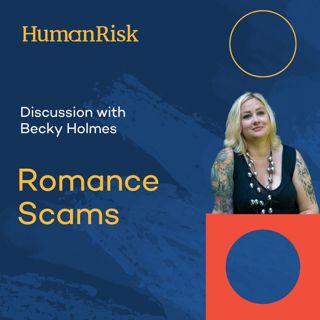
Becky Holmes on Romance Scams

Becky Holmes on Romance Scams

What lies behind Romance Fraud? Romance fraud is one of the fastest-growing forms of fraud worldwide, and one of the most emotionally devastating. It’s also one of the most misunderstood.On this epis...

21 Jan 1h 8min
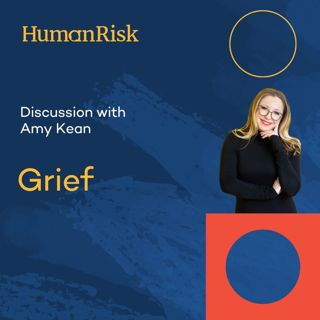
Amy Kean on Grief

Amy Kean on Grief

Why do we struggle to talk about grief? Why that matters and what we can do about it, is the subject of this episode.SummaryGrief is something almost all of us will experience, and yet something we st...

12 Jan 1h 4min
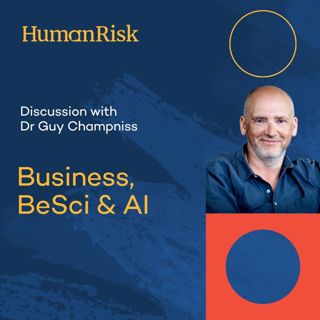
Dr Guy Champniss on Business, BeSci and AI

Dr Guy Champniss on Business, BeSci and AI

Are we losing our ability to think critically as we rely more on AI?Episode SummaryMy guest is social psychologist Dr Guy Champniss to explore the role of behavioural science in business and the emerg...

7 Des 20251h 1min
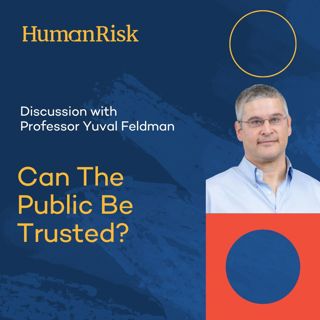
Professor Yuval Feldman on Can The Public Be Trusted?

Professor Yuval Feldman on Can The Public Be Trusted?

Why do governments rely on coercion and punishment when voluntary cooperation often produces better, more sustainable outcomes?Episode SummaryOn this episode, I’m joined once again by Professor Yuval ...

23 Nov 20251h 5min

Populært innen Vitenskap

fastlegen
tingenes-tilstand
jss
rss-zahid-ali-hjelper-deg
liberal-halvtime
sinnsyn
rekommandert
forskningno
villmarksliv
rss-paradigmepodden
vett-og-vitenskap-med-gaute-einevoll
rss-overskuddsliv
nordnorsk-historie
tidlose-historier
rss-inn-til-kjernen-med-sunniva-rose
dekodet-2
kvinnehelsepodden
grunnstoffene
fjellsportpodden
rss-nysgjerrige-norge