Dr Ludmila Praslova on The Canary Code

Dr Ludmila Praslova on The Canary Code

What can canaries in coalmines teach us about diversity and inclusion? In this episode, I’m speaking to an academic who has some fascinating ideas and insights into how we can create more inclusive work environments and cultures — in other words, how to get the best out of all employees.

Guest Bio
My guest, Dr. Ludmila Praslova, is a Professor and the Founding Director of Graduate Programs in Organizational Psychology at Vanguard University in Costa Mesa, California. She is an industrial organizational psychologist with a background in global diversity, intercultural relations, and, more recently, neurodiversity in the workplace.

She’s also the author of a new book called 'The Canary Code: A Guide to Neurodiversity, Dignity, and Intersectional Belonging at Work’ which takes a concept you’ve heard of — the canary in the coal mine — and applies it to the world of inclusion.

Her simple yet fascinating idea is that if we can focus on meeting the needs of those who are most sensitive to negative workplace dynamics and then create an environment that allows them to flourish, we can create an environment where everyone can flourish.


Episode Description:
In our discussion, we explore the importance of removing barriers in the workplace, the pitfalls of traditional hiring practices, and how the Canary Code works in practice. You'll hear
insights on creating inclusive environments, addressing workplace biases, and why something I've often done, viewing neurodivergent traits as 'superpowers', is actually unhelpful.

AI-generated timestamp summary
[00:00:00] - Introduction
  • Christian Hunt introduces Dr. Ludmila Praslova, discussing her book "The Canary Code" and its focus on inclusive work environments.
[00:01:00] - Ludmila's Background
  • Ludmila, an industrial-organizational psychologist, specializes in global diversity, intercultural relations, and neurodiversity.
[00:03:00] - Interest in Diversity
  • Ludmila's journey into diversity began with global diversity and now focuses on intersectional inclusivity and neurodiversity.
[00:07:00] - The Canary Code Concept
  • The concept suggests that addressing the needs of the most vulnerable employees can improve conditions for all.
[00:11:00] - Flexibility in the Workplace
  • Emphasizes creating flexible work environments to reduce workplace toxicity and improve productivity.
[00:18:00] - Neurodiversity Explained
  • Neurodiversity includes ADHD, dyslexia, autism, and other neurological differences that impact workplace experiences.
[00:22:00] - Managerial Concerns
  • Managers don't need to specialize in every condition but should create generally inclusive and flexible environments.
[00:25:00] - Job Matching and Crafting
  • Focus on matching jobs to individual strengths and job crafting to optimize roles.
[00:28:00] - The Limits of Flexibility
  • Some roles require specific skills and cannot be flexible, but many roles can adapt to a diverse workforce.
[00:31:00] - Validity in Hiring Practices
  • Emphasizes the need for valid, job-relevant assessments in hiring to ensure fairness and effectiveness.
[00:39:00] - Resistance to Change
  • Some organizations resist flexible work practices, but modern, flexible practices can help attract and retain talent.
[00:46:00] - Book Structure
  • "The Canary Code" is structured to be accessible to CEOs, diversity professionals, and neurodivergent individuals, with stories, research, and practical advice.
[00:58:00] - The Superpower Myth
  • While neurodivergent individuals may see their traits as superpowers, using this as a hiring argument is problematic.
[01:02:00] - Conclusion
  • Advocates for creating environments where everyone can thrive without needing extraordinary measures. Encourages more inclusive and flexible workplace practices.
Links
Ludmila's Faculty Page - https://www.vanguard.edu/about/history

The Canary Code - https://www.penguinrandomhouse.com/books/742858/the-canary-code-by-ludmila-n-praslova-phd/

Ludmila on Social Media
LinkedIn - https://www.linkedin.com/in/ludmila-praslova/
Twitter/X - https://x.com/ludmilapraslova

A piece explaining the point we discussed on the show about why neurodiversity isn't a 'superpower' - https://www.psychologytoday.com/us/blog/positively-different/202405/healing-the-invalidation-the-complex-truth-of-autism


Denne episoden er hentet fra en åpen RSS-feed og er ikke publisert av Podme. Den kan derfor inneholde annonser.

Episoder(368)

Giles Oakley on The Art & Science of Tea

Giles Oakley on The Art & Science of Tea

What does tea have to do with human behaviour? A lot more than you might think.  On this epusoed, I'm exploring one of the world's most popular drinks and what we can learn from it.SummaryMy guest is ...

15 Feb 202549min

Pav Gill on Whistleblowing that works

Pav Gill on Whistleblowing that works

How do we create systems that encourage whistleblowing without incentivizing malicious reporting? Should we reward whistleblowers financially? Why is closure important, both for whistleblowers and the...

1 Feb 20251h 11min
Dr Hemma Lomax on The Edge of Possibility

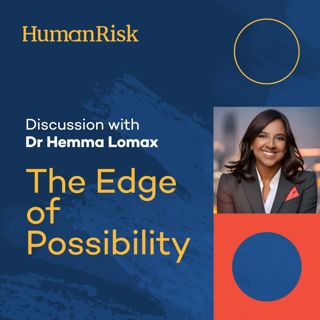
Dr Hemma Lomax on The Edge of Possibility

What is the edge of possibility and how can storytelling help us to find it?  My guest isn't a storyteller — she's a lawyer, working in compliance — but she's got some fascinating insights to share ab...

25 Jan 20251h 3min
Duncan Mavin on Meltdown: The Collapse of Credit Suisse

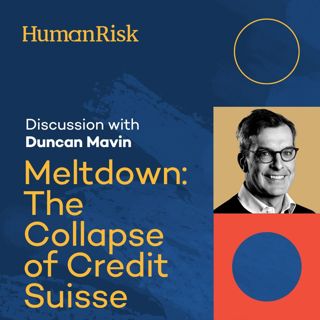
Duncan Mavin on Meltdown: The Collapse of Credit Suisse

How does a major global bank keep surviving crises; until it doesn't?Episode SummaryOn this episode, I’m joined by Duncan Mavin, author of Meltdown: Scandal, Sleaze, and the Collapse of Credit Suisse....

12 Jan 20251h 1min
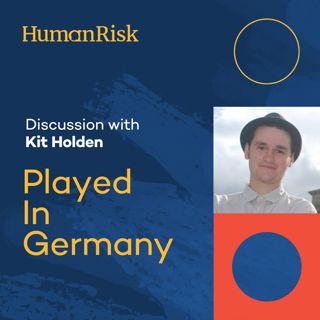
Kit Holden on Played in Germany -  a footballing journey through a nation's soul

Kit Holden on Played in Germany -  a footballing journey through a nation's soul

What can we learn about a country from its favourite sport?  A lot. Particularly when that country has a history and culture like Germany.  Which is what I'm exploring on this episode.Even if you're n...

5 Jan 202556min
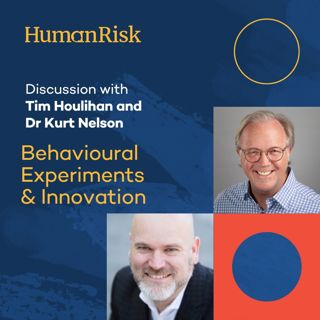
Tim Houlihan & Dr Kurt Nelson on Behavioural Experiments, Podcasting, and Innovation

Tim Houlihan & Dr Kurt Nelson on Behavioural Experiments, Podcasting, and Innovation

What role does experimentation play in making big life and creative decisions? What lessons can podcasters teach us about effective communication in business?Show Summary To answer these questions, in...

27 Des 20241h 32min
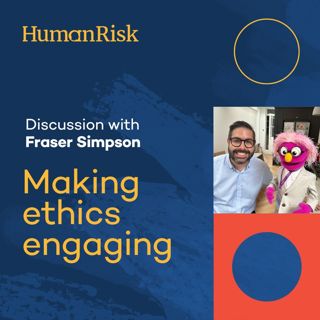
Fraser Simpson on Making Ethics Engaging

Fraser Simpson on Making Ethics Engaging

What does a pink puppet called Connie have to do with ethics? More than you might think. On this episode, I'm speaking with a lawyer, whose innovative approach to getting employees to engage in ethics...

21 Des 20241h 38min
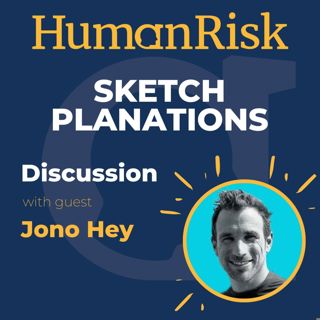
Jono Hey on Sketchplanations

Jono Hey on Sketchplanations

Can you distill a complex concept into a single sketch? Jono Hey can and on this episode, he joins me to talk about Sketchplanations —a project that explains the world, one sketch at a time.SummaryI’v...

6 Des 20241h 7min

Populært innen Vitenskap

fastlegen
tingenes-tilstand
jss
rss-zahid-ali-hjelper-deg
liberal-halvtime
sinnsyn
rekommandert
forskningno
villmarksliv
rss-paradigmepodden
vett-og-vitenskap-med-gaute-einevoll
rss-overskuddsliv
nordnorsk-historie
tidlose-historier
rss-inn-til-kjernen-med-sunniva-rose
dekodet-2
kvinnehelsepodden
grunnstoffene
fjellsportpodden
rss-nysgjerrige-norge