BEAUTY, her BEAST, and the BLOSSOMING SELF

BEAUTY, her BEAST, and the BLOSSOMING SELF

The tale of Beauty and the Beast is at least 4,000 years old, perhaps second in popularity only to Cinderella. It has generated many print versions, animated films, a Broadway show, and a Disney film. What about this tale continues to ensure its popularity? And what is this tale really about?

Beauty and the Beast is a metaphor for the development of the feminine, symbolized by an animal bridegroom—who, of course, is an enchanted prince. It’s tempting to see this tale as an example of women treated as chattel by misogynistic males, but as our archetypal bones, fairy tales show us universal problems, patterns, and psychic realities. Beauty’s task is to relate to her instinctual self, represented by the beast. Each of us has an inner other, often imaged as opposite sex, who possesses qualities that seem utterly foreign yet compel attention and interaction.

The tale begins with Beauty’s father stealing a rose for his favorite daughter from the beast’s garden. Outraged, the beast demands retribution: either the father or one of his daughters must agree to live with the beast. Beauty, described as “loyal and modest,” loves her father and insists on sacrificing herself to the beast, who they believe will kill her. A seemingly simple rose comes at a high price, and representations of masculine figures are negative: feckless father and fiend. However, the rose is a mandala. It opens like the lotus from a center and holds the promise of wholeness.

We see the interplay of opposites at the outset and throughout: Beauty’s innocence and self-sacrifice contrast with the beast’s domineering will. Beauty’s seemingly loving father is powerless and unable to protect her, but the beast provides for her every want despite her nightly refusal to wed him. In the beast’s domain, naïve and compliant Beauty discovers her power of self-determination: she stands up to the beast as she did not do with her father, and the beast agrees to let her visit her family. Given freedom from obligation, she chooses to return to the beast.

Beauty’s realization reflects her newfound ability to base loyalty on character and consciousness rather than reflexive filial duty. She needed to access autonomy, and her primal inner other—the beast--needed to relinquish control. Beauty and the Beast is a heartening tale of hard-won wholeness—and at its center is love.

LOOK & GROW

⁠⁠⁠⁠⁠⁠⁠Join THIS JUNGIAN LIFE DREAM SCHOOL⁠⁠⁠⁠⁠⁠⁠

⁠⁠⁠⁠⁠⁠⁠Do you have a topic you want us to cover?⁠⁠⁠⁠⁠⁠⁠

⁠⁠⁠⁠⁠⁠⁠WE NEED YOUR HELP! Become a patron to keep TJL running.⁠⁠⁠⁠⁠⁠⁠

⁠⁠⁠⁠⁠⁠⁠Lisa’s leading a retreat in ITALY!⁠⁠⁠⁠⁠⁠⁠

⁠⁠⁠⁠We've got totally NEW MERCH!⁠⁠⁠⁠

If you’ve been struggling in the dark trying to find the keys to unlock your dreams, help has arrived. Order your copy of ⁠⁠⁠⁠⁠⁠⁠Dream Wise: Unlocking the Meaning of Your Dreams⁠⁠⁠⁠⁠⁠⁠ from the hosts of This Jungian Life podcast and open the secret door.

Denne episoden er hentet fra en åpen RSS-feed og er ikke publisert av Podme. Den kan derfor inneholde annonser.

Episoder(447)

Goblins, Demons and Goddesses: A Conversation at the Edge of AI

Goblins, Demons and Goddesses: A Conversation at the Edge of AI

OpenAI recently had to explain to frightened users why their models kept introducing goblins and gremlins into otherwise humdrum conversations. Is it possible that archetypes are emerging through the ...

27 Aug 1h 34min
The Psychology of Magic: A Jungian Exploration

The Psychology of Magic: A Jungian Exploration

Magic can be viewed as intentional engagement with what Jung called synchronicity. It is closely related to a mythological worldview, which recognizes a grand narrative supraordinate to everyday life....

20 Aug 1h 27min
In Search of the Wild Man: Befriending Bigfoot

In Search of the Wild Man: Befriending Bigfoot

The wild man is an enduring archetypal figure worldwide, from Enkidu in Gilgamesh, to the Greek god Pan (worshipped in glens and woods), the Green Man in England, and Bigfoot and the Sasquatch in the ...

13 Aug 1h 28min
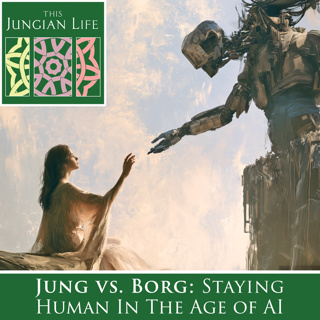
Jung vs. Borg: Staying Human in the Age of AI

Jung vs. Borg: Staying Human in the Age of AI

Are we living through a tech-driven collapse of the ecology of mind? In his new book, Jung vs. Borg, author, psychologist and Jungian scholar GLEN SLATER Ph.D suggests that industrial disruption of th...

6 Aug 1h 41min
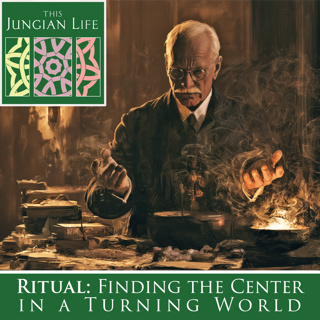
Ritual: Finding the Center in a Turning World

Ritual: Finding the Center in a Turning World

As we confront the turbulence of rapid change, technological dehumanization, and cultural polarization, how do we reconnect to being and meaning? Best-selling author BRUCE FEILER returns us to ritual:...

30 Jul 1h 10min
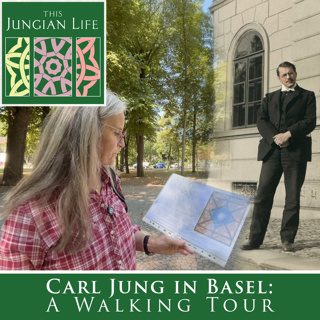
Carl Jung in Basel: A Walking Tour

Carl Jung in Basel: A Walking Tour

Happy Birthday to Carl Gustav Jung! To celebrate, we're sharing Lisa's walking tour of Basel with Jungian Analyst and author Kathrin Shaeppi. Last year, she visited Jung's hometown in Basel, Switzerla...

26 Jul 1h 43min
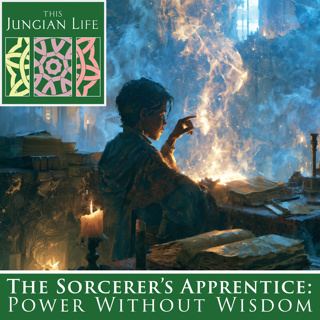
The Sorcerer’s Apprentice: Power Without Wisdom

The Sorcerer’s Apprentice: Power Without Wisdom

The tale of the Sorcerer’s Apprentice is a gripping story about loss of control and the timeless warning to be careful what you wish for.  It sets out the archetypal theme of a magical shortcut that p...

23 Jul 1h 4min
The Odyssey: A Jungian Journey Home

The Odyssey: A Jungian Journey Home

The Odyssey (the subject of a new Christopher Nolan film released on the same day as this episode), is the ancient Greek epic attributed to Homer and one of the foundational works of Western literatur...

16 Jul 1h 17min

Populært innen Helse

fastlegen
lydartikler-fra-aftenposten
psykodrama
rss-gukild-johaug
hvordan-har-du-det-mann
leger-om-livet
relasjonspodden-med-dora-thorhallsdottir-kjersti-idem
rss-skravla-gar
bak-fasaden-en-reise-i-livet-med-sykepleier-ine
foreldreradet
hjernesterk
morten-ramm-lar-kakla-ga-til-du-sovner
klimaks
g-punktet
rss-lopedrommen
kjed-deg-i-sovn-verdens-kjedeligste-podcast
hormonelle-frida
rss-garne-damer
treningsprat
sinnsyn