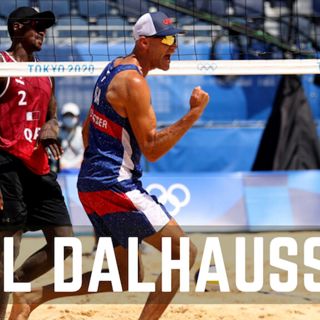
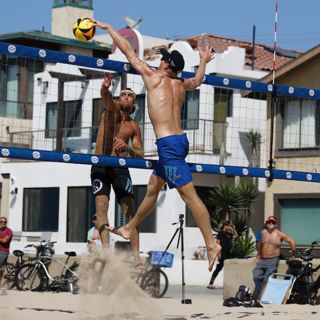
Phil Dalhausser, and The Legend of the Thin Beast

Phil Dalhausser, and The Legend of the Thin Beast

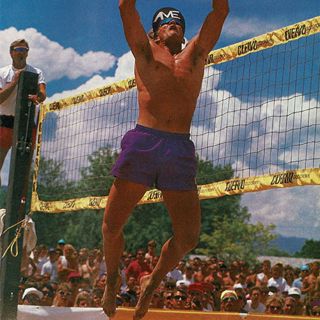
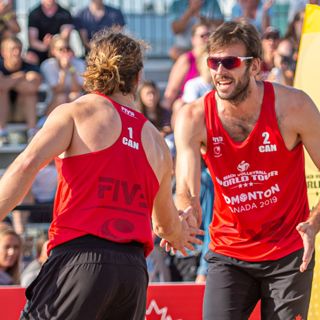
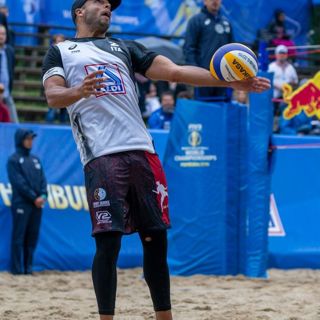
This episode of SANDCAST: Beach Volleyball with Tri Bourne and Travis Mewhirter features Phil Dalhausser, one of the greatest – and some would say, THE greatest – American players of all-time. Since he and Todd Rogers won the Olympic gold medal in 2008 in Beijing, Dalhausser has been the most dominant blocker in the United States, and remains that way. We chatted all about Dalhausser’s storied career, as well as:

  • His wild experience in the Tokyo Olympics
  • How drastically the World Tour has changed since he made his debut in 2006
  • The regrets his has on his career as a player, and the untold potential he and Sean Rosenthal could have had together
  • What his future looks like, both as a player and a budding businessman

And so, so, so much more. This is honestly one of the best episodes we’ve ever had on SANDCAST, as Phil completely opens up in a remarkably honest, funny, and reflective two hours.

ENJOY!

***

NEW BOOK ALERT!!! Travis Mewhirter and Kent Steffes just published a seminal work on the history of beach volleyball in their new book, Kings of Summer: The Rise of Beach Volleyball. Check it out on Amazon!! https://www.amazon.com/Kings-Summer-rise-beach-volleyball/dp/B0B3JHFKM7/ref=sr_1_1?crid=1WGJFWHPBGPQ2&keywords=kings+of+summer+book&qid=1658922972&sprefix=kings+of+summer+book%2Caps%2C1328&sr=8-1

We are FIRED UP to announce that we've signed on for another year with Athletic Greens! Stay healthy with Tri Bourne and Travis Mewhirter and get your greens today! https://athleticgreens.com/partner/d35ctoffer-strength/en?utm_source=podcast&utm_medium=influencer&utm_campaign=sandcast_d35ct__a3172__o27&utm_term=cac__a3172__o27&utm_content=sport__a3172__o27

We now have SANDCAST MERCHANDISE!! Rock the gear of your favorite podcast today! https://www.sandcastmerch.com/

If you want to receive our SANDCAST weekly newsletter, the Beach Volleyball Digest, which dishes all the biggest news in beach volleyball in one quick newsletter, head over to our website and subscribe! We'd love to have ya! https://www.sandcastvolleyball.com/

This episode, as always, is brought to you by Wilson Volleyball, makers of the absolute best balls in the game, hands down. You can get a 20-percent discount using our code, SANDCAST-20! https://www.wilson.com/en-us/volleyball

Check out our book, Volleyball for Milkshakes, written by SANDCAST hosts Tri Bourne and Travis Mewhirter: https://www.amazon.com/Volleyball-Milkshakes-Travis-Mewhirter/dp/B089781SHB

Episoder(500)

BounceBeach: How a 17-year-old high schooler created the most viral account in beach volleyball

BounceBeach: How a 17-year-old high schooler created the most viral account in beach volleyball

The idea began, like all viral ideas do, with something so blatantly obvious it had been overlooked by everyone. Parker Conley was the rare type of teenaged boy in Arizona who was obsessed with beach volleyball. It isn’t entirely unheard of. A handful of professionals hail from Arizona, and the sport has a small presence. But it is rare, to be sure. Conley sought any resource he could to learn the sport. Namely, YouTube. He’d watch anything he could find, no matter the era – old school Sinjin and Karch, all things Taylor Crabb, American or international, male or female. He’d see highlight after highlight, realizing, to his own subtle surprise, that there was no Instagram account that shared them. Other sports – basketball, primarily – have thousands of social media accounts dedicated almost exclusively to highlights, sharing clips that go viral, the type you’d see on SportsCenter’s Top 10 plays. Beach volleyball had none of that. “I thought,” Conley said on SANDCAST: Beach volleyball with Tri Bourne and Travis Mewhirter, “I should do it.” Thus, BounceBeach was born. Maybe. He waffled between names for a bit, seeking something about beach volleyball and some kind of impressive play within the sport. Bouncing a ball is one of the more highlight-worthy plays – just ask Sean Rosenthal, who is still, 13 years later, asked about his “Vegas Line” – and the alliteration worked. Conley created the Instagram account, pouring over film from The Hague four-star in 2019 as his first event, and began creating highlights. “I posted six or seven videos, the quality was horrible, I had a huge watermark, you could hardly see the players,” Conley said, laughing at the memory of his first attempt. “I was like ‘I’m not letting those stay on my page.’” Nevertheless, the social media world took notice. When a sport is starved for content, particularly highlights that players can use to market their own brand, it doesn’t necessarily have to be the highest of quality. As Conley perfected his craft, the momentum only increased, a snowball careening down the mountain.    Soon, the pros themselves, the same ones on which Conley had watched so many hours of film, began reaching out: Phil Dalhausser, Jake Gibb, Nick Lucena, Casey Patterson. Could Conley send over a few highlights they could use? After sitting down for half an hour, processing the fact that it was, indeed, that Phil Dalhausser who had messaged him, Conley would reply: Of course he’d send over a highlight. “I had no idea where it was going to go,” said Conley, who is 17 and enrolled in online classes both at a high school and Arizona State. “I’m still blown away by how many people are following it. I thought I would eventually hit the cap and I’d stop getting followers but I haven’t hit it.” If anything, BounceBeach is only picking up speed, taking on a life of its own. It’s morphed into something of an online forum, a place to discuss the highlights, where the best players in the world can beat their chest or poke fun of others. It’s its own subculture, in a way. When Conley posted a video of John Hyden digging a ruthless swing from Taylor Crabb, putting the ensuing transition point away with a jumbo poke that tagged the back line, Crabb commented, in jest, “Who won?” This ignited a string of amusing comments and debates, becoming its own chat room. “As I started growing, it’s been cool to see how the pros interact with it,” Conley said. “That was my goal, originally: to have my name known, build a brand for myself in a way. Having it be a forum in a way where pros will talk about highlights has been kind of surreal.” In less than a year and a half, Conley has amassed nearly 40,000 followers. More than that, he’s created something that virtually every beach volleyball player and fan turns to when seeking highlights. He tapped the latent gold mine of content, becoming essentially the exclusive source of viral clips. The FIVB took note, asking Conley to edit some highlights for them as well, joining the growing list of players. It’s become almost a competition among players to get their highlights featured on BounceBeach, which has become beach volleyball’s version of SportsCenter. “It’s been crazy, surreal to see people say ‘I got on BounceBeach!’ I never expected that,” Conley said. “It’s insane. It almost has become something on its own, where people consider it a brand. When I started, I was just posting highlights for the fun of it.” He’s still having fun with it. Still digging through YouTube, discovering gems with barely any views. “I’m like ‘How has nobody ever seen this?’” Conley said. With him, and BounceBeach, now everybody can.

20 Mai 20201h 2min

Savvy Simo, UCLA's favorite 'pain in the butt,' returning for one more year

Savvy Simo, UCLA's favorite 'pain in the butt,' returning for one more year

On the evening of January 14, UCLA women’s volleyball coach Mike Sealy had the mic. As he expounded on the tremendous careers of his seniors, of which there were just two – setter Cali Thompson and outside hitter Savvy Simo – he turned to Simo and, instead of gushing about her laundry list of accomplishments, said a joke. “You’re one of my favorite players I’ve ever coached,” he said. At least, Simo thought it was a joke. Over the past four years, she had been, by her own admission, a “pain in the butt,” something her beach coach, Stein Metzger, will readily, if not warmly, agree to. But Sealy didn’t laugh. Didn’t betray a single sign of amusement. He couldn’t have been more serious, and afterwards, he’d hug Simo and tell her that she’s the best, and to keep in touch. That’ll be easier to do than Sealy could have known. Savvy Simo’s coming back to UCLA for one more year. When the NCAA initially granted an extra year of eligibility for all spring athletes who had their 2020 seasons cut short, Simo had no designs on returning to Westwood. She’d done her four years, playing both beach and indoor. She’d won two NCAA Championships on the beach, piled up 91 wins, completed her sociology major. She was ready to move on. “When I found out everything was cancelled I was like ‘Screw it, I’m not coming back, I’m over college, I’ve had my time, I already feel old, I want to play AVP, I want to do interviews, I want to move on,’” said Simo, who went 13-2 on court one with Abby Van Winkle in the truncated 2020 season. Already, she had plans to move to the South Bay to room with LMU transfer Iya Lindahl. She was going to play on the AVP Tour, launch what is already a promising career in sports media. Move on with her life. As the reaction to Covid-19 spread, and the economy was shuttered and sports, including the AVP, were postponed indefinitely, if not altogether cancelled, reservation began to take root. With no AVP to play at the moment, few if any jobs readily available, many of her rivals – Kristen Nuss and Claire Coppola at LSU, for instance – returning to school, her roommate, Lindahl, remaining in college, was there any real reason to move on? It was a picture painted by Rachel Morris, Simo’s old coach at WAVE in San Diego, that ultimately convinced her. “Look, Savvy,” Morris, a former setter for Oregon, told her, “next May you’re going to be sitting on your couch watching your team compete for a national championship and, win or lose, you’re going to regret not being there.” “That,” Simo said, “was the tipping point for me. I was like ‘You’re so right, I cannot imagine watching this team play, knowing I could have had an opportunity.’” She called Metzger. She wanted to come back. It’s simple in concept, but not in execution. There was the academic side of things to work out, since Simo can’t exactly return with no classes on the schedule, only to play beach volleyball for a few months in the spring semester. There is still the thorny scholarship issue as well, something that schools around the country are dealing with. But there was zero chance Metzger would let that interfere with Simo returning. He’d make it work, because if there’s one thing UCLA could use most on its young and talented team, it’s the Bruins’ phenomenal pain in the butt leader. “I friggin love Stein, I love Jenny [Johnson Jordan], I think they’re both incredible humans,” Simo said. “Literally yesterday, I said ‘I’m sorry for being such a pain’ and he said ‘You really are a total pain but I love you kid.’ I’m so excited to come back.” The Bruins will be equally excited to have Simo back as well. Simo’s fellow seniors, Lily Justine and Madi Yeomans, are moving on, making Simo, already the vocal leader of the bunch, the de facto captain of a team that featured underclassmen in 50 percent of its starting lineup: Van Winkle (sophomore), Lindsey Sparks (sophomore), Lexy Denaburg (freshman), Devon Newberry (freshman), Rileigh Powers (freshman). “I took on the leadership role with the other seniors and it was a challenge but I just kinda took it and ran with it and no program is ever perfect but we were on the ups and it was a bummer it was cancelled but thankfully I’m back and I’m fired up to see the potential this team has,” Simo said. “Me and Stein, we have a really great relationship and I think a reason why we kinda go back and forth is because I do have a really high level of respect for Stein. I listen to everything he says and he is one of the best coaches I’ve had on the beach and he is so smart and I think especially this year, I wanted to win so bad and I know he did too. “I’ve learned and matured and figured out when to pick my battles and when to not. Even this year, there were times where I was like ‘Stein we need to be doing more of this’ and agree or disagree, I think we both have a common goal and we want to win. He has so much experience but I also have the side of the players and the team and we worked out a balance to find out what’s best. Jenny also plays an incredible role in that balance as a female figure too. People like Sarah [Sponcil] and people like Zana [Muno] were the same: We all just want to win. And that’s an incredible part of UCLA’s culture and I hope it carries out.”

13 Mai 202057min

Mike Lambert: The consummate teammate, still shining the spotlight on his partners

Mike Lambert: The consummate teammate, still shining the spotlight on his partners

After a few minutes of cordial catching up and introductions, Mike Lambert paused, sitting in his office in Lucca, Italy, and wondered, on SANDCAST: Beach volleyball with Tri Bourne and Travis Mewhirter: “What should we talk about?” The conversation would be wide-ranging, covering a vast canvas of topics. Midway through, however, it became comically evident what Lambert didn’t want to talk about: himself. It is vintage Lambert. Though he may be nearly a decade since he last appeared in an AVP tournament, he is still very much the same man who, in his Beach Volleyball Hall of Fame write up – he was inducted in 2018 – was described as “a favorite of both fans and his fellow tour professionals, often bringing his guitar to the beach to play songs in-between matches and charming with an infectious smile. You would have to search far and wide to find someone with anything bad to say about Mike Lambert.” And, for that matter, you would likely have to search farther and wider to find a time Lambert said anything bad about anyone else. When he first posed the question of what we should discuss on the podcast, he immediately answered his own prompt: “Stein,” he said, referring to Stein Metzger, his childhood friend and partner for the 2006 season. “Let’s talk about that guy.” And then, unprompted, he sang the UCLA coach’s praises. “He was super special because he was so competitive, even back in the day,” Lambert said. “I think he would say that he’s not the most talented player, but he just wants to win more than the other guy. There’s so many memories of him, younger, and then in college and when he turned pro where he just wanted it more than the other player. That’s a fun guy to be partnered with. You get into battle and the trash talk starts going and he’s not going anywhere. He’s not backing down. He wants more of it.” He talked Metzger. He marveled at the discipline of John Hyden, with whom Lambert played on the 1996 and 2000 Olympic teams. Lambert, a Hawai’i native, complimented Bourne’s mother, Katy, a teacher on the Island. “Such a stud,” he said of the woman known for her penchant for excelling in long-distance events. Mostly, though, Lambert wanted to talk about Karch Kiraly. It was only Lambert’s second full-time year on the beach when he got the call from Kiraly, who by then was considered the greatest to ever play the game. Kiraly was in his early 40s, Lambert coming off a successful indoor career to win, improbably, both Rookie of the Year and Best Offensive Player in the same AVP season in 2002. Given that, “I thought I had played at a pretty high level,” Lambert said. “I had played in two Olympics and played against the best in the world indoor and on the beach but there are few people that are mentally just on a different level and they’ll never drop their game whether it’s practice or a game against a scrub team or a qualifier team or if he’s on center court against the best team. [Kiraly] keeps his level there. He never drops no matter who’s on the other side of the court or if he’s tired or where the sun is or what the wind is or this or that. He was always immovable. There were times where I was tired but I’d say ‘Look at my guy! He’s not tired so I’m gonna keep going.’ He was always there. Constant, just the north star. It was crazy.” To watch Lambert and Kiraly compete together – YouTube has plenty of fantastic match replays if you’d like to do so – is to witness exactly why Lambert is quick to praise others and slow to credit himself. If you were to only watch their celebrations, you’d never know who scored the point, who made the highlight, who put down the block or the big swing. When the ball hit the sand, they wouldn’t find the camera, or the crowd, but each other. That’s the point. There were occasions where Kiraly – 148-time winner, three-time Olympic gold medalist Karch Kiraly – would bow down to Lambert following a block. Dishing all the credit. Building up his teammate. “Any chance he had to throw the spotlight on me he did,” Lambert said. “It was because ‘Lambo did this’ and ‘Lambo started stuffing balls!’ He was always trying to put his partner in the spotlight. Not long ago, he asked me what he did well as a teammate, and I said he was always giving me props for everything we did, and not trying to take the spotlight from his teammate. When you do that, all of a sudden, I’m puffing out my chest, like ‘Yeah! I am the guy stuffing balls!’ And then I get more confident and become even more of what he wants. It’s almost like he’s feeding that. He was really good at that. He was really good at letting go of a great play and a terrible play because it was all about being in the moment. He had the same routine, whether he did something great or something terrible he’d either celebrate and move on or think about it and move on. He was always ready for the next play, which was super cool. “If you make a great play on the court, there’s a finite amount of seconds where you’ve got this crazy energy and what do you do with it? Do you keep it all or do you go to your guy, stare him in the eye and go ‘Ahhh!’ and share that moment. That stokes the other guy’s fire and it can become contagious. Anytime we did something great, we right away tried to share that with each other. That’s what you miss. I’m never out here going ‘Yeah! I did a sale! Whooo! Let’s do another one!’” Perhaps Lambert is not beating his chest, whooping after a successful digital marketing campaign. But he’s still the consummate teammate, dishing credit, building up those around him. Making sure to talk only the best of everyone who has partnered with Mike Lambert.

6 Mai 20201h 21min

Mailbag: Who are the top five blockers and defenders in the world? More fan questions

Mailbag: Who are the top five blockers and defenders in the world? More fan questions

Typically, I’d be a bit neurotic by now. Short on sleep. Distracted. Mind ping-ponging back and forth, looking at the draw, then looking again – did it change did it change? This, of course, is not the typical pre-AVP Huntington Beach qualifier eve. This is just a Wednesday like any other in the off-season: no events on the foreseeable horizon. Nothing specific to train for. Sleep comes easy. In such a strangely uncertain sports world, Tri and I opened up SANDCAST: Beach volleyball with Tri Bourne and Travis Mewhirter, to fan questions, and we did our best to answer, or at least opine, on them. A few I’ve written our responses to. Because nobody wants to read 3,000 words of me answering questions, you can find our answers to the rest on our episode.   Question one: Who are some younger players to watch out for (not obvious ones like Eric Beranek, etc.) Where do you think the season will begin? Where have you been training? (and we know you have, wink) This is always such a difficult list for the men, because there really aren’t many youngsters who would willingly commit to beach over indoor. Kawika Shoji discussed that very thing last week on SANDCAST, and the list of reasons is nearly endless, with financial security being the most obvious. However, there are a handful. Miles Partain is the obvious candidate here. At just 18 years old and still in high school, he already has a fifth-place AVP finish to his name, at AVP Chicago with Paul Lotman. He made the final three AVP main draws of the season – Manhattan, Chicago, Hawai’i – and trained the entire off-season under coach Tyler Hildebrand and our top national teams. He’s a can’t-miss up-and-comer. The women, meanwhile, are nearly endless. Peruse the top two courts at any of the top 15 or so college programs and you have AVP main draw talents. The names I’ll point you to, however, are these: Savvy Simo and Abby Van Winkle (UCLA), Alaina Chacon and Molly McBain (Florida State), Haley Harward (USC), Brook Bauer and Deahna Kraft (Pepperdine), Julia Scoles and Morgan Martin (Hawai’i), Delaynie Maple and Megan Kraft (committed to USC), Torrey Van Winden (Cal Poly), Reka Orsi Toth and Iya Lindahl (LMU), Sunniva Helland-Hansen and Carly Perales (Stetson), Dani Alvarez (TCU), Kristen Nuss and Claire Coppola (LSU), Mima Mirkovic (Cal). Of the bunch, my breakout selection would be Simo, UCLA’s dynamic court one defender and unquestioned leader of the team I would have bet a fair amount of American dollars to win the National Championship. She has all the potential to become this year’s version of a Sarah Sponcil, who made the finals in her first AVP event, or Zana Muno, another Bruin who made an AVP semifinal in her rookie season.   Question two: Should the AVP start a Dino Division for players post 50 who still want to compete 3-4 times per year? Golf has masters, AVP has dino?  I thought this question was hysterical in the best of ways. Idealistically, this sounds great. Who wouldn’t want to watch Tim Hovland yap with Sinjin Smith, while the always-quiet Mike Dodd digs balls and Randy Stoklos yells about how he was the first person to ever hand set? I’m game. But it is, let’s all be honest here, a bit quixotic. The AVP does well enough to put on eight events for the best, most explosive players in the world, and when compared to the major sports, there’s a niche market at best. Would there really be a market for old men with big mouths and small verticals? The dino is such a great event because it’s the only one – and it’s given a shot of life with younger players such as Tayor Crabb to help carry their older counterparts. It’s fun, competitive, and a little heartwarming. Golf’s Champions Tour works because guys like Tom Watson and Fred Couples can still compete at close to the same level they could when they were in their primes. There’s no impact on their bodies, and the level of play is still astonishingly high. Watson, for example, finished second at The Open Championship in 2009, losing in a four-hole playoff, 26 years after his most recent major win, when he was 60 years old. I have no doubt that Sinjin can still ball. But could he get out there with Stoklos and take Jake Gibb and Crabb to three sets in the finals of the Manhattan Beach Open? Doubtful. I think p1440 nailed an older-aged event when they hosted a four-on-four match featuring two legends and two current pros on either team. There’s certainly a market and space for something whimsical like that to happen a few times per year. Until then, keep the Dino the great, annual event that it is.   Question 3: Will there be a new BVB book (got my copy signed by Tri in Hamburg)? Yes. Maybe. I can’t tell you for sure. But all I can say is that there could, potentially, be a possibility of an upcoming beach volleyball book to be released in early summer.   Question 4: Rate your top 5 male defenders/blockers internationally. This was such a fun one to discuss. Everybody keeps talking about how much parity there is on the world tour, and with good reason. Attempting to nail down the top five defenders is, to me, like trying to rank my favorite golf courses in Myrtle Beach – they’re all the best courses. The top five blockers came a little easier. We decided on: Anders Mol, Norway Oleg Stoyanovskiy, Russia Phil Dalhausser, United States Alison Cerutti, Brazil Evandro Goncalves, Brazil Honorable mentions included: Paolo Nicolai, Italy; Michal Bryl, Poland; Jake Gibb, United States; Tri Bourne, United States; Julius Thole, Germany. The defenders weren’t so clear-cut. It’s impossible to rank them because they’re all playing behind blockers of varying sizes and abilities. But we wound up pinning it down to: Taylor Crabb, United States (we are prepared to duke it out from six feet away with those who disagree) Christian Sorum, Norway Clemens Wickler, Germany Viacheslav Krasilnikov, Russia Grzegorz Fijalek, Poland Honorable mentions included: Alvaro Filho, Brazil; Bruno Schmidt, Brazil; Adrian Carambula, Italy; Nick Lucena, United States; Daniele Lupo, Italy.

29 Apr 20201h 2min

Kawika Shoji: Leading the wildly talented Hawai'i generation of Olympians

Kawika Shoji: Leading the wildly talented Hawai'i generation of Olympians

A few weeks ago, Kawika Shoji and Taylor Crabb escaped the tedium of quarantine to do some hill sprints near their houses in Manoa. There is nothing new or special or spectacular about this. It is, actually, the most normal, mundane, practiced bit of Shoji’s life up to this point. It isn’t necessarily the hill sprints that are typical, but the fact that Shoji was there. Leading. Forever leading. Much has been justifiably made – and more needs to be made – of the current generation of Hawai’i volleyball players either currently or previously representing the United States in some professional capacity or other. There is Spencer McLachlin, a national champ at Stanford in 2010, Crabb’s first partner on the AVP Tour, currently a coach at UCLA. There’s Brad Lawson, McLachlin’s who put together one of the most complete performances in any collegiate national championship, leading the Cardinal to that 2010 title with 24 kills in 28 swings. He was named, alongside Shoji, his setter, the NCAA Tournament MVP. There’s Micah Christensen, Shoji’s current roommate and arguably the best setter on the planet. There’s Shoji’s younger brother, Erik, his teammate and libero on the United States National Team Then, on the beach, there’s Tri Bourne, one of the top blockers in the USA Volleyball pipeline and currently ranked second in the American race to Tokyo. And the Crabbs, both Taylor and Trevor, the former currently ranked No. 1 in the American Olympic race, the latter, Bourne’s partner, to be cemented on the Manhattan Beach Pier later this year. There’s the McKibbins, Riley and Madison, whose infectious personalities and talents both on the beach and in the YouTube studios have led them to become perhaps the AVP’s most recognizable and hirsute faces. There are two common threads here: Honolulu roots. And Kawika Shoji. “I was kind of the first generation to come over,” he said on SANDCAST: Beach volleyball with Tri Bourne and Travis Mewhirter. It is not difficult to see why Shoji is the one who cleared that path, from the Islands to California to anywhere in the world that might need a good volleyball player. The son of legendary coach Dave Shoji, who helmed the University of Hawai’i from 1975-2017, Kawika saw first-hand what it took to climb the ladder. Even as a kid, he realized that volleyball, be it on the beach or indoors, is “a skillful game, it’s an athletic game, but it’s also a game of intelligence and decision making and strategy,” said Kawika, who is 32, married and with a 2-year-old daughter, Ada-Jean. “That’s the biggest takeaway I have of my upbringing. Most of us from Hawai’i, especially Erik and I, are not genetic freaks. We’re not jumping out of the gym, not the tallest, not the strongest, but the ability to control the ball and the ability to make the right decisions are things we pride ourselves on and have carried us a long way. It’s something I have a lot of pride in.” His is an old-school mindset. He wasn’t raised in an era of social media highlight tapes, but in repetition-intensive practices. Ball control and decision-making was king. It’s how he became the first brick upon the Stanford foundation that would win that 2010 National Championship. Not with awe-inducing swings or bounce-blocks, but the two most fundamental aspects of the game: Controlling the ball, controlling your mind.   “I still think the game needs to be played the right way, and if you look at the top players, you don’t get to the top unless you can control the ball,” he said. “That’s just the way it is. That came from my dad. He knew the importance of ball control. He was really skill focused and old school in that way: A lot of repetitions. It can definitely get a little monotonous for sure, but if you don’t put in those touches, those hours, you can’t master whatever skill you’re trying to master. You gotta find a way to touch the ball and feel the ball.” It wasn’t just volleyball that he espoused that mindset. As a standout on the Iolani School basketball team, he was named the Hawai’i State Player of the Year. He joked that his being named Player of the Year says more about the state of Hawai’i high school basketball than it does about his own skills on the court, but the one thing that he did point out was this: “I got it around just because of how smart I was on the court.” It is more than possible that this generation of Honolulu natives would enjoy the successes they had whether Shoji paved the way or not. But few can be roommates with the player who shares their position, fighting for the same spot, and see it not as an awkward pairing, but as a legitimate advantage. “I’m going to be ready if needed, and I’m going to do all of the little things to help our team win, help our team prepare, and that’s just understanding yourself, your strengths and weaknesses, your role, and valuing that role and what you do for others,” he said. “We all have service aspects of our life and our different roles in life and you have to value it.” So he’s carved out a successful career overseas, picking up contracts in Finland, Germany, Turkey, Russia, Italy, and, currently, Poland. He supplements that with his role on the United States National Team, with whom he won a bronze medal in 2016. At the current moment, he’s quarantined, like every other athlete. He has his brother, his daughter. The Crabbs, when they’re home, are “a lob wedge” down the street. He’s finding ways to be productive, be it watching film or running hill sprints or finishing up his masters in sports psychology. Finding some way to do what he’s always done: Lead.

22 Apr 20201h 9min

Hector Gutierrez is building another college beach southeast power at TCU

Hector Gutierrez is building another college beach southeast power at TCU

Hector Guitierrez sat outside of his home in Fort Worth, Texas, a purple TCU sweatshirt protecting him from a cool breeze, and hat shading him from the sun. “You never know,” he said on SANDCAST: Beach volleyball with Tri Bourne and Travis Mewhirter, “what life can bring you, right?” Currently, everyone in the world, no matter location or industry or title, can empathize. This time of year is typically a critical period for Guitierrez at TCU, a burgeoning college beach program that was 11-4 and ranked No. 15 in the country when the season was cancelled due to Covid-19. Odd as these times are for the world, it is almost more confounding to Guitierrez that he is here at all, in Fort Worth, Texas, coaching a college beach volleyball team. A native of the Canary Islands, Guitierrez was raised primarily in Tenerife, Spain, which has become one of the most popular off-season training sites in the world for European beach volleyball teams. Guitierrez’s own professional journey was a precocious one. Debuting on the professional scene at the age of 17, Guitierrez competed for the C.V Orotava team that, in 2004, finished second in the FEV Spanish Volleyball League. He played indoors all over Europe, and in the summer, he’d return to the island and play beach. Fun as it was to be a professional athlete, getting paid to travel, compete, play volleyball all day long, Guitierrez knew his own limits. “When I was playing, around 27 or 28, it was an ‘I’m kind of done’ type of thing,” he said with a laugh. For some players, the transition to coaching is an arduous one. Jose Loiola, a member of the Beach Volleyball Hall of Fame and winner of 55 events in his career, struggled mightily, saying that “you have to kill the player inside.” Guitierrez chuckled at that notion. “I was a good player,” he said, “but I wasn’t at the level of Jose Loiola.” The coach in him was already more alive than the player. He volunteered to help a few indoor players competing in Switzerland transition to the beach, building from there. He coached indoor in Turkey, Azerbaijan, and Germany, which led to an up-and-coming German beach team, Karla Borger and Britta Buthe, taking him on as their coach. In 2012, they’d take a silver medal at the World Championships, finishing the season ranked No. 11 in the world. National teams took note. Slovakia hired Guitierrez, who helped Dominika Nestracova and Natalia Dubovcova to a bronze at the Stavanger Grand Slam. The U.S., too, brought Guitierrez on board, where he oversaw Brittany Hochevar and Heather McGuire and Hochevar and Jen Fopma. By then, the college game had begun building momentum, and Guitierrez accepted an offer to assist Florida State, a rising power in the southeast. But the Seminoles had already proven themselves. While Guitierrez certainly helped a great deal as they took second at the 2016 NCAA Championships, “it was already an established program,” Guitierrez said. “You’re going to Nationals all the time. You’re trying to win a National Championship.” TCU was not Florida State. Not yet, anyway. When Guitierrez received word, on Nov. 9, 2016, that he had been hired as the head coach of the beach volleyball program, it had only been in existence for one year. The Frogs hadn’t won a single match. “It’s a challenge but there’s a side of it that it belongs to me and my staff: We built this,” Guitierrez said. “We’re moving this train in the right direction.” There is no arguing that. The next season, Guitierrez’s first, the Frogs finished 18-7. In two of the next three, TCU produced 18 wins. Midway through the 2020 season, TCU, with quality wins over South Carolina and Arizona, was making a case – still an outside case, but a case nonetheless – for an East Region bid to the NCAA Championships, which would have been the first in school history. “We’re in a good situation but we need to catch up soon because we don’t want to be at the back of the train,” he said. “You need to be realistic with what we have and what we can build. I’m a really competitive coach and I want to build up quick. We’re accomplishing that right now.” Guitierrez will get two of his seniors back for one more year. He’ll also return 11 others from the 2020 team, including freshman Daniela Alvarez, who had made an immediate presence on court one partnered with LSU transfer Olivia Beyer. The Frogs have come a long way from 0-11 five years ago, just as Guitierrez has come a long way from the Canary Islands and much of Europe. “There’s a special moment in coaching where they players begin to trust what I see,” he said. “That’s the ultimate goal as a coach: If I can get you to trust me, we’re going to do great things.”

15 Apr 202045min

Marcio Sicoli loves what he does: Coaching to Olympic medals, living vicariously through his players

Marcio Sicoli loves what he does: Coaching to Olympic medals, living vicariously through his players

It was 2005 when Tatiana Minello and Mimi Amaral needed a coach. Not just any coach. The natives of Rio de Janeiro were making the move to the AVP. They needed someone who could speak English. “You speak English!” they said to Marcio Sicoli. “Let’s use you!” The United States didn’t know it at the time, but one of the most successful beach volleyball coaches of this generation was about to cross its borders. Sicoli was more than just a 25-year-old who both knew his way around the beach and could speak English. Already, he had an Olympic silver medal, having coached Shelda Kelly Bruno Bede and Adriana Brandao Behar to a silver at the Athens Games. That would seem young, by American standards, to have risen to the top of any kind of hierarchy, be it in sports or business, at that age. It is not so in Brazil. “I was really involved in playing and at an early age, it was ‘Do you want to play or do you want to coach?’” Sicoli recalled on SANDCAST: Beach volleyball with Tri Bourne and Travis Mewhirter. Sicoli took stock of his frame: 5-foot-11. Not short, but also not the fast track to developing as an elite player in the perpetually deepening Brazilian pipeline. “Playing,” he said, “wasn’t an option.” He took his father’s advice and enrolled in the Federal University of Rio de Janeiro, setting for the indoor team but turning his focus mainly to his degree in Physical Education. He graduated in 2001, the same year he achieved a Level II certification in Brazilian Beach Volleyball, becoming the youngest to hold that title. “I knew, early on, that I was a personal person,” he said. “I wouldn’t be talking to machines, I wouldn’t be talking to computers. I didn’t like that. I knew that. It was natural. In college, my sophomore year, I was playing on a team and I got an internship with PE at a high school and that was it. It’s that passion: To be with people, and drive through other peoples’ success. That’s what coaching is. If you see a process and you see something really cool happening that is not with you but someone else, and when that happens, great, and you move onto the next one.” In 2007, his next move wasn’t an easy one. As it goes when you achieve certain levels of success, offers became coming in. Holly McPeak was one of the many to take note of Sicoli’s talents as a coach. The three-time Olympian offered him a full-time job, in the United States, to coach her and Logan Tom. She’d set him up with indoor contacts so he could make money during the off-season months. Here Sicoli was, with a “job for life” as a PE teacher in Rio, a wife and family in Brazil – and an incredible offer in the United States. “I talked to my dad and he looked at me and said ‘Worst case scenario, you’re coming back and I’ll be here for you,’” Sicoli recalled. “I said ‘Ok, let’s do it.’” McPeak and Tom fizzled, but the indoor contact McPeak set Sicoli up with was Tim Jensen, then an assistant coach at Pepperdine. “Twelve years later,” he said, smiling his cherubic smile. Twelve years later, Sicoli is living a life that would have been difficult to imagine as a PE teacher in Rio. He’s an American citizen now, something he takes immense pride in, and though you are not likely to get him to talk politics, he will tell you that he’s thrilled to vote in the upcoming election. He has remarried, with an infant, Max, and another on the way. He has coached in two more Olympics, winning gold with Kerri Walsh Jennings and Misty May-Treanor in London and bronze with Walsh Jennings and April Ross in 2016. He was promoted to head coach at Pepperdine in 2019, when Nina Matthies retired after an astonishing 35 years, one of the most successful individuals in the game.   Sicoli has never talked to machines. He does not sit in front of computers all day long. He’s doing what he has always been enamored with: Working with people, building relationships, thriving on the success of those he helps.    “I love what I do,” he said. “I don’t want to go anywhere. Hopefully I can do 20 more years then I can retire to the beachfront.”

8 Apr 202049min

Christian Hartford is changing the culture at USA Volleyball

Christian Hartford is changing the culture at USA Volleyball

Alex Brouwer sought the source of the voice. The one that perpetually stood out from among 13,000 screaming Germans at the World Championships in Hamburg. The one that was always heard by any player competing against an American team. When he found the bearded face of Christian Hartford, the Dutchman pumped a fist and said “Let’s go U.S.A.!” That is but a brief but encompassing glimpse into the enthusiasm that Hartford has brought into the gym at USA Volleyball. “We’ll be on the bike, and he’s always screaming at you,” Tri Bourne said on SANDCAST: Beach volleyball with Tri Bourne and Travis Mewhirter. Never is Hartford screaming in a negative light. He’s not a Navy commander, barking orders. He’s lifting up, encouraging, pushing, to the point that even someone like Alex Brouwer, the defender on the Netherlands’ top team and a former World Champ, can buy in. “I remember my first couple months, Trevor [Crabb] was like ‘Who the hell is this guy? He never shuts up!’” Hartford recalled, laughing. “That was my job. I want to make that weight room the most positive, engaging environment possible. That doesn’t mean we’re going to have full out conversations of how your wife and kids are doing or your boyfriend or girlfriend. But when you walk through the door, I’m going to greet you. When you’re in there training, I’m going to engage and music is going to be blasting.” Hartford knows, both from personal experience as an elite athlete himself and from half a decade of training college teams, it’s not a one-size-fits all approach. His day might consist of working with 44-year-old Jake Gibb in the morning on the sand, shifting to helping 23-year-old Sarah Sponcil in the afternoon and prescribing a weight program for indoor convert David Lee in the evening. “We always talk about individualization and how you’re going to be able to do this program because as beach volleyball players, you’re all going to need certain characteristics,” said Hartford, who walked on to Wake Forest as a quarterback and received his masters from Northwestern. “Athlete A may get it a lot differently than Athlete B but also Athlete C might have a much different strength in their game that needs to be focused on than Athlete B. So you have to take into account all these individualizations.” In that sense, it is perhaps Hartford’s greatest strength that, prior to USA Volleyball, he had little to no experience on the beach, but was an expert in virtually every other sport. As a quarterback at Wake Forest, he knew how to train football players. As a strength and conditioning coach at Northwestern, he worked with 115 athletes across a wide variety of disciplines. At Maryland, he helped with gymnastics, women’s lacrosse, wrestling, softball, and indoor volleyball. All of that switching made his ability to pick up a new sport, reverting back to a beginner’s mindset, that much easier. He didn’t walk onto the beach proclaiming to know everything. Instead, he acknowledged he knew little. He asked questions, attaining his own unofficial Beach Volleyball Certification through coaches like Rich Lambourne, Jen Kessy, Jose Loiola and Tyler Hildebrand. “Being around all these different sports as the strength coach, you don’t have any other choice but to learn everything about that sport,” Hartford said. “Diving in headfirst into whatever sport you’re working with and being at practice and asking coaches questions, watching film, going to competitions to see the environment and just the pure nature of each sport, I think that type of diversity in my coaching background helped me a ton with the transition to the beach.” Most athletic performance coaches would be able to do that, in some form or other. Some might take longer. Some might pick it up as quickly as Hartford, who is immensely popular among the athletes, has. But what separates Hartford from the other candidates who sought the job is that he brings more than an ability to prescribe a quality training regimen. For the first time in Bourne’s memory, there’s a tangible culture being set at USA Volleyball. “When I got here I asked Tyler Hildebrand ‘What are we trying to create here, culture wise? What environment are we trying to create?’” Hartford said. “We were striving for a new culture.” He acknowledges that it won’t be akin to a college team, that he’ll be working with Gibb and Bourne at the same time, despite them both vying for the same spot in the Tokyo Olympics. But still, you can find Chaim Schalk and Sponcil competing in Spikeball contests in the weight room. Athletes cheering their fellow athletes in pull-up contests. Others pushing one another on the assault bike. “Try training 18 gymnasts at 5 in the afternoon after practice,” Hartford said. “You need as much positive energy as you can in that moment so I’m used to creating that and that’s always been a part of my mission is to create the most positive, productive training environment possible. “To be in this environment where we have 25-30 athletes, it’s been incredible to build all of those relationships. Whenever you’re able to do that, you’re able to dive a lot deeper into the training process and thought process of what you’re doing. You’re also able to get a little more creative with your process as well. A huge piece has been being able to watch and talk to and see every single athlete as an individual perform and see what that person needs from a strength and conditioning side to get better. For me to be working with a specialized crew in a much smaller volume, it’s been a blessing because now I can see them practice, see them live, see how they jump, see how they swing and also talk to their coaches. You can really dive a lot deeper into these training programs.”

1 Apr 202040min

Populært innen Politikk og nyheter

giver-og-gjengen-vg
aftenpodden
bt-dokumentar-2
forklart
popradet
stopp-verden
aftenpodden-usa
fotballpodden-2
dine-penger-pengeradet
det-store-bildet
nokon-ma-ga
rss-ness
hanna-de-heldige
rss-gukild-johaug
aftenbla-bla
rss-penger-polser-og-politikk
kommentarer-fra-aftenposten
oppdatert
frokostshowet-pa-p5
e24-podden