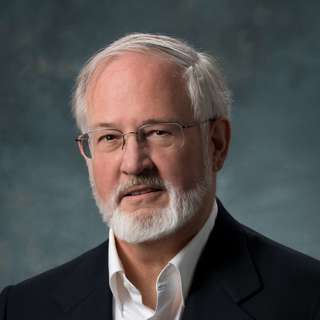

#4 - Howie Lempel on pandemics that kill hundreds of millions and how to stop them

#4 - Howie Lempel on pandemics that kill hundreds of millions and how to stop them

What disaster is most likely to kill more than 10 million human beings in the next 20 years? Terrorism? Famine? An asteroid?

Actually it’s probably a pandemic: a deadly new disease that spreads out of control. We’ve recently seen the risks with Ebola and swine flu, but they pale in comparison to the Spanish flu which killed 3% of the world’s population in 1918 to 1920. A pandemic of that scale today would kill 200 million.

In this in-depth interview I speak to Howie Lempel, who spent years studying pandemic preparedness for the Open Philanthropy Project. We spend the first 20 minutes covering his work at the foundation, then discuss how bad the pandemic problem is, why it’s probably getting worse, and what can be done about it.

Full transcript, apply for personalised coaching to help you work on pandemic preparedness, see what questions are asked when, and read extra resources to learn more.

In the second half we go through where you personally could study and work to tackle one of the worst threats facing humanity.

Want to help ensure we have no severe pandemics in the 21st century? We want to help.

We’ve helped dozens of people formulate their plans, and put them in touch with academic mentors. If you want to work on pandemic preparedness safety, apply for our free coaching service.

APPLY FOR COACHING

2m - What does the Open Philanthropy Project do? What’s it like to work there?
16m27s - What grants did OpenPhil make in pandemic preparedness? Did they work out?
22m56s - Why is pandemic preparedness such an important thing to work on?
31m23s - How many people could die in a global pandemic? Is Contagion a realistic movie?
37m05s - Why the risk is getting worse due to scientific discoveries
40m10s - How would dangerous pathogens get released?
45m27s - Would society collapse if a billion people die in a pandemic?
49m25s - The plague, Spanish flu, smallpox, and other historical pandemics
58m30s - How are risks affected by sloppy research security or the existence of factory farming?
1h7m30s - What's already being done? Why institutions for dealing with pandemics are really insufficient.
1h14m30s - What the World Health Organisation should do but can’t.
1h21m51s - What charities do about pandemics and why they aren’t able to fix things
1h25m50s - How long would it take to make vaccines?
1h30m40s - What does the US government do to protect Americans? It’s a mess.
1h37m20s - What kind of people do you know work on this problem and what are they doing?
1h46m30s - Are there things that we ought to be banning or technologies that we should be trying not to develop because we're just better off not having them?
1h49m35s - What kind of reforms are needed at the international level?
1h54m40s - Where should people who want to tackle this problem go to work?
1h59m50s - Are there any technologies we need to urgently develop?
2h04m20s - What about trying to stop humans from having contact with wild animals?
2h08m5s - What should people study if they're young and choosing their major; what should they do a PhD in? Where should they study, and with who?
More...

Episoder(320)

#172 – Bryan Caplan on why you should stop reading the news

#172 – Bryan Caplan on why you should stop reading the news

Is following important political and international news a civic duty — or is it our civic duty to avoid it?It's common to think that 'staying informed' and checking the headlines every day is just wha...

17 Nov 20232h 23min

#171 – Alison Young on how top labs have jeopardised public health with repeated biosafety failures

#171 – Alison Young on how top labs have jeopardised public health with repeated biosafety failures

"Rare events can still cause catastrophic accidents. The concern that has been raised by experts going back over time, is that really, the more of these experiments, the more labs, the more opportunit...

9 Nov 20231h 46min

#170 – Santosh Harish on how air pollution is responsible for ~12% of global deaths — and how to get that number down

#170 – Santosh Harish on how air pollution is responsible for ~12% of global deaths — and how to get that number down

"One [outrageous example of air pollution] is municipal waste burning that happens in many cities in the Global South. Basically, this is waste that gets collected from people's homes, and instead of ...

1 Nov 20232h 57min

#169 – Paul Niehaus on whether cash transfers cause economic growth, and keeping theft to acceptable levels

#169 – Paul Niehaus on whether cash transfers cause economic growth, and keeping theft to acceptable levels

"One of our earliest supporters and a dear friend of mine, Mark Lampert, once said to me, “The way I think about it is, imagine that this money were already in the hands of people living in poverty. I...

26 Okt 20231h 47min

#168 – Ian Morris on whether deep history says we're heading for an intelligence explosion

#168 – Ian Morris on whether deep history says we're heading for an intelligence explosion

"If we carry on looking at these industrialised economies, not thinking about what it is they're actually doing and what the potential of this is, you can make an argument that, yes, rates of growth a...

23 Okt 20232h 43min

#167 – Seren Kell on the research gaps holding back alternative proteins from mass adoption

#167 – Seren Kell on the research gaps holding back alternative proteins from mass adoption

"There have been literally thousands of years of breeding and living with animals to optimise these kinds of problems. But because we're just so early on with alternative proteins and there's so much ...

18 Okt 20231h 54min

#166 – Tantum Collins on what he’s learned as an AI policy insider at the White House, DeepMind and elsewhere

#166 – Tantum Collins on what he’s learned as an AI policy insider at the White House, DeepMind and elsewhere

"If you and I and 100 other people were on the first ship that was going to go settle Mars, and were going to build a human civilisation, and we have to decide what that government looks like, and we ...

12 Okt 20233h 8min

#165 – Anders Sandberg on war in space, whether civilisations age, and the best things possible in our universe

#165 – Anders Sandberg on war in space, whether civilisations age, and the best things possible in our universe

"Now, the really interesting question is: How much is there an attacker-versus-defender advantage in this kind of advanced future? Right now, if somebody's sitting on Mars and you're going to war agai...

6 Okt 20232h 48min

Populært innen Fakta

fastlegen
dine-penger-pengeradet
relasjonspodden-med-dora-thorhallsdottir-kjersti-idem
treningspodden
rss-strid-de-norske-borgerkrigene
foreldreradet
jakt-og-fiskepodden
rss-sunn-okonomi
merry-quizmas
gravid-uke-for-uke
fryktlos
sinnsyn
rss-mann-i-krise-med-sagen
hverdagspsyken
generasjonspodden
rss-kunsten-a-leve
smart-forklart
dopet
teknologi-og-mennesker
rss-adhd-i-klasserommet