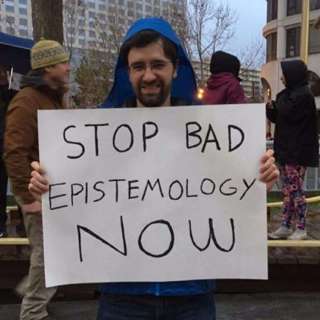

#10 - Nick Beckstead on how to spend billions of dollars preventing human extinction

#10 - Nick Beckstead on how to spend billions of dollars preventing human extinction

What if you were in a position to give away billions of dollars to improve the world? What would you do with it? This is the problem facing Program Officers at the Open Philanthropy Project - people like Dr Nick Beckstead.

Following a PhD in philosophy, Nick works to figure out where money can do the most good. He’s been involved in major grants in a wide range of areas, including ending factory farming through technological innovation, safeguarding the world from advances in biotechnology and artificial intelligence, and spreading rational compassion.

Full transcript, coaching application form, overview of the conversation, and links to resources discussed in the episode:

This episode is a tour through some of the toughest questions ‘effective altruists’ face when figuring out how to best improve the world, including:

* * Should we mostly try to help people currently alive, or future generations? Nick studied this question for years in his PhD thesis, On the Overwhelming Importance of Shaping the Far Future. (The first 31 minutes is a snappier version of my conversation with Toby Ord.)
* Is clean meat (aka *in vitro* meat) technologically feasible any time soon, or should we be looking for plant-based alternatives?
* What are the greatest risks to human civilisation?
* To stop malaria is it more cost-effective to use technology to eliminate mosquitos than to distribute bed nets?
* Should people who want to improve the future work for changes that will be very useful in a specific scenario, or just generally try to improve how well humanity makes decisions?
* What specific jobs should our listeners take in order for Nick to be able to spend more money in useful ways to improve the world?
* Should we expect the future to be better if the economy grows more quickly - or more slowly?

Get free, one-on-one career advice

We’ve helped dozens of people compare between their options, get introductions, and jobs important for the the long-run future. If you want to work on any of the problems discussed in this episode, find out if our coaching can help you.

Denne episoden er hentet fra en åpen RSS-feed og er ikke publisert av Podme. Den kan derfor inneholde annonser.

Episoder(334)

Rob & Howie on what we do and don't know about 2019-nCoV

Rob & Howie on what we do and don't know about 2019-nCoV

Two 80,000 Hours researchers, Robert Wiblin and Howie Lempel, record an experimental bonus episode about the new 2019-nCoV virus.See this list of resources, including many discussed in the episode, to...

3 Feb 20201h 18min
#68 - Will MacAskill on the paralysis argument, whether we're at the hinge of history, & his new priorities

#68 - Will MacAskill on the paralysis argument, whether we're at the hinge of history, & his new priorities

You’re given a box with a set of dice in it. If you roll an even number, a person's life is saved. If you roll an odd number, someone else will die. Each time you shake the box you get $10. Should you...

24 Jan 20203h 25min
#44 Classic episode - Paul Christiano on finding real solutions to the AI alignment problem

#44 Classic episode - Paul Christiano on finding real solutions to the AI alignment problem

Rebroadcast: this episode was originally released in October 2018. Paul Christiano is one of the smartest people I know. After our first session produced such great material, we decided to do a seco...

15 Jan 20203h 51min
#33 Classic episode - Anders Sandberg on cryonics, solar flares, and the annual odds of nuclear war

#33 Classic episode - Anders Sandberg on cryonics, solar flares, and the annual odds of nuclear war

Rebroadcast: this episode was originally released in May 2018. Joseph Stalin had a life-extension program dedicated to making himself immortal. What if he had succeeded? According to Bryan Caplan ...

8 Jan 20201h 25min
#17 Classic episode - Will MacAskill on moral uncertainty, utilitarianism & how to avoid being a moral monster

#17 Classic episode - Will MacAskill on moral uncertainty, utilitarianism & how to avoid being a moral monster

Rebroadcast: this episode was originally released in January 2018. Immanuel Kant is a profoundly influential figure in modern philosophy, and was one of the earliest proponents for universal democracy...

31 Des 20191h 52min
#67 – David Chalmers on the nature and ethics of consciousness

#67 – David Chalmers on the nature and ethics of consciousness

What is it like to be you right now? You're seeing this text on the screen, smelling the coffee next to you, and feeling the warmth of the cup. There’s a lot going on in your head — your conscious exp...

16 Des 20194h 41min
#66 – Peter Singer on being provocative, effective altruism, & how his moral views have changed

#66 – Peter Singer on being provocative, effective altruism, & how his moral views have changed

In 1989, the professor of moral philosophy Peter Singer was all over the news for his inflammatory opinions about abortion. But the controversy stemmed from Practical Ethics — a book he’d actually rel...

5 Des 20192h 1min

#65 – Ambassador Bonnie Jenkins on 8 years pursuing WMD arms control, & diversity in diplomacy

#65 – Ambassador Bonnie Jenkins on 8 years pursuing WMD arms control, & diversity in diplomacy

"…it started when the Soviet Union fell apart and there was a real desire to ensure security of nuclear materials and pathogens, and that scientists with [WMD-related] knowledge could get paid so that...

19 Nov 20191h 40min

Populært innen Fakta

fastlegen
dine-penger-pengeradet
relasjonspodden-med-dora-thorhallsdottir-kjersti-idem
rss-strid-de-norske-borgerkrigene
rss-bisarr-historie
foreldreradet
treningspodden
jakt-og-fiskepodden
mikkels-paskenotter
rss-sunn-okonomi
sinnsyn
hverdagspsyken
rss-kull
rss-sarbar-med-lotte-erik
rss-bak-luftfarten
rss-kunsten-a-leve
gravid-uke-for-uke
fryktlos
nevropodden
lrerrommet