#21 - Holden Karnofsky on times philanthropy transformed the world & Open Phil’s plan to do the same

#21 - Holden Karnofsky on times philanthropy transformed the world & Open Phil’s plan to do the same

The Green Revolution averted mass famine during the 20th century. The contraceptive pill gave women unprecedented freedom in planning their own lives. Both are widely recognised as scientific breakthroughs that transformed the world. But few know that those breakthroughs only happened when they did because of a philanthropist willing to take a risky bet on a new idea.

Today’s guest, Holden Karnofsky, has been looking for philanthropy’s biggest success stories because he’s Executive Director of the Open Philanthropy Project, which gives away over $100 million per year - and he’s hungry for big wins.

Full transcript, related links, job opportunities and summary of the interview.

In the 1940s, poverty reduction overseas was not a big priority for many. But the Rockefeller Foundation decided to fund agricultural scientists to breed much better crops for the developing world - thereby massively increasing their food production.

In the 1950s, society was a long way from demanding effective birth control. Activist Margaret Sanger had the idea for the pill, and endocrinologist Gregory Pincus the research team – but they couldn’t proceed without a $40,000 research check from biologist and women’s rights activist Katherine McCormick.

In both cases, it was philanthropists rather than governments that led the way.

The reason, according to Holden, is that while governments have enormous resources, they’re constrained by only being able to fund reasonably sure bets. Philanthropists can transform the world by filling the gaps government leaves - but to seize that opportunity they have to hire outstanding researchers, think long-term and be willing to fail most of the time.

Holden knows more about this type of giving than almost anyone. As founder of GiveWell and then the Open Philanthropy Project, he has been working feverishly since 2007 to find outstanding giving opportunities. This practical experience has made him one of the most influential figures in the development of the school of thought that has come to be known as effective altruism.

We’ve recorded this episode now because [the Open Philanthropy Project is hiring](https://www.openphilanthropy.org/get-involved/jobs) for a large number of positions, which we think would allow the right person to have a very large positive influence on the world. They’re looking for a large number of entry lever researchers to train up, 3 specialist researchers into potential risks from advanced artificial intelligence, as well as a Director of Operations, Operations Associate and General Counsel.

But the conversation goes well beyond specifics about these jobs. We also discuss:

* How did they pick the problems they focus on, and how will they change over time?
* What would Holden do differently if he were starting Open Phil again today?
* What can we learn from the history of philanthropy?
* What makes a good Program Officer.
* The importance of not letting hype get ahead of the science in an emerging field.
* The importance of honest feedback for philanthropists, and the difficulty getting it.
* How do they decide what’s above the bar to fund, and when it’s better to hold onto the money?
* How philanthropic funding can most influence politics.
* What Holden would say to a new billionaire who wanted to give away most of their wealth.
* Why Open Phil is building a research field around the safe development of artificial intelligence
* Why they invested in OpenAI.
* Academia’s faulty approach to answering practical questions.
* What potential utopias do people most want, according to opinion polls?

Keiran Harris helped produce today’s episode.

Episoder(325)

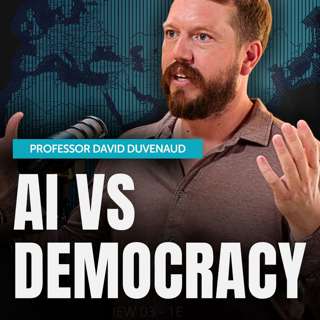
#234 – David Duvenaud on why 'aligned AI' would still kill democracy

#234 – David Duvenaud on why 'aligned AI' would still kill democracy

Democracy might be a brief historical blip. That’s the unsettling thesis of a recent paper, which argues AI that can do all the work a human can do inevitably leads to the “gradual disempowerment” of ...

27 Jan 2h 31min
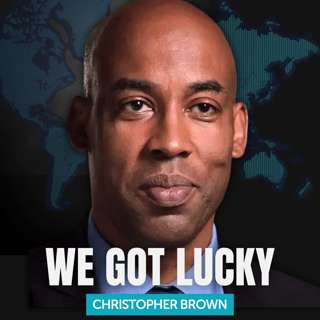
#145 Classic episode – Christopher Brown on why slavery abolition wasn't inevitable

#145 Classic episode – Christopher Brown on why slavery abolition wasn't inevitable

In many ways, humanity seems to have become more humane and inclusive over time. While there’s still a lot of progress to be made, campaigns to give people of different genders, races, sexualities, et...

20 Jan 2h 56min
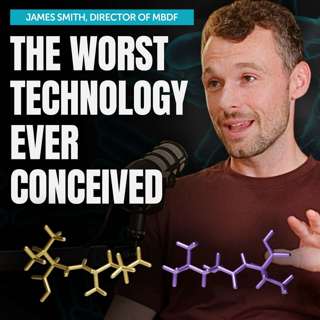
#233 – James Smith on how to prevent a mirror life catastrophe

#233 – James Smith on how to prevent a mirror life catastrophe

When James Smith first heard about mirror bacteria, he was sceptical. But within two weeks, he’d dropped everything to work on it full time, considering it the worst biothreat that he’d seen described...

13 Jan 2h 9min
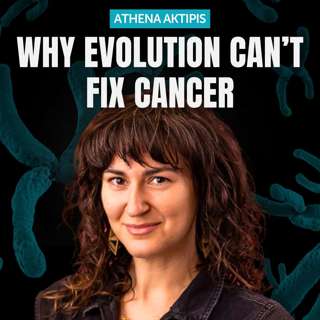
#144 Classic episode – Athena Aktipis on why cancer is a fundamental universal phenomena

#144 Classic episode – Athena Aktipis on why cancer is a fundamental universal phenomena

What’s the opposite of cancer? If you answered “cure,” “antidote,” or “antivenom” — you’ve obviously been reading the antonym section at www.merriam-webster.com/thesaurus/cancer.But today’s guest Athe...

9 Jan 3h 30min
#142 Classic episode – John McWhorter on why the optimal number of languages might be one, and other provocative claims about language

#142 Classic episode – John McWhorter on why the optimal number of languages might be one, and other provocative claims about language

John McWhorter is a linguistics professor at Columbia University specialising in research on creole languages. He's also a content-producing machine, never afraid to give his frank opinion on anything...

6 Jan 1h 35min
2025 Highlight-o-thon: Oops! All Bests

2025 Highlight-o-thon: Oops! All Bests

It’s that magical time of year once again — highlightapalooza! Stick around for one top bit from each episode we recorded this year, including:Kyle Fish explaining how Anthropic’s AI Claude descends i...

29 Des 20251h 40min

#232 – Andreas Mogensen on what we owe 'philosophical Vulcans' and unconscious beings

#232 – Andreas Mogensen on what we owe 'philosophical Vulcans' and unconscious beings

Most debates about the moral status of AI systems circle the same question: is there something that it feels like to be them? But what if that’s the wrong question to ask? Andreas Mogensen — a senior ...

19 Des 20252h 37min
#231 – Paul Scharre on how AI-controlled robots will and won't change war

#231 – Paul Scharre on how AI-controlled robots will and won't change war

In 1983, Stanislav Petrov, a Soviet lieutenant colonel, sat in a bunker watching a red screen flash “MISSILE LAUNCH.” Protocol demanded he report it to superiors, which would very likely trigger a ret...

17 Des 20252h 45min

Populært innen Fakta

fastlegen
dine-penger-pengeradet
relasjonspodden-med-dora-thorhallsdottir-kjersti-idem
treningspodden
rss-strid-de-norske-borgerkrigene
foreldreradet
rss-sunn-okonomi
jakt-og-fiskepodden
takk-og-lov-med-anine-kierulf
sinnsyn
rss-kunsten-a-leve
merry-quizmas
gravid-uke-for-uke
hverdagspsyken
smart-forklart
hagespiren-podcast
rss-kull
lederskap-nhhs-podkast-om-ledelse
fryktlos
uroskolen