#25 - Robin Hanson on why we have to lie to ourselves about why we do what we do

#25 - Robin Hanson on why we have to lie to ourselves about why we do what we do

On February 2, 1685, England’s King Charles II was struck by a sudden illness. Fortunately his physicians were the best of the best. To reassure the public they kept them abreast of the King’s treatment regimen. King Charles was made to swallow a toxic metal; had blistering agents applied to his scalp; had pigeon droppings attached to his feet; was prodded with a red-hot poker; given forty drops of ooze from “the skull of a man that was never buried”; and, finally, had crushed stones from the intestines of an East Indian goat forced down his throat. Sadly, despite these heroic efforts, he passed away the following week.

Why did the doctors go this far?

Prof, Robin Hanson, Associate Professor of Economics at George Mason University suspects that on top of any medical beliefs they also had a hidden motive: it needed to be clear, to the king and the public, that the physicians cared enormously about saving His Royal Majesty. Only by going ‘all out’ would they be protected against accusations of negligence should the King die.

Full transcript, summary, and links to articles discussed in the show.

If you believe Hanson, the same desire to be seen to care about our family and friends explains much of what’s perverse about our medical system today.

And not just medicine - Robin thinks we’re mostly kidding ourselves when we say our charities exist to help others, our schools exist to educate students and our politics are about choosing wise policies.

So important are hidden motives for navigating our social world that we have to deny them to ourselves, lest we accidentally reveal them to others.

Robin is a polymath economist, who has come up with surprising and novel insight in a range of fields including psychology, politics and futurology. In this extensive episode we discuss his latest book with Kevin Simler, *The Elephant in the Brain: Hidden Motives in Everyday Life*, but also:

* What was it like being part of a competitor group to the ‘World Wide Web’, and being beaten to the post?
* If people aren’t going to school to learn, what’s education all about?
* What split brain patients tell us about our ability to justify anything
* The hidden motivations that shape religions
* Why we choose the friends we do
* Why is our attitude to medicine mysterious?
* What would it look like if people were focused on doing as much good as possible?
* Are we better off donating now, when we’re older, or even wait until well after our deaths?
* How much of the behavior of ‘effective altruists’ can we assume is genuinely motivated by wanting to do as much good as possible?
* What does Robin mean when he refers to effective altruism as a youth movement? Is that a good or bad thing?
* And much more...

Episoder(325)

#234 – David Duvenaud on why 'aligned AI' would still kill democracy

#234 – David Duvenaud on why 'aligned AI' would still kill democracy

Democracy might be a brief historical blip. That’s the unsettling thesis of a recent paper, which argues AI that can do all the work a human can do inevitably leads to the “gradual disempowerment” of ...

27 Jan 2h 31min
#145 Classic episode – Christopher Brown on why slavery abolition wasn't inevitable

#145 Classic episode – Christopher Brown on why slavery abolition wasn't inevitable

In many ways, humanity seems to have become more humane and inclusive over time. While there’s still a lot of progress to be made, campaigns to give people of different genders, races, sexualities, et...

20 Jan 2h 56min
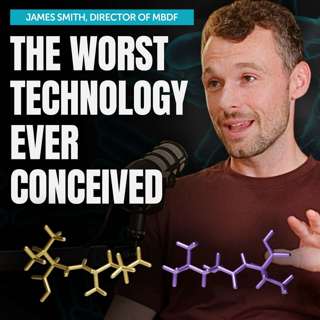
#233 – James Smith on how to prevent a mirror life catastrophe

#233 – James Smith on how to prevent a mirror life catastrophe

When James Smith first heard about mirror bacteria, he was sceptical. But within two weeks, he’d dropped everything to work on it full time, considering it the worst biothreat that he’d seen described...

13 Jan 2h 9min
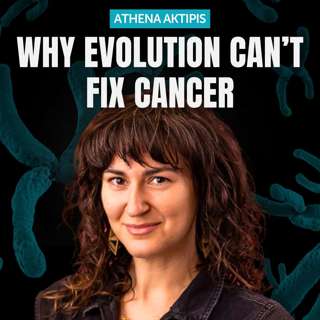
#144 Classic episode – Athena Aktipis on why cancer is a fundamental universal phenomena

#144 Classic episode – Athena Aktipis on why cancer is a fundamental universal phenomena

What’s the opposite of cancer? If you answered “cure,” “antidote,” or “antivenom” — you’ve obviously been reading the antonym section at www.merriam-webster.com/thesaurus/cancer.But today’s guest Athe...

9 Jan 3h 30min
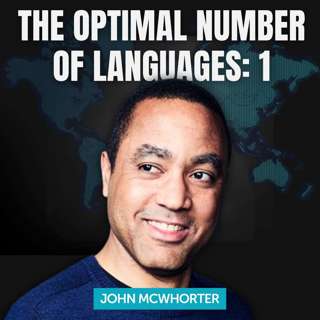
#142 Classic episode – John McWhorter on why the optimal number of languages might be one, and other provocative claims about language

#142 Classic episode – John McWhorter on why the optimal number of languages might be one, and other provocative claims about language

John McWhorter is a linguistics professor at Columbia University specialising in research on creole languages. He's also a content-producing machine, never afraid to give his frank opinion on anything...

6 Jan 1h 35min
2025 Highlight-o-thon: Oops! All Bests

2025 Highlight-o-thon: Oops! All Bests

It’s that magical time of year once again — highlightapalooza! Stick around for one top bit from each episode we recorded this year, including:Kyle Fish explaining how Anthropic’s AI Claude descends i...

29 Des 20251h 40min

#232 – Andreas Mogensen on what we owe 'philosophical Vulcans' and unconscious beings

#232 – Andreas Mogensen on what we owe 'philosophical Vulcans' and unconscious beings

Most debates about the moral status of AI systems circle the same question: is there something that it feels like to be them? But what if that’s the wrong question to ask? Andreas Mogensen — a senior ...

19 Des 20252h 37min
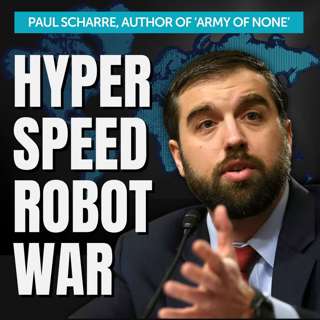
#231 – Paul Scharre on how AI-controlled robots will and won't change war

#231 – Paul Scharre on how AI-controlled robots will and won't change war

In 1983, Stanislav Petrov, a Soviet lieutenant colonel, sat in a bunker watching a red screen flash “MISSILE LAUNCH.” Protocol demanded he report it to superiors, which would very likely trigger a ret...

17 Des 20252h 45min

Populært innen Fakta

fastlegen
dine-penger-pengeradet
relasjonspodden-med-dora-thorhallsdottir-kjersti-idem
treningspodden
foreldreradet
rss-strid-de-norske-borgerkrigene
rss-sunn-okonomi
jakt-og-fiskepodden
sinnsyn
takk-og-lov-med-anine-kierulf
rss-kunsten-a-leve
gravid-uke-for-uke
merry-quizmas
hverdagspsyken
hagespiren-podcast
smart-forklart
rss-kull
fryktlos
lederskap-nhhs-podkast-om-ledelse
hr-podden-2