#74 – Dr Greg Lewis on COVID-19 & catastrophic biological risks

#74 – Dr Greg Lewis on COVID-19 & catastrophic biological risks

Our lives currently revolve around the global emergency of COVID-19; you’re probably reading this while confined to your house, as the death toll from the worst pandemic since 1918 continues to rise.

The question of how to tackle COVID-19 has been foremost in the minds of many, including here at 80,000 Hours.

Today's guest, Dr Gregory Lewis, acting head of the Biosecurity Research Group at Oxford University's Future of Humanity Institute, puts the crisis in context, explaining how COVID-19 compares to other diseases, pandemics of the past, and possible worse crises in the future.

COVID-19 is a vivid reminder that we are unprepared to contain or respond to new pathogens.

How would we cope with a virus that was even more contagious and even more deadly? Greg's work focuses on these risks -- of outbreaks that threaten our entire future through an unrecoverable collapse of civilisation, or even the extinction of humanity.

Links to learn more, summary and full transcript.

If such a catastrophe were to occur, Greg believes it’s more likely to be caused by accidental or deliberate misuse of biotechnology than by a pathogen developed by nature.

There are a few direct causes for concern: humans now have the ability to produce some of the most dangerous diseases in history in the lab; technological progress may enable the creation of pathogens which are nastier than anything we see in nature; and most biotechnology has yet to even be conceived, so we can’t assume all the dangers will be familiar.

This is grim stuff, but it needn’t be paralysing. In the years following COVID-19, humanity may be inspired to better prepare for the existential risks of the next century: improving our science, updating our policy options, and enhancing our social cohesion.

COVID-19 is a tragedy of stunning proportions, and its immediate threat is undoubtedly worthy of significant resources.

But we will get through it; if a future biological catastrophe poses an existential risk, we may not get a second chance. It is therefore vital to learn every lesson we can from this pandemic, and provide our descendants with the security we wish for ourselves.

Today’s episode is the hosting debut of our Strategy Advisor, Howie Lempel.

80,000 Hours has focused on COVID-19 for the last few weeks and published over ten pieces about it, and a substantial benefit of this interview was to help inform our own views. As such, at times this episode may feel like eavesdropping on a private conversation, and it is likely to be of most interest to people primarily focused on making the long-term future go as well as possible.

In this episode, Howie and Greg cover:

• Reflections on the first few months of the pandemic
• Common confusions around COVID-19
• How COVID-19 compares to other diseases
• What types of interventions have been available to policymakers
• Arguments for and against working on global catastrophic biological risks (GCBRs)
• How to know if you’re a good fit to work on GCBRs
• The response of the effective altruism community, as well as 80,000 Hours in particular, to COVID-19
• And much more.

Chapters:

  • Rob’s intro (00:00:00)
  • The interview begins (00:03:15)
  • What is COVID-19? (00:16:05)
  • If you end up infected, how severe is it likely to be? (00:19:21)
  • How does COVID-19 compare to other diseases? (00:25:42)
  • Common confusions around COVID-19 (00:32:02)
  • What types of interventions were available to policymakers? (00:46:20)
  • Nonpharmaceutical Interventions (01:04:18)
  • What can you do personally? (01:18:25)
  • Reflections on the first few months of the pandemic (01:23:46)
  • Global catastrophic biological risks (GCBRs) (01:26:17)
  • Counterarguments to working on GCBRs (01:45:56)
  • How do GCBRs compare to other problems? (01:49:05)
  • Careers (01:59:50)
  • The response of the effective altruism community to COVID-19 (02:11:42)
  • The response of 80,000 Hours to COVID-19 (02:28:12)


Get this episode by subscribing: type '80,000 Hours' into your podcasting app. Or read the linked transcript.

Producer: Keiran Harris.
Audio mastering: Ben Cordell.
Transcriptions: Zakee Ulhaq.

Episoder(320)

#31 - Allan Dafoe on defusing the political & economic risks posed by existing AI capabilities

#31 - Allan Dafoe on defusing the political & economic risks posed by existing AI capabilities

The debate around the impacts of artificial intelligence often centres on ‘superintelligence’ - a general intellect that is much smarter than the best humans, in practically every field. But according...

18 Mai 201848min
#30 - Eva Vivalt on how little social science findings generalize from one study to another

#30 - Eva Vivalt on how little social science findings generalize from one study to another

If we have a study on the impact of a social program in a particular place and time, how confident can we be that we’ll get a similar result if we study the same program again somewhere else? Dr Eva V...

15 Mai 20182h 1min

#29 - Anders Sandberg on 3 new resolutions for the Fermi paradox & how to colonise the universe

#29 - Anders Sandberg on 3 new resolutions for the Fermi paradox & how to colonise the universe

Part 2 out now: #33 - Dr Anders Sandberg on what if we ended ageing, solar flares & the annual risk of nuclear war The universe is so vast, yet we don’t see any alien civilizations. If they exist, whe...

8 Mai 20181h 21min
#28 - Owen Cotton-Barratt on why scientists should need insurance, PhD strategy & fast AI progresses

#28 - Owen Cotton-Barratt on why scientists should need insurance, PhD strategy & fast AI progresses

A researcher is working on creating a new virus – one more dangerous than any that exist naturally. They believe they’re being as careful as possible. After all, if things go wrong, their own life and...

27 Apr 20181h 3min
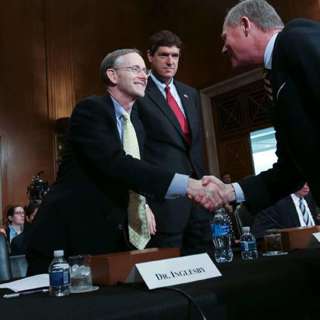
#27 - Dr Tom Inglesby on careers and policies that reduce global catastrophic biological risks

#27 - Dr Tom Inglesby on careers and policies that reduce global catastrophic biological risks

How about this for a movie idea: a main character has to prevent a new contagious strain of Ebola spreading around the world. She’s the best of the best. So good in fact, that her work on early detect...

18 Apr 20182h 16min
#26 - Marie Gibbons on how exactly clean meat is made & what's needed to get it in every supermarket

#26 - Marie Gibbons on how exactly clean meat is made & what's needed to get it in every supermarket

First, decide on the type of animal. Next, pick the cell type. Then take a small, painless biopsy, and put the cells in a solution that makes them feel like they’re still in the body. Once the cells a...

10 Apr 20181h 44min
#25 - Robin Hanson on why we have to lie to ourselves about why we do what we do

#25 - Robin Hanson on why we have to lie to ourselves about why we do what we do

On February 2, 1685, England’s King Charles II was struck by a sudden illness. Fortunately his physicians were the best of the best. To reassure the public they kept them abreast of the King’s treatme...

28 Mar 20182h 39min
#24 - Stefan Schubert on why it’s a bad idea to break the rules, even if it’s for a good cause

#24 - Stefan Schubert on why it’s a bad idea to break the rules, even if it’s for a good cause

How honest should we be? How helpful? How friendly? If our society claims to value honesty, for instance, but in reality accepts an awful lot of lying – should we go along with those lax standards? Or...

20 Mar 201855min

Populært innen Fakta

fastlegen
dine-penger-pengeradet
relasjonspodden-med-dora-thorhallsdottir-kjersti-idem
treningspodden
rss-strid-de-norske-borgerkrigene
foreldreradet
jakt-og-fiskepodden
rss-sunn-okonomi
merry-quizmas
gravid-uke-for-uke
fryktlos
sinnsyn
smart-forklart
rss-mann-i-krise-med-sagen
hverdagspsyken
rss-kunsten-a-leve
dopet
aldring-og-helse-podden
rss-adhd-i-klasserommet
generasjonspodden