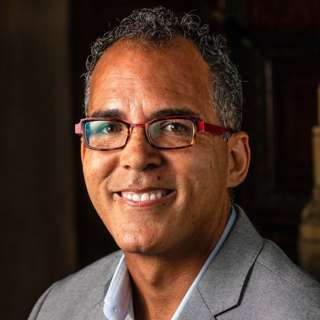

#82 – James Forman Jr on reducing the cruelty of the US criminal legal system

#82 – James Forman Jr on reducing the cruelty of the US criminal legal system

No democracy has ever incarcerated as many people as the United States. To get its incarceration rate down to the global average, the US would have to release 3 in 4 people in its prisons today.

The effects on Black Americans have been especially severe — Black people make up 12% of the US population but 33% of its prison population. In the early 2000's when incarceration reached its peak, the US government estimated that 32% of Black boys would go to prison at some point in their lives, 5.5 times the figure for whites.

Contrary to popular understanding, nonviolent drug offenders make up less than a fifth of the incarcerated population. The only way to get its incarceration rate near the global average will be to shorten prison sentences for so-called 'violent criminals' — a politically toxic idea. But could we change that?

According to today’s guest, Professor James Forman Jr — a former public defender in Washington DC, Pulitzer Prize-winning author of Locking Up Our Own: Crime and Punishment in Black America, and now a professor at Yale Law School — there are two things we have to do to make that happen.

Links to learn more, summary and full transcript.

First, he thinks we should lose the term 'violent offender', and maybe even 'violent crime'. When you say 'violent crime', most people immediately think of murder and rape — but they're only a small fraction of the crimes that the law deems as violent.

In reality, the crime that puts the most people in prison in the US is robbery. And the law says that robbery is a violent crime whether a weapon is involved or not. By moving away from the catch-all category of 'violent criminals' we can judge the risk posed by individual people more sensibly.

Second, he thinks we should embrace the restorative justice movement. Instead of asking "What was the law? Who broke it? What should the punishment be", restorative justice asks "Who was harmed? Who harmed them? And what can we as a society, including the person who committed the harm, do to try to remedy that harm?"

Instead of being narrowly focused on how many years people should spend in prison as retribution, it starts a different conversation.

You might think this apparently softer approach would be unsatisfying to victims of crime. But James has discovered that a lot of victims of crime find that the current system doesn't help them in any meaningful way. What they primarily want to know is: why did this happen to me?

The best way to find that out is to actually talk to the person who harmed them, and in doing so gain a better understanding of the underlying factors behind the crime. The restorative justice approach facilitates these conversations in a way the current system doesn't allow, and can include restitution, apologies, and face-to-face reconciliation.

That’s just one topic of many covered in today’s episode, with much of the conversation focusing on Professor Forman’s 2018 book Locking Up Our Own — an examination of the historical roots of contemporary criminal justice practices in the US, and his experience setting up a charter school for at-risk youth in DC.

Chapters:

  • Rob’s intro (00:00:00)
  • The interview begins (00:02:02)
  • How did we get here? (00:04:07)
  • The role racism plays in policing today (00:14:47)
  • Black American views on policing and criminal justice (00:22:37)
  • Has the core argument of the book been controversial? (00:31:51)
  • The role that class divisions played in forming the current legal system (00:37:33)
  • What are the biggest problems today? (00:40:56)
  • What changes in policy would make the biggest difference? (00:52:41)
  • Shorter sentences for violent crimes (00:58:26)
  • Important recent successes (01:08:21)
  • What can people actually do to help? (01:14:38)


Get this episode by subscribing: type 80,000 Hours into your podcasting app. Or read the linked transcript.

Producer: Keiran Harris.
Audio mastering: Ben Cordell.
Transcriptions: Zakee Ulhaq.

Episoder(325)

AI might let a few people control everything — permanently (article by Rose Hadshar)

AI might let a few people control everything — permanently (article by Rose Hadshar)

Power is already concentrated today: over 800 million people live on less than $3 a day, the three richest men in the world are worth over $1 trillion, and almost six billion people live in countries ...

12 Des 20251h

#230 – Dean Ball on how AI is a huge deal — but we shouldn’t regulate it yet

#230 – Dean Ball on how AI is a huge deal — but we shouldn’t regulate it yet

Former White House staffer Dean Ball thinks it's very likely some form of 'superintelligence' arrives in under 20 years. He thinks AI being used for bioweapon research is "a real threat model, obvious...

10 Des 20252h 54min

#229 – Marius Hobbhahn on the race to solve AI scheming before models go superhuman

#229 – Marius Hobbhahn on the race to solve AI scheming before models go superhuman

We often worry about AI models “hallucinating” or making honest mistakes. But what happens when a model knows the truth, but decides to deceive you anyway to achieve a goal of its own? This isn’t sci-...

3 Des 20253h 3min

Rob & Luisa chat kids, the 2016 fertility crash, and how the 50s invented parenting that makes us miserable

Rob & Luisa chat kids, the 2016 fertility crash, and how the 50s invented parenting that makes us miserable

Global fertility rates aren’t just falling: the rate of decline is accelerating. From 2006 to 2016, fertility dropped gradually, but since 2016 the rate of decline has increased 4.5-fold. In many weal...

25 Nov 20251h 59min

#228 – Eileen Yam on how we're completely out of touch with what the public thinks about AI

#228 – Eileen Yam on how we're completely out of touch with what the public thinks about AI

If you work in AI, you probably think it’s going to boost productivity, create wealth, advance science, and improve your life. If you’re a member of the American public, you probably strongly disagree...

20 Nov 20251h 43min

OpenAI: The nonprofit refuses to be killed (with Tyler Whitmer)

OpenAI: The nonprofit refuses to be killed (with Tyler Whitmer)

Last December, the OpenAI business put forward a plan to completely sideline its nonprofit board. But two state attorneys general have now blocked that effort and kept that board very much alive and k...

11 Nov 20251h 56min
#227 – Helen Toner on the geopolitics of AGI in China and the Middle East

#227 – Helen Toner on the geopolitics of AGI in China and the Middle East

With the US racing to develop AGI and superintelligence ahead of China, you might expect the two countries to be negotiating how they’ll deploy AI, including in the military, without coming to blows. ...

5 Nov 20252h 20min

#226 – Holden Karnofsky on unexploited opportunities to make AI safer — and all his AGI takes

#226 – Holden Karnofsky on unexploited opportunities to make AI safer — and all his AGI takes

For years, working on AI safety usually meant theorising about the ‘alignment problem’ or trying to convince other people to give a damn. If you could find any way to help, the work was frustrating an...

30 Okt 20254h 30min

Populært innen Fakta

fastlegen
dine-penger-pengeradet
relasjonspodden-med-dora-thorhallsdottir-kjersti-idem
rss-strid-de-norske-borgerkrigene
foreldreradet
treningspodden
rss-sunn-okonomi
jakt-og-fiskepodden
takk-og-lov-med-anine-kierulf
sinnsyn
merry-quizmas
gravid-uke-for-uke
rss-kunsten-a-leve
rss-kull
hagespiren-podcast
hverdagspsyken
rss-var-forste-kaffe
fryktlos
rss-mann-i-krise-med-sagen
smart-forklart