#86 – Hilary Greaves on Pascal's mugging, strong longtermism, and whether existing can be good for us

#86 – Hilary Greaves on Pascal's mugging, strong longtermism, and whether existing can be good for us

Had World War 1 never happened, you might never have existed.

It’s very unlikely that the exact chain of events that led to your conception would have happened otherwise — so perhaps you wouldn't have been born.

Would that mean that it's better for you that World War 1 happened (regardless of whether it was better for the world overall)?

On the one hand, if you're living a pretty good life, you might think the answer is yes – you get to live rather than not.

On the other hand, it sounds strange to say that it's better for you to be alive, because if you'd never existed there'd be no you to be worse off. But if you wouldn't be worse off if you hadn't existed, can you be better off because you do?

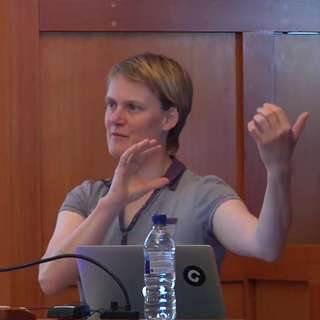
In this episode, philosophy professor Hilary Greaves – Director of Oxford University’s Global Priorities Institute – helps untangle this puzzle for us and walks me and Rob through the space of possible answers. She argues that philosophers have been too quick to conclude what she calls existence non-comparativism – i.e, that it can't be better for someone to exist vs. not.

Links to learn more, summary and full transcript.

Where we come down on this issue matters. If people are not made better off by existing and having good lives, you might conclude that bringing more people into existence isn't better for them, and thus, perhaps, that it's not better at all.

This would imply that bringing about a world in which more people live happy lives might not actually be a good thing (if the people wouldn't otherwise have existed) — which would affect how we try to make the world a better place.

Those wanting to have children in order to give them the pleasure of a good life would in some sense be mistaken. And if humanity stopped bothering to have kids and just gradually died out we would have no particular reason to be concerned.

Furthermore it might mean we should deprioritise issues that primarily affect future generations, like climate change or the risk of humanity accidentally wiping itself out.

This is our second episode with Professor Greaves. The first one was a big hit, so we thought we'd come back and dive into even more complex ethical issues.

We discuss:

• The case for different types of ‘strong longtermism’ — the idea that we ought morally to try to make the very long run future go as well as possible
• What it means for us to be 'clueless' about the consequences of our actions
• Moral uncertainty -- what we should do when we don't know which moral theory is correct
• Whether we should take a bet on a really small probability of a really great outcome
• The field of global priorities research at the Global Priorities Institute and beyond

Chapters:

  • The interview begins (00:02:53)
  • The Case for Strong Longtermism (00:05:49)
  • Compatible moral views (00:20:03)
  • Defining cluelessness (00:39:26)
  • Why cluelessness isn’t an objection to longtermism (00:51:05)
  • Theories of what to do under moral uncertainty (01:07:42)
  • Pascal’s mugging (01:16:37)
  • Comparing Existence and Non-Existence (01:30:58)
  • Philosophers who reject existence comparativism (01:48:56)
  • Lives framework (02:01:52)
  • Global priorities research (02:09:25)


Get this episode by subscribing: type 80,000 Hours into your podcasting app. Or read the linked transcript.

Producer: Keiran Harris.
Audio mastering: Ben Cordell.
Transcriptions: Zakee Ulhaq.

Episoder(325)

The 80,000 Hours Career Guide (2023)

The 80,000 Hours Career Guide (2023)

An audio version of the 2023 80,000 Hours career guide, also available on our website, on Amazon, and on Audible.If you know someone who might find our career guide helpful, you can get a free copy se...

4 Sep 20234h 41min
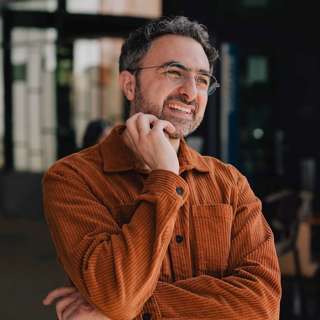
#162 – Mustafa Suleyman on getting Washington and Silicon Valley to tame AI

#162 – Mustafa Suleyman on getting Washington and Silicon Valley to tame AI

Mustafa Suleyman was part of the trio that founded DeepMind, and his new AI project is building one of the world's largest supercomputers to train a large language model on 10–100x the compute used to...

1 Sep 202359min
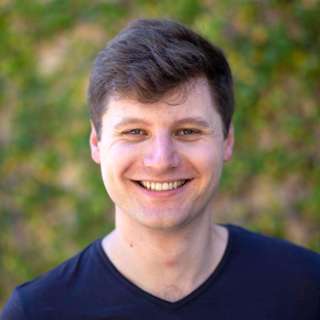
#161 – Michael Webb on whether AI will soon cause job loss, lower incomes, and higher inequality — or the opposite

#161 – Michael Webb on whether AI will soon cause job loss, lower incomes, and higher inequality — or the opposite

"Do you remember seeing these photographs of generally women sitting in front of these huge panels and connecting calls, plugging different calls between different numbers? The automated version of th...

23 Aug 20233h 30min

#160 – Hannah Ritchie on why it makes sense to be optimistic about the environment

#160 – Hannah Ritchie on why it makes sense to be optimistic about the environment

"There's no money to invest in education elsewhere, so they almost get trapped in the cycle where they don't get a lot from crop production, but everyone in the family has to work there to just stay a...

14 Aug 20232h 36min
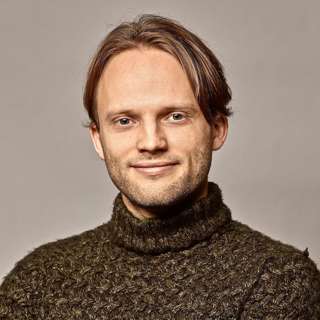
#159 – Jan Leike on OpenAI's massive push to make superintelligence safe in 4 years or less

#159 – Jan Leike on OpenAI's massive push to make superintelligence safe in 4 years or less

In July, OpenAI announced a new team and project: Superalignment. The goal is to figure out how to make superintelligent AI systems aligned and safe to use within four years, and the lab is putting a ...

7 Aug 20232h 51min
We now offer shorter 'interview highlights' episodes

We now offer shorter 'interview highlights' episodes

Over on our other feed, 80k After Hours, you can now find 20-30 minute highlights episodes of our 80,000 Hours Podcast interviews. These aren’t necessarily the most important parts of the interview, a...

5 Aug 20236min
#158 – Holden Karnofsky on how AIs might take over even if they're no smarter than humans, and his 4-part playbook for AI risk

#158 – Holden Karnofsky on how AIs might take over even if they're no smarter than humans, and his 4-part playbook for AI risk

Back in 2007, Holden Karnofsky cofounded GiveWell, where he sought out the charities that most cost-effectively helped save lives. He then cofounded Open Philanthropy, where he oversaw a team making b...

31 Jul 20233h 13min
#157 – Ezra Klein on existential risk from AI and what DC could do about it

#157 – Ezra Klein on existential risk from AI and what DC could do about it

In Oppenheimer, scientists detonate a nuclear weapon despite thinking there's some 'near zero' chance it would ignite the atmosphere, putting an end to life on Earth. Today, scientists working on AI t...

24 Jul 20231h 18min

Populært innen Fakta

fastlegen
dine-penger-pengeradet
relasjonspodden-med-dora-thorhallsdottir-kjersti-idem
treningspodden
rss-strid-de-norske-borgerkrigene
foreldreradet
rss-sunn-okonomi
jakt-og-fiskepodden
takk-og-lov-med-anine-kierulf
sinnsyn
rss-kunsten-a-leve
merry-quizmas
gravid-uke-for-uke
hverdagspsyken
smart-forklart
hagespiren-podcast
rss-kull
lederskap-nhhs-podkast-om-ledelse
fryktlos
uroskolen