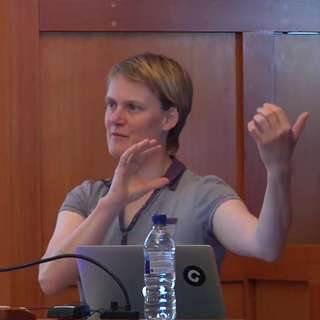

#86 – Hilary Greaves on Pascal's mugging, strong longtermism, and whether existing can be good for us

#86 – Hilary Greaves on Pascal's mugging, strong longtermism, and whether existing can be good for us

Had World War 1 never happened, you might never have existed.

It’s very unlikely that the exact chain of events that led to your conception would have happened otherwise — so perhaps you wouldn't have been born.

Would that mean that it's better for you that World War 1 happened (regardless of whether it was better for the world overall)?

On the one hand, if you're living a pretty good life, you might think the answer is yes – you get to live rather than not.

On the other hand, it sounds strange to say that it's better for you to be alive, because if you'd never existed there'd be no you to be worse off. But if you wouldn't be worse off if you hadn't existed, can you be better off because you do?

In this episode, philosophy professor Hilary Greaves – Director of Oxford University’s Global Priorities Institute – helps untangle this puzzle for us and walks me and Rob through the space of possible answers. She argues that philosophers have been too quick to conclude what she calls existence non-comparativism – i.e, that it can't be better for someone to exist vs. not.

Links to learn more, summary and full transcript.

Where we come down on this issue matters. If people are not made better off by existing and having good lives, you might conclude that bringing more people into existence isn't better for them, and thus, perhaps, that it's not better at all.

This would imply that bringing about a world in which more people live happy lives might not actually be a good thing (if the people wouldn't otherwise have existed) — which would affect how we try to make the world a better place.

Those wanting to have children in order to give them the pleasure of a good life would in some sense be mistaken. And if humanity stopped bothering to have kids and just gradually died out we would have no particular reason to be concerned.

Furthermore it might mean we should deprioritise issues that primarily affect future generations, like climate change or the risk of humanity accidentally wiping itself out.

This is our second episode with Professor Greaves. The first one was a big hit, so we thought we'd come back and dive into even more complex ethical issues.

We discuss:

• The case for different types of ‘strong longtermism’ — the idea that we ought morally to try to make the very long run future go as well as possible
• What it means for us to be 'clueless' about the consequences of our actions
• Moral uncertainty -- what we should do when we don't know which moral theory is correct
• Whether we should take a bet on a really small probability of a really great outcome
• The field of global priorities research at the Global Priorities Institute and beyond

Chapters:

  • The interview begins (00:02:53)
  • The Case for Strong Longtermism (00:05:49)
  • Compatible moral views (00:20:03)
  • Defining cluelessness (00:39:26)
  • Why cluelessness isn’t an objection to longtermism (00:51:05)
  • Theories of what to do under moral uncertainty (01:07:42)
  • Pascal’s mugging (01:16:37)
  • Comparing Existence and Non-Existence (01:30:58)
  • Philosophers who reject existence comparativism (01:48:56)
  • Lives framework (02:01:52)
  • Global priorities research (02:09:25)


Get this episode by subscribing: type 80,000 Hours into your podcasting app. Or read the linked transcript.

Producer: Keiran Harris.
Audio mastering: Ben Cordell.
Transcriptions: Zakee Ulhaq.

Episoder(326)

#140 – Bear Braumoeller on the case that war isn't in decline

#140 – Bear Braumoeller on the case that war isn't in decline

Is war in long-term decline? Steven Pinker's The Better Angels of Our Nature brought this previously obscure academic question to the centre of public debate, and pointed to rates of death in war to a...

8 Nov 20222h 47min

#139 – Alan Hájek on puzzles and paradoxes in probability and expected value

#139 – Alan Hájek on puzzles and paradoxes in probability and expected value

A casino offers you a game. A coin will be tossed. If it comes up heads on the first flip you win $2. If it comes up on the second flip you win $4. If it comes up on the third you win $8, the fourth y...

28 Okt 20223h 38min

Preventing an AI-related catastrophe (Article)

Preventing an AI-related catastrophe (Article)

Today’s release is a professional reading of our new problem profile on preventing an AI-related catastrophe, written by Benjamin Hilton. We expect that there will be substantial progress in AI in t...

14 Okt 20222h 24min

#138 – Sharon Hewitt Rawlette on why pleasure and pain are the only things that intrinsically matter

#138 – Sharon Hewitt Rawlette on why pleasure and pain are the only things that intrinsically matter

What in the world is intrinsically good — good in itself even if it has no other effects? Over the millennia, people have offered many answers: joy, justice, equality, accomplishment, loving god, wisd...

30 Sep 20222h 24min
#137 – Andreas Mogensen on whether effective altruism is just for consequentialists

#137 – Andreas Mogensen on whether effective altruism is just for consequentialists

Effective altruism, in a slogan, aims to 'do the most good.' Utilitarianism, in a slogan, says we should act to 'produce the greatest good for the greatest number.' It's clear enough why utilitarians ...

8 Sep 20222h 21min

#136 – Will MacAskill on what we owe the future

#136 – Will MacAskill on what we owe the future

People who exist in the future deserve some degree of moral consideration.The future could be very big, very long, and/or very good.We can reasonably hope to influence whether people in the future exi...

15 Aug 20222h 54min

#135 – Samuel Charap on key lessons from five months of war in Ukraine

#135 – Samuel Charap on key lessons from five months of war in Ukraine

After a frenetic level of commentary during February and March, the war in Ukraine has faded into the background of our news coverage. But with the benefit of time we're in a much stronger position to...

8 Aug 202254min

#134 – Ian Morris on what big-picture history teaches us

#134 – Ian Morris on what big-picture history teaches us

Wind back 1,000 years and the moral landscape looks very different to today. Most farming societies thought slavery was natural and unobjectionable, premarital sex was an abomination, women should obe...

22 Jul 20223h 41min

Populært innen Fakta

fastlegen
dine-penger-pengeradet
relasjonspodden-med-dora-thorhallsdottir-kjersti-idem
treningspodden
foreldreradet
rss-strid-de-norske-borgerkrigene
jakt-og-fiskepodden
rss-sunn-okonomi
sinnsyn
takk-og-lov-med-anine-kierulf
merry-quizmas
gravid-uke-for-uke
rss-kunsten-a-leve
hverdagspsyken
rss-kull
hagespiren-podcast
rss-var-forste-kaffe
fryktlos
rss-mann-i-krise-med-sagen
lederskap-nhhs-podkast-om-ledelse