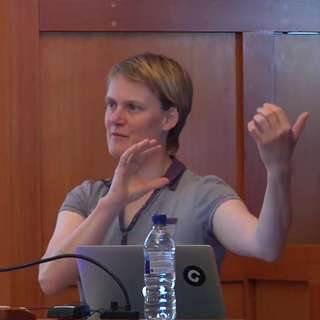

#86 – Hilary Greaves on Pascal's mugging, strong longtermism, and whether existing can be good for us

#86 – Hilary Greaves on Pascal's mugging, strong longtermism, and whether existing can be good for us

Had World War 1 never happened, you might never have existed.

It’s very unlikely that the exact chain of events that led to your conception would have happened otherwise — so perhaps you wouldn't have been born.

Would that mean that it's better for you that World War 1 happened (regardless of whether it was better for the world overall)?

On the one hand, if you're living a pretty good life, you might think the answer is yes – you get to live rather than not.

On the other hand, it sounds strange to say that it's better for you to be alive, because if you'd never existed there'd be no you to be worse off. But if you wouldn't be worse off if you hadn't existed, can you be better off because you do?

In this episode, philosophy professor Hilary Greaves – Director of Oxford University’s Global Priorities Institute – helps untangle this puzzle for us and walks me and Rob through the space of possible answers. She argues that philosophers have been too quick to conclude what she calls existence non-comparativism – i.e, that it can't be better for someone to exist vs. not.

Links to learn more, summary and full transcript.

Where we come down on this issue matters. If people are not made better off by existing and having good lives, you might conclude that bringing more people into existence isn't better for them, and thus, perhaps, that it's not better at all.

This would imply that bringing about a world in which more people live happy lives might not actually be a good thing (if the people wouldn't otherwise have existed) — which would affect how we try to make the world a better place.

Those wanting to have children in order to give them the pleasure of a good life would in some sense be mistaken. And if humanity stopped bothering to have kids and just gradually died out we would have no particular reason to be concerned.

Furthermore it might mean we should deprioritise issues that primarily affect future generations, like climate change or the risk of humanity accidentally wiping itself out.

This is our second episode with Professor Greaves. The first one was a big hit, so we thought we'd come back and dive into even more complex ethical issues.

We discuss:

• The case for different types of ‘strong longtermism’ — the idea that we ought morally to try to make the very long run future go as well as possible
• What it means for us to be 'clueless' about the consequences of our actions
• Moral uncertainty -- what we should do when we don't know which moral theory is correct
• Whether we should take a bet on a really small probability of a really great outcome
• The field of global priorities research at the Global Priorities Institute and beyond

Chapters:

  • The interview begins (00:02:53)
  • The Case for Strong Longtermism (00:05:49)
  • Compatible moral views (00:20:03)
  • Defining cluelessness (00:39:26)
  • Why cluelessness isn’t an objection to longtermism (00:51:05)
  • Theories of what to do under moral uncertainty (01:07:42)
  • Pascal’s mugging (01:16:37)
  • Comparing Existence and Non-Existence (01:30:58)
  • Philosophers who reject existence comparativism (01:48:56)
  • Lives framework (02:01:52)
  • Global priorities research (02:09:25)


Get this episode by subscribing: type 80,000 Hours into your podcasting app. Or read the linked transcript.

Producer: Keiran Harris.
Audio mastering: Ben Cordell.
Transcriptions: Zakee Ulhaq.

Episoder(325)

#98 – Christian Tarsney on future bias and a possible solution to moral fanaticism

#98 – Christian Tarsney on future bias and a possible solution to moral fanaticism

Imagine that you’re in the hospital for surgery. This kind of procedure is always safe, and always successful — but it can take anywhere from one to ten hours. You can’t be knocked out for the operati...

5 Mai 20212h 38min

#97 – Mike Berkowitz on keeping the US a liberal democratic country

#97 – Mike Berkowitz on keeping the US a liberal democratic country

Donald Trump’s attempt to overturn the results of the 2020 election split the Republican party. There were those who went along with it — 147 members of Congress raised objections to the official cert...

20 Apr 20212h 36min
The ten episodes of this show you should listen to first

The ten episodes of this show you should listen to first

Today we're launching a new podcast feed that might be useful to you and people you know. It's called 'Effective Altruism: An Introduction', and it's a carefully chosen selection of ten episodes of ...

15 Apr 20213min

#96 – Nina Schick on disinformation and the rise of synthetic media

#96 – Nina Schick on disinformation and the rise of synthetic media

You might have heard fears like this in the last few years: What if Donald Trump was woken up in the middle of the night and shown a fake video — indistinguishable from a real one — in which Kim Jong ...

6 Apr 20212h

#95 – Kelly Wanser on whether to deliberately intervene in the climate

#95 – Kelly Wanser on whether to deliberately intervene in the climate

How long do you think it’ll be before we’re able to bend the weather to our will? A massive rainmaking program in China, efforts to seed new oases in the Arabian peninsula, or chemically induce snow f...

26 Mar 20211h 24min

#94 – Ezra Klein on aligning journalism, politics, and what matters most

#94 – Ezra Klein on aligning journalism, politics, and what matters most

How many words in U.S. newspapers have been spilled on tax policy in the past five years? And how many words on CRISPR? Or meat alternatives? Or how AI may soon automate the majority of jobs? When p...

20 Mar 20211h 45min

#93 – Andy Weber on rendering bioweapons obsolete & ending the new nuclear arms race

#93 – Andy Weber on rendering bioweapons obsolete & ending the new nuclear arms race

COVID-19 has provided a vivid reminder of the power of biological threats. But the threat doesn't come from natural sources alone. Weaponized contagious diseases — which were abandoned by the United S...

12 Mar 20211h 54min

#92 – Brian Christian on the alignment problem

#92 – Brian Christian on the alignment problem

Brian Christian is a bestselling author with a particular knack for accurately communicating difficult or technical ideas from both mathematics and computer science. Listeners loved our episode abo...

5 Mar 20212h 55min

Populært innen Fakta

fastlegen
dine-penger-pengeradet
relasjonspodden-med-dora-thorhallsdottir-kjersti-idem
treningspodden
rss-strid-de-norske-borgerkrigene
foreldreradet
rss-sunn-okonomi
jakt-og-fiskepodden
takk-og-lov-med-anine-kierulf
sinnsyn
rss-kunsten-a-leve
merry-quizmas
gravid-uke-for-uke
hverdagspsyken
smart-forklart
hagespiren-podcast
rss-kull
lederskap-nhhs-podkast-om-ledelse
fryktlos
uroskolen