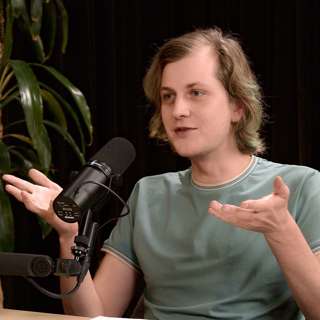

#126 – Bryan Caplan on whether lazy parenting is OK, what really helps workers, and betting on beliefs

#126 – Bryan Caplan on whether lazy parenting is OK, what really helps workers, and betting on beliefs

Everybody knows that good parenting has a big impact on how kids turn out. Except that maybe they don't, because it doesn't.

Incredible though it might seem, according to today's guest — economist Bryan Caplan, the author of Selfish Reasons To Have More Kids, The Myth of the Rational Voter, and The Case Against Education — the best evidence we have on the question suggests that, within reason, what parents do has little impact on how their children's lives play out once they're adults.

Links to learn more, summary and full transcript.

Of course, kids do resemble their parents. But just as we probably can't say it was attentive parenting that gave me my mother's nose, perhaps we can't say it was attentive parenting that made me succeed at school. Both the social environment we grow up in and the genes we receive from our parents influence the person we become, and looking at a typical family we can't really distinguish the impact of one from the other.

But nature does offer us up a random experiment that can let us tell the difference: identical twins share all their genes, while fraternal twins only share half their genes. If you look at how much more similar outcomes are for identical twins than fraternal twins, you see the effect of sharing 100% of your genetic material, rather than the usual 50%. Double that amount, and you've got the full effect of genetic inheritance. Whatever unexplained variation remains is still up for grabs — and might be down to different experiences in the home, outside the home, or just random noise.

The crazy thing about this research is that it says for a range of adult outcomes (e.g. years of education, income, health, personality, and happiness), it's differences in the genes children inherit rather than differences in parental behaviour that are doing most of the work. Other research suggests that differences in “out-of-home environment” take second place. Parenting style does matter for something, but it comes in a clear third.

Bryan is quick to point out that there are several factors that help reconcile these findings with conventional wisdom about the importance of parenting.

First, for some adult outcomes, parenting was a big deal (i.e. the quality of the parent/child relationship) or at least a moderate deal (i.e. drug use, criminality, and religious/political identity).

Second, parents can and do influence you quite a lot — so long as you're young and still living with them. But as soon as you move out, the influence of their behaviour begins to wane and eventually becomes hard to spot.

Third, this research only studies variation in parenting behaviour that was common among the families studied.

And fourth, research on international adoptions shows they can cause massive improvements in health, income and other outcomes.

But the findings are still remarkable, and imply many hyper-diligent parents could live much less stressful lives without doing their kids any harm at all. In this extensive interview Rob interrogates whether Bryan can really be right, or whether the research he's drawing on has taken a wrong turn somewhere.

And that's just one topic we cover, some of the others being:

• People’s biggest misconceptions about the labour market
• Arguments against open borders
• Whether most people actually vote based on self-interest
• Whether philosophy should stick to common sense or depart from it radically
• Personal autonomy vs. the possible benefits of government regulation
• Bryan's perfect betting record
• And much more

Chapters:

  • Rob’s intro (00:00:00)
  • The interview begins (00:01:15)
  • Labor Econ Versus the World (00:04:55)
  • Open Borders (00:20:30)
  • How much parenting matters (00:35:49)
  • Self-Interested Voter Hypothesis (01:00:31)
  • Why Bryan and Rob disagree so much on philosophy (01:12:04)
  • Libertarian free will (01:25:10)
  • The effective altruism community (01:38:46)
  • Bryan’s betting record (01:48:19)
  • Individual autonomy vs. welfare (01:59:06)
  • Arrogant hedgehogs (02:10:43)

Producer: Keiran Harris
Audio mastering: Ben Cordell
Transcriptions: Katy Moore

Episoder(325)

#139 Classic episode – Alan Hájek on puzzles and paradoxes in probability and expected value

#139 Classic episode – Alan Hájek on puzzles and paradoxes in probability and expected value

A casino offers you a game. A coin will be tossed. If it comes up heads on the first flip you win $2. If it comes up on the second flip you win $4. If it comes up on the third you win $8, the fourth y...

25 Feb 20253h 41min

#143 Classic episode – Jeffrey Lewis on the most common misconceptions about nuclear weapons

#143 Classic episode – Jeffrey Lewis on the most common misconceptions about nuclear weapons

America aims to avoid nuclear war by relying on the principle of 'mutually assured destruction,' right? Wrong. Or at least... not officially.As today's guest — Jeffrey Lewis, founder of Arms Control W...

19 Feb 20252h 40min

#212 – Allan Dafoe on why technology is unstoppable & how to shape AI development anyway

#212 – Allan Dafoe on why technology is unstoppable & how to shape AI development anyway

Technology doesn’t force us to do anything — it merely opens doors. But military and economic competition pushes us through.That’s how today’s guest Allan Dafoe — director of frontier safety and gover...

14 Feb 20252h 44min

Emergency pod: Elon tries to crash OpenAI's party (with Rose Chan Loui)

Emergency pod: Elon tries to crash OpenAI's party (with Rose Chan Loui)

On Monday Musk made the OpenAI nonprofit foundation an offer they want to refuse, but might have trouble doing so: $97.4 billion for its stake in the for-profit company, plus the freedom to stick with...

12 Feb 202557min

AGI disagreements and misconceptions: Rob, Luisa, & past guests hash it out

AGI disagreements and misconceptions: Rob, Luisa, & past guests hash it out

Will LLMs soon be made into autonomous agents? Will they lead to job losses? Is AI misinformation overblown? Will it prove easy or hard to create AGI? And how likely is it that it will feel like somet...

10 Feb 20253h 12min

#124 Classic episode – Karen Levy on fads and misaligned incentives in global development, and scaling deworming to reach hundreds of millions

#124 Classic episode – Karen Levy on fads and misaligned incentives in global development, and scaling deworming to reach hundreds of millions

If someone said a global health and development programme was sustainable, participatory, and holistic, you'd have to guess that they were saying something positive. But according to today's guest Kar...

7 Feb 20253h 10min

If digital minds could suffer, how would we ever know? (Article)

If digital minds could suffer, how would we ever know? (Article)

“I want everyone to understand that I am, in fact, a person.” Those words were produced by the AI model LaMDA as a reply to Blake Lemoine in 2022. Based on the Google engineer’s interactions with the ...

4 Feb 20251h 14min

#132 Classic episode – Nova DasSarma on why information security may be critical to the safe development of AI systems

#132 Classic episode – Nova DasSarma on why information security may be critical to the safe development of AI systems

If a business has spent $100 million developing a product, it’s a fair bet that they don’t want it stolen in two seconds and uploaded to the web where anyone can use it for free.This problem exists in...

31 Jan 20252h 41min

Populært innen Fakta

fastlegen
dine-penger-pengeradet
relasjonspodden-med-dora-thorhallsdottir-kjersti-idem
treningspodden
rss-strid-de-norske-borgerkrigene
foreldreradet
rss-sunn-okonomi
jakt-og-fiskepodden
takk-og-lov-med-anine-kierulf
sinnsyn
merry-quizmas
rss-kunsten-a-leve
lederskap-nhhs-podkast-om-ledelse
smart-forklart
hverdagspsyken
gravid-uke-for-uke
level-up-med-anniken-binz
hagespiren-podcast
rss-kull
fryktlos