#133 – Max Tegmark on how a 'put-up-or-shut-up' resolution led him to work on AI and algorithmic news selection

#133 – Max Tegmark on how a 'put-up-or-shut-up' resolution led him to work on AI and algorithmic news selection

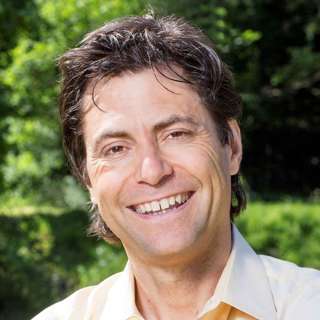
On January 1, 2015, physicist Max Tegmark gave up something most of us love to do: complain about things without ever trying to fix them.

That “put up or shut up” New Year’s resolution led to the first Puerto Rico conference and Open Letter on Artificial Intelligence — milestones for researchers taking the safe development of highly-capable AI systems seriously.

Links to learn more, summary and full transcript.

Max's primary work has been cosmology research at MIT, but his energetic and freewheeling nature has led him into so many other projects that you would be forgiven for forgetting it. In the 2010s he wrote two best-selling books, Our Mathematical Universe: My Quest for the Ultimate Nature of Reality, and Life 3.0: Being Human in the Age of Artificial Intelligence, and in 2014 founded a non-profit, the Future of Life Institute, which works to reduce all sorts of threats to humanity's future including nuclear war, synthetic biology, and AI.

Max has complained about many other things over the years, from killer robots to the impact of social media algorithms on the news we consume. True to his 'put up or shut up' resolution, he and his team went on to produce a video on so-called ‘Slaughterbots’ which attracted millions of views, and develop a website called 'Improve The News' to help readers separate facts from spin.

But given the stunning recent advances in capabilities — from OpenAI’s DALL-E to DeepMind’s Gato — AI itself remains top of his mind.

You can now give an AI system like GPT-3 the text: "I'm going to go to this mountain with the faces on it. What is the capital of the state to the east of the state that that's in?" And it gives the correct answer (Saint Paul, Minnesota) — something most AI researchers would have said was impossible without fundamental breakthroughs just seven years ago.

So back at MIT, he now leads a research group dedicated to what he calls “intelligible intelligence.” At the moment, AI systems are basically giant black boxes that magically do wildly impressive things. But for us to trust these systems, we need to understand them.

He says that training a black box that does something smart needs to just be stage one in a bigger process. Stage two is: “How do we get the knowledge out and put it in a safer system?”

Today’s conversation starts off giving a broad overview of the key questions about artificial intelligence: What's the potential? What are the threats? How might this story play out? What should we be doing to prepare?

Rob and Max then move on to recent advances in capabilities and alignment, the mood we should have, and possible ways we might misunderstand the problem.

They then spend roughly the last third talking about Max's current big passion: improving the news we consume — where Rob has a few reservations.

They also cover:

• Whether we could understand what superintelligent systems were doing
• The value of encouraging people to think about the positive future they want
• How to give machines goals
• Whether ‘Big Tech’ is following the lead of ‘Big Tobacco’
• Whether we’re sleepwalking into disaster
• Whether people actually just want their biases confirmed
• Why Max is worried about government-backed fact-checking
• And much more

Chapters:

  • Rob’s intro (00:00:00)
  • The interview begins (00:01:19)
  • How Max prioritises (00:12:33)
  • Intro to AI risk (00:15:47)
  • Superintelligence (00:35:56)
  • Imagining a wide range of possible futures (00:47:45)
  • Recent advances in capabilities and alignment (00:57:37)
  • How to give machines goals (01:13:13)
  • Regulatory capture (01:21:03)
  • How humanity fails to fulfil its potential (01:39:45)
  • Are we being hacked? (01:51:01)
  • Improving the news (02:05:31)
  • Do people actually just want their biases confirmed? (02:16:15)
  • Government-backed fact-checking (02:37:00)
  • Would a superintelligence seem like magic? (02:49:50)


Producer: Keiran Harris
Audio mastering: Ben Cordell
Transcriptions: Katy Moore

Episoder(320)

#172 – Bryan Caplan on why you should stop reading the news

#172 – Bryan Caplan on why you should stop reading the news

Is following important political and international news a civic duty — or is it our civic duty to avoid it?It's common to think that 'staying informed' and checking the headlines every day is just wha...

17 Nov 20232h 23min

#171 – Alison Young on how top labs have jeopardised public health with repeated biosafety failures

#171 – Alison Young on how top labs have jeopardised public health with repeated biosafety failures

"Rare events can still cause catastrophic accidents. The concern that has been raised by experts going back over time, is that really, the more of these experiments, the more labs, the more opportunit...

9 Nov 20231h 46min

#170 – Santosh Harish on how air pollution is responsible for ~12% of global deaths — and how to get that number down

#170 – Santosh Harish on how air pollution is responsible for ~12% of global deaths — and how to get that number down

"One [outrageous example of air pollution] is municipal waste burning that happens in many cities in the Global South. Basically, this is waste that gets collected from people's homes, and instead of ...

1 Nov 20232h 57min

#169 – Paul Niehaus on whether cash transfers cause economic growth, and keeping theft to acceptable levels

#169 – Paul Niehaus on whether cash transfers cause economic growth, and keeping theft to acceptable levels

"One of our earliest supporters and a dear friend of mine, Mark Lampert, once said to me, “The way I think about it is, imagine that this money were already in the hands of people living in poverty. I...

26 Okt 20231h 47min
#168 – Ian Morris on whether deep history says we're heading for an intelligence explosion

#168 – Ian Morris on whether deep history says we're heading for an intelligence explosion

"If we carry on looking at these industrialised economies, not thinking about what it is they're actually doing and what the potential of this is, you can make an argument that, yes, rates of growth a...

23 Okt 20232h 43min

#167 – Seren Kell on the research gaps holding back alternative proteins from mass adoption

#167 – Seren Kell on the research gaps holding back alternative proteins from mass adoption

"There have been literally thousands of years of breeding and living with animals to optimise these kinds of problems. But because we're just so early on with alternative proteins and there's so much ...

18 Okt 20231h 54min

#166 – Tantum Collins on what he’s learned as an AI policy insider at the White House, DeepMind and elsewhere

#166 – Tantum Collins on what he’s learned as an AI policy insider at the White House, DeepMind and elsewhere

"If you and I and 100 other people were on the first ship that was going to go settle Mars, and were going to build a human civilisation, and we have to decide what that government looks like, and we ...

12 Okt 20233h 8min

#165 – Anders Sandberg on war in space, whether civilisations age, and the best things possible in our universe

#165 – Anders Sandberg on war in space, whether civilisations age, and the best things possible in our universe

"Now, the really interesting question is: How much is there an attacker-versus-defender advantage in this kind of advanced future? Right now, if somebody's sitting on Mars and you're going to war agai...

6 Okt 20232h 48min

Populært innen Fakta

fastlegen
dine-penger-pengeradet
relasjonspodden-med-dora-thorhallsdottir-kjersti-idem
treningspodden
rss-strid-de-norske-borgerkrigene
foreldreradet
jakt-og-fiskepodden
rss-sunn-okonomi
merry-quizmas
fryktlos
gravid-uke-for-uke
rss-mann-i-krise-med-sagen
sinnsyn
hverdagspsyken
generasjonspodden
rss-kunsten-a-leve
dopet
teknologi-og-mennesker
rss-adhd-i-klasserommet
hr-podden-2