
#144 – Athena Aktipis on why cancer is actually one of our universe's most fundamental phenomena

#144 – Athena Aktipis on why cancer is actually one of our universe's most fundamental phenomena

What’s the opposite of cancer?

If you answered “cure,” “antidote,” or “antivenom” — you’ve obviously been reading the antonym section at www.merriam-webster.com/thesaurus/cancer.

But today’s guest Athena Aktipis says that the opposite of cancer is us: it's having a functional multicellular body that’s cooperating effectively in order to make that multicellular body function.

If, like us, you found her answer far more satisfying than the dictionary, maybe you could consider closing your dozens of merriam-webster.com tabs, and start listening to this podcast instead.

Links to learn more, summary and full transcript.

As Athena explains in her book The Cheating Cell, what we see with cancer is a breakdown in each of the foundations of cooperation that allowed multicellularity to arise:

  • Cells will proliferate when they shouldn't.
  • Cells won't die when they should.
  • Cells won't engage in the kind of division of labour that they should.
  • Cells won’t do the jobs that they're supposed to do.
  • Cells will monopolise resources.
  • And cells will trash the environment.

When we think about animals in the wild, or even bacteria living inside our cells, we understand that they're facing evolutionary pressures to figure out how they can replicate more; how they can get more resources; and how they can avoid predators — like lions, or antibiotics.

We don’t normally think of individual cells as acting as if they have their own interests like this. But cancer cells are actually facing similar kinds of evolutionary pressures within our bodies, with one major difference: they replicate much, much faster.

Incredibly, the opportunity for evolution by natural selection to operate just over the course of cancer progression is easily faster than all of the evolutionary time that we have had as humans since *Homo sapiens* came about.

Here’s a quote from Athena:

“So you have to shift your thinking to be like: the body is a world with all these different ecosystems in it, and the cells are existing on a time scale where, if we're going to map it onto anything like what we experience, a day is at least 10 years for them, right? So it's a very, very different way of thinking.”

You can find compelling examples of cooperation and conflict all over the universe, so Rob and Athena don’t stop with cancer. They also discuss:

  • Cheating within cells themselves
  • Cooperation in human societies as they exist today — and perhaps in the future, between civilisations spread across different planets or stars
  • Whether it’s too out-there to think of humans as engaging in cancerous behaviour
  • Why elephants get deadly cancers less often than humans, despite having way more cells
  • When a cell should commit suicide
  • The strategy of deliberately not treating cancer aggressively
  • Superhuman cooperation

And at the end of the episode, they cover Athena’s new book Everything is Fine! How to Thrive in the Apocalypse, including:

  • Staying happy while thinking about the apocalypse
  • Practical steps to prepare for the apocalypse
  • And whether a zombie apocalypse is already happening among Tasmanian devils

And if you’d rather see Rob and Athena’s facial expressions as they laugh and laugh while discussing cancer and the apocalypse — you can watch the video of the full interview.

Get this episode by subscribing to our podcast on the world’s most pressing problems and how to solve them: type 80,000 Hours into your podcasting app.

Producer: Keiran Harris
Audio mastering: Milo McGuire
Transcriptions: Katy Moore

Episoder(318)

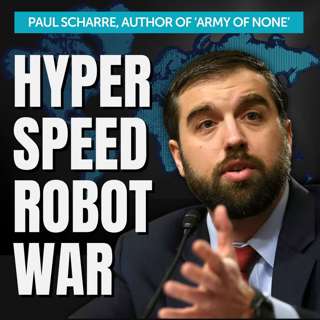
#231 – Paul Scharre on how AI-controlled robots will and won't change war

#231 – Paul Scharre on how AI-controlled robots will and won't change war

In 1983, Stanislav Petrov, a Soviet lieutenant colonel, sat in a bunker watching a red screen flash “MISSILE LAUNCH.” Protocol demanded he report it to superiors, which would very likely trigger a ret...

17 Des 20252h 45min

AI might let a few people control everything — permanently (article by Rose Hadshar)

AI might let a few people control everything — permanently (article by Rose Hadshar)

Power is already concentrated today: over 800 million people live on less than $3 a day, the three richest men in the world are worth over $1 trillion, and almost six billion people live in countries ...

12 Des 20251h
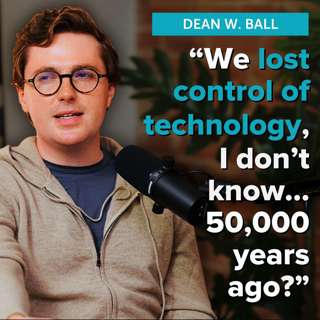
#230 – Dean Ball on how AI is a huge deal — but we shouldn’t regulate it yet

#230 – Dean Ball on how AI is a huge deal — but we shouldn’t regulate it yet

Former White House staffer Dean Ball thinks it's very likely some form of 'superintelligence' arrives in under 20 years. He thinks AI being used for bioweapon research is "a real threat model, obvious...

10 Des 20252h 54min

#229 – Marius Hobbhahn on the race to solve AI scheming before models go superhuman

#229 – Marius Hobbhahn on the race to solve AI scheming before models go superhuman

We often worry about AI models “hallucinating” or making honest mistakes. But what happens when a model knows the truth, but decides to deceive you anyway to achieve a goal of its own? This isn’t sci-...

3 Des 20253h 3min

Rob & Luisa chat kids, the 2016 fertility crash, and how the 50s invented parenting that makes us miserable

Rob & Luisa chat kids, the 2016 fertility crash, and how the 50s invented parenting that makes us miserable

Global fertility rates aren’t just falling: the rate of decline is accelerating. From 2006 to 2016, fertility dropped gradually, but since 2016 the rate of decline has increased 4.5-fold. In many weal...

25 Nov 20251h 59min
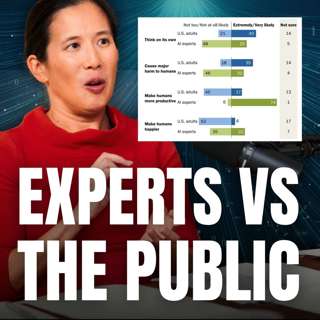
#228 – Eileen Yam on how we're completely out of touch with what the public thinks about AI

#228 – Eileen Yam on how we're completely out of touch with what the public thinks about AI

If you work in AI, you probably think it’s going to boost productivity, create wealth, advance science, and improve your life. If you’re a member of the American public, you probably strongly disagree...

20 Nov 20251h 43min
OpenAI: The nonprofit refuses to be killed (with Tyler Whitmer)

OpenAI: The nonprofit refuses to be killed (with Tyler Whitmer)

Last December, the OpenAI business put forward a plan to completely sideline its nonprofit board. But two state attorneys general have now blocked that effort and kept that board very much alive and k...

11 Nov 20251h 56min
#227 – Helen Toner on the geopolitics of AGI in China and the Middle East

#227 – Helen Toner on the geopolitics of AGI in China and the Middle East

With the US racing to develop AGI and superintelligence ahead of China, you might expect the two countries to be negotiating how they’ll deploy AI, including in the military, without coming to blows. ...

5 Nov 20252h 20min

Populært innen Fakta

fastlegen
dine-penger-pengeradet
relasjonspodden-med-dora-thorhallsdottir-kjersti-idem
treningspodden
foreldreradet
jakt-og-fiskepodden
merry-quizmas
dopet
podme-bio-3
rss-strid-de-norske-borgerkrigene
sovnlos
rss-kull
sinnsyn
gravid-uke-for-uke
rss-var-forste-kaffe
hverdagspsyken
fryktlos
rss-kunsten-a-leve
dypdykk
rss-impressions-2